
Learn
Lossy vs Lossless Compression: Images, Video and Audio
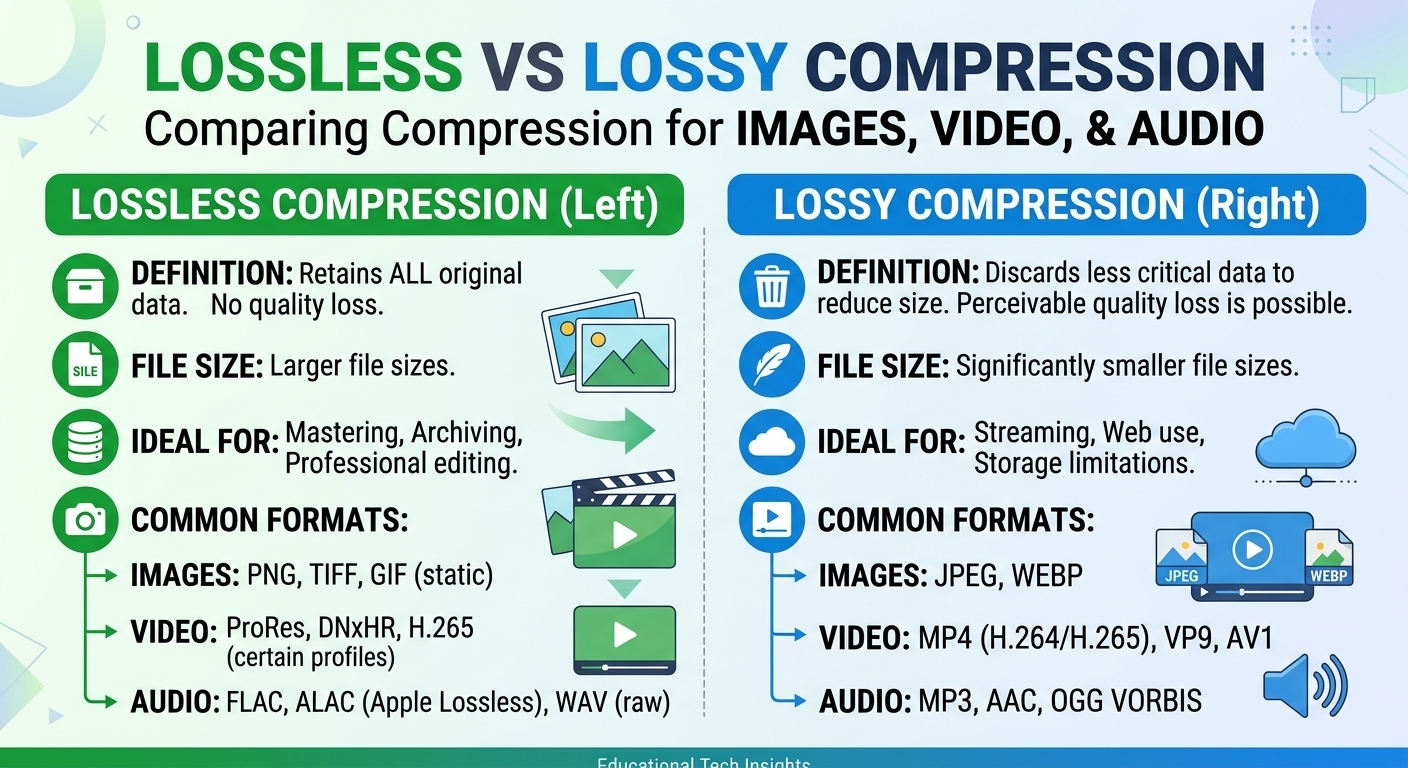
Lossy vs lossless compression comes down to one trade: lossless compression rebuilds every original bit and typically ...

In 2023, a Google engineering report noted that just a 100 ms delay in load time can reduce mobile conversion rates by up to 7%. At the same time, Gartner predicts that by 2025, 75% of enterprise data will be processed outside traditional centralized data centers. These two facts point to a crucial question for every digital business: is your future about using a CDN, adopting edge computing, or both?
Many teams still use “CDN” and “edge computing” almost interchangeably — but they are not the same thing. They solve different problems, rely on different architectures, and should be evaluated with different KPIs. Misunderstanding that difference can lead to overspending on infrastructure, misaligned architectures, and disappointing performance for users.
This article breaks down CDN vs edge computing in practical, concrete terms: how they work, where they overlap, where they diverge, and how enterprises can combine them for streaming, SaaS, gaming, and large-scale web applications. Along the way, you’ll see how a modern platform like BlazingCDN fits into this picture as a high-performance, cost-effective CDN foundation you can build your edge strategy on.
If you remember only one thing, let it be this:
A CDN primarily moves and caches content closer to users; edge computing moves application logic and data processing closer to users.
Both reduce latency, both operate on distributed infrastructure, and both run at “the edge” of the network — but they sit at different layers in your architecture and require different ways of thinking.
As you read the rest of this article, ask yourself: where do your current performance issues actually live — in content delivery, or in application logic and real-time decision-making?
A Content Delivery Network (CDN) is a globally distributed system of servers designed to deliver static and dynamic content to users as fast and reliably as possible. Instead of every request hitting your origin server, a CDN caches content closer to users and serves it from there.
According to research by Google and Deloitte, reducing mobile site load time by 0.1 seconds can increase retail conversions by up to 8% and lead conversions by up to 10%. CDNs are usually the single biggest contributor to achieving those reductions, especially for media-heavy sites and apps.
CDNs shine when the problem is “we must deliver the same content to millions of users quickly and cheaply.” They reduce bandwidth on origin servers and smooth out traffic spikes that would otherwise cause outages.
Ask yourself: if your origin went offline for 10 minutes during peak time, how much of your traffic could still be served purely from cache?
Edge computing extends the idea of “moving things closer to the user” from content to computation. Instead of running all business logic, analytics, and data processing in a central cloud or data center, edge computing executes that logic on distributed infrastructure close to where data is generated or consumed.
IDC estimates that by 2025, more than 50% of new enterprise IT infrastructure will be deployed at the edge rather than traditional data centers, driven by low-latency and data-locality requirements. This is not just a buzzword shift; it represents a fundamental change in where your application “lives.”
Here’s the key shift: with edge computing, the network edge becomes a place where your application logic runs, not just where your content is cached.
Which parts of your current architecture absolutely must respond in under 20 ms and can’t tolerate round-trips to a distant data center?
The overlap between CDN and edge computing is real — many CDNs now offer “edge functions” and edge platforms often include caching. But under the hood, their focus is different. This table highlights the key distinctions.
| Dimension | CDN | Edge Computing |
|---|---|---|
| Primary Goal | Accelerate and offload content delivery | Execute application logic and process data near the user/device |
| Typical Workload | Static content, video segments, APIs with limited logic | Stateful apps, real-time analytics, personalization, ML inference |
| State | Mostly stateless | Can be stateful or stateless; often interacts with data stores |
| Complexity of Logic | Simple rules, redirects, header changes, cache behavior | Full application workflows, authentication, routing, transformations |
| Integration | Origin servers (web, streaming, storage) | Cloud services, databases, IoT devices, 5G networks, CDNs |
| Key KPI | Cache hit ratio, bandwidth savings, TTFB, throughput | End-to-end latency, local processing speed, data transfer reduction |
| Cost Profile | Primarily traffic (GB/TB) and requests | Compute, storage, data transfer, sometimes per-invocation fees |
Most enterprises don’t choose one over the other. Instead, they layer edge computing capabilities on top of a robust CDN foundation. The real decision is which parts of your stack belong at the edge — and which can stay centralized.
Where in your current monitoring do you see the biggest bottleneck: network transfer times, or server-side application logic?
To make the difference tangible, it helps to look at how mature digital businesses architect their delivery stacks. Instead of fictional scenarios, we’ll look at common patterns observed across streaming, SaaS, gaming, and large-scale websites.
Global streaming providers rely heavily on CDNs to deliver video segments, images, subtitles, and API responses. A typical architecture looks like this:
As competition intensifies, streaming platforms are starting to push more real-time personalization — e.g., regions or user segments getting different promo carousels or previews — to the edge. This reduces latency and allows experimentation without hammering central microservices.
For media companies, a modern CDN like BlazingCDN can serve as the high-performance backbone for global content delivery while keeping costs predictable at scale. With pricing starting at $5 per TB, down to $2.50 per TB at volume (as of October 2026), BlazingCDN lets broadcasters and OTT platforms keep delivery costs predictable — a crucial factor for bandwidth-heavy video workloads.
High-traffic SaaS applications typically do the following:
As SaaS platforms expand globally, they often face latency complaints from regions far from their primary cloud region. Moving entire backends closer can be costly and complex. A more efficient pattern is to:
This staged approach delivers a measurable drop in perceived latency without a full multi-region database and application replication project.
Gaming is one of the clearest examples of CDN vs edge computing specialization:
Here, the line is straightforward: CDNs deliver content; specialized edge/game servers handle real-time gameplay. Some game companies are experimenting with using edge functions for parts of anti-cheat or telemetry aggregation, but core game state remains on dedicated infrastructure.
Notice the pattern? In all these industries, CDN is non-negotiable for performance and cost efficiency — and edge computing is selectively layered for specific latency-sensitive or personalized use cases.
Which parts of your workload resemble video segments and static assets — and which behave more like real-time game state or personalization logic?
One of the biggest sources of confusion is performance expectations. Teams sometimes try to solve an application-logic problem with CDN configuration alone, or they chase edge platforms when better caching and routing would solve 80% of the issue.
Akamai has reported that offloading 80–90% of static content to a CDN can reduce origin infrastructure costs and scaling needs by over 50% for some customers. That benefit holds across providers: if most of your traffic is static or cacheable, a well-tuned CDN gives you a massive ROI without touching edge computing.
You should consider edge computing when:
If your profiling shows that 70% of your user-facing latency is due to business logic and database access in a faraway region, no amount of CDN tuning alone will fix it. That’s the moment to consider shifting some of that logic closer to the user with an edge strategy.
Do your current performance dashboards clearly separate network latency from application processing time — or are you making architecture decisions with incomplete visibility?
Performance is only half of the story. The other half is cost and operational complexity.
CDN pricing is typically dominated by:
Because CDNs are optimized for high-volume delivery, per-GB pricing can be very aggressive at scale. This matters enormously for streaming, software distribution, and gaming companies pushing petabytes of data every month.
BlazingCDN is designed exactly for these cost-sensitive, bandwidth-heavy scenarios. With pricing starting at $5 per TB, down to $2.50 per TB at volume (as of October 2026), it offers enterprises a way to cut delivery bills — at 100 TB per month that is $415 versus about $6,965 on Amazon CloudFront pay-as-you-go — especially for organizations serving global video, downloads, or rich media. You can explore detailed tiers and savings scenarios directly on the BlazingCDN pricing page.
Edge computing, by contrast, introduces:
In many public offerings, edge function pricing is comparable to serverless platforms: you’re billed per invocation and execution time. That’s acceptable for small volumes or targeted logic, but it can become expensive if you indiscriminately move heavy workloads to the edge.
The rule of thumb: exhaust CDN optimization first. Only move computation to the edge when you have a clear, measured reason and a plan to handle the additional operational overhead.
Are you currently tracking how much of your infrastructure spend is “doing work twice” — central logic and edge logic solving overlapping problems?
Modern CDNs are no longer just “dumb caches.” Many now provide:
This blurring of roles means your CDN can become a gentle on-ramp toward edge computing. You can start with:
In other words, you don’t have to “go all-in on edge” to benefit from edge capabilities. Use your CDN as the base platform, and extend only where you see performance or regulatory pressure.
Is your current CDN strategy future-proof enough to support incremental adoption of edge patterns, or is it locking you into a rigid, origin-centric model?
For most enterprises, the pragmatic roadmap looks like this: deploy a powerful, cost-optimized CDN as the foundation, then selectively add edge computing where user experience, compliance, or business logic truly demands it.
BlazingCDN fits squarely into this strategy. It offers:
Whether you’re a streaming platform, a rapidly growing SaaS company, or a global game publisher, BlazingCDN provides the stable, fault-tolerant delivery layer you need before you start pushing more sophisticated logic to the edge. For media and entertainment organizations in particular, the combination of predictable pricing and CloudFront-level reliability makes it an obvious fit; you can explore tailored setups for broadcasters and VOD providers on the BlazingCDN media solutions page.
Are you currently building on a CDN that feels like a commodity pipe — or on a delivery platform that actively supports your long-term edge roadmap?
To make this concrete, here is a simple framework you can apply to your own roadmap.
Maximize CDN for the first two categories; consider edge strategies for the third.
If server processing time in a distant region dominates, that’s a flag for edge computing. If network transit and TTFB for static assets dominate, focus on CDN optimization.
Map which data categories (PII, financial, health, telemetry) are subject to region-specific processing or storage rules. If they demand local processing in multiple jurisdictions, your architecture will likely need some edge components, regardless of performance concerns.
At each step, measure the actual impact. Edge computing should be a precise tool, not an ideology.
Do you have at least one project in the next 12 months where you can deliberately run this phased approach and document the results?
By now, the core distinctions should be clear:
For enterprises, the smartest path is usually not “CDN vs edge computing” but “which problems do we solve with CDN, and which with edge?” The right answer is highly specific to your traffic patterns, user base, and regulatory environment — but the architectural principles are consistent across industries.
As you plan your roadmap, consider this final question: if you had to cut your delivery and infrastructure spend by 30% next year without hurting user experience, would you know exactly which mix of CDN optimization and edge investment to pursue?
The difference between CDN and edge computing is more than terminology — it’s a blueprint for how your digital business will scale over the next 3–5 years. You don’t need a massive re-architecture to start; you need a clear plan and the right delivery foundation.
If you’re responsible for performance, infrastructure, or product in a media, gaming, SaaS, or large-scale web environment, now is the right time to:
BlazingCDN can help you execute that plan with a delivery layer built for high-traffic static workloads. With flexible configuration and pricing starting at $5 per TB, down to $2.50 per TB at volume (as of October 2026), it suits teams that care about both reliability and efficiency.
If you’re ready to benchmark your current setup, explore hybrid CDN + edge patterns, or simply see how much you could save on global delivery without sacrificing performance, now is the time to take the next step: talk with your engineering and product teams about where edge truly belongs in your architecture — and put a modern CDN foundation in place to support that evolution.
Share this article with your team, bookmark it for your next architecture review, and when you’re ready to translate strategy into implementation, start by reviewing your delivery baseline and cost structure — then choose a CDN partner capable of growing with your edge ambitions.

Heavy traffic.
Light bill.
The CDN for video and large traffic
Learn
Lossy vs lossless compression comes down to one trade: lossless compression rebuilds every original bit and typically ...
Pricing - Pricing & Costs
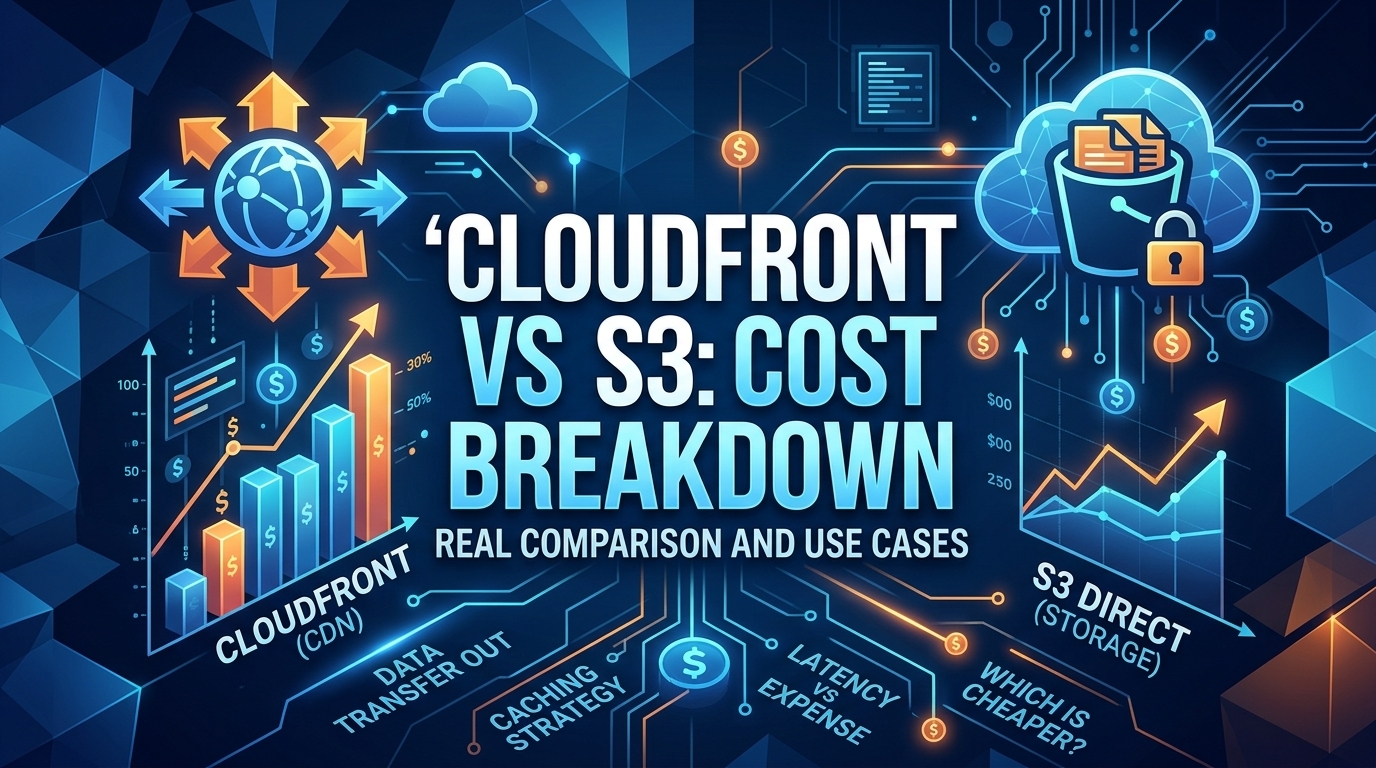
The CloudFront vs S3 decision depends more on object size than on traffic volume. At a 500 KB average response, 100 TB ...
Learn
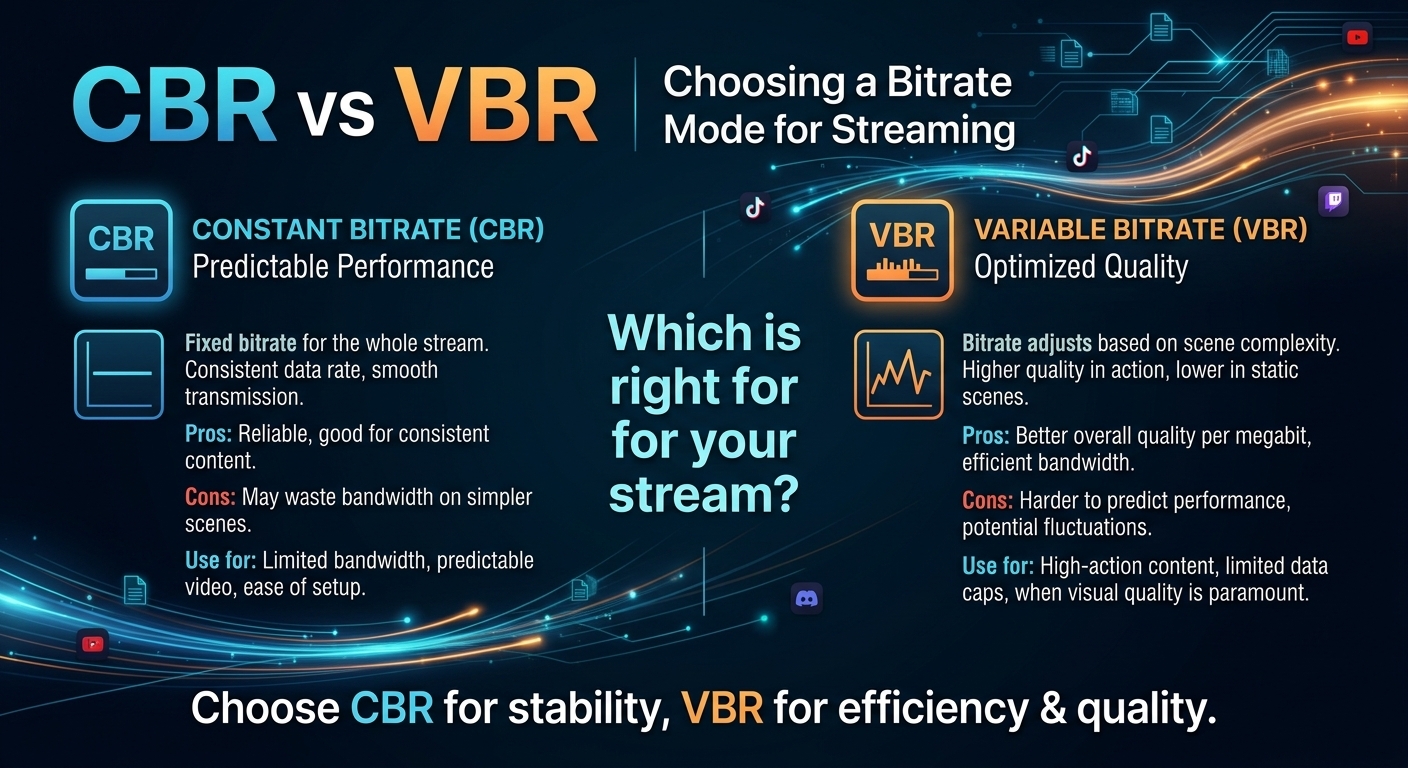
For most on-demand video, capped variable bitrate (VBR) wins the cbr vs vbr decision: it spends bits where the picture ...