

Learn
What Is a Keyframe? GOP Size and Keyframe Interval
In answer to what is a keyframe: a keyframe, or I-frame, is a video frame encoded without reference to any other frame, ...
A single penny per gigabyte sounds trivial until you multiply it by 500 TB of monthly egress. At that volume, the spread between the cheapest and most expensive CDN on this list is over $25,000 per month — $300,000 per year of margin evaporating into transfer fees. This CDN pricing comparison benchmarks 12 providers as of Q2 2026, normalizing their published and negotiated rates across five traffic tiers, three delivery regions, and two workload profiles. You will get a pricing table, a methodology disclosure, and a workload-profile decision matrix you can hand directly to procurement or plug into your own TCO model.
Every CDN provider structures pricing differently — commit-based tiers, bandwidth percentile billing (95th or 99th), request-based surcharges, regional multipliers, origin-shield add-ons. Direct apples-to-apples comparison is intentionally difficult. Here is how we normalized.
Data sources: Public pricing pages scraped April 2026, supplemented by contract quotes shared (anonymized) by three mid-market SaaS companies and one video platform each doing 50–200 TB/month. Where providers publish only "contact us," we used the median of available contract data points.
Normalization dimensions:
We did not include free-tier allowances. A CDN's free 1 TB offer is irrelevant to anyone reading a benchmark at these volumes.
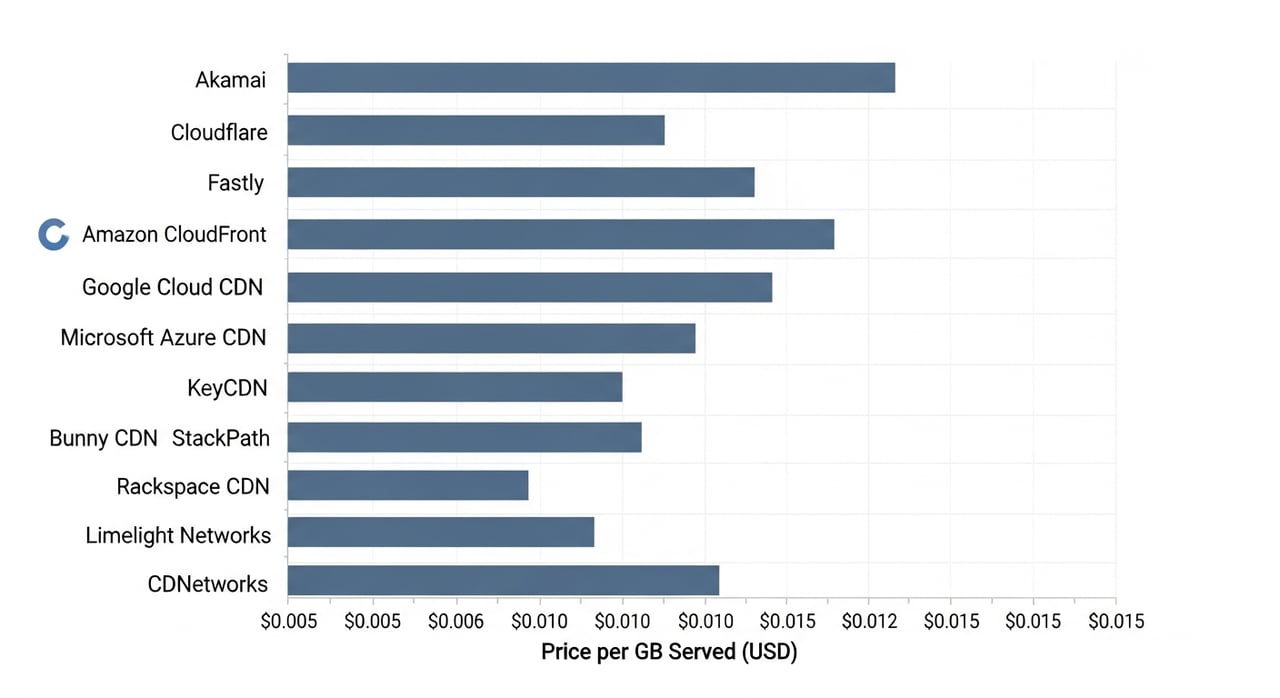
| Provider | 10 TB/mo ($/GB) | 100 TB/mo ($/GB) | 500 TB/mo ($/GB) | Billing Model |
|---|---|---|---|---|
| Akamai | $0.045–$0.060 | $0.025–$0.040 | $0.015–$0.025 | Commit + overage |
| BlazingCDN | $0.0048 | $0.0042 | $0.0036 | Pay-as-you-go progressive tiers |
| Cloudflare | $0.05–$0.07 | $0.03–$0.05 | $0.02–$0.035 | Plan-based + bandwidth alliance |
| Amazon CloudFront | $0.060–$0.085 | $0.040–$0.060 | $0.020–$0.030 | Pay-as-you-go + savings plans |
| Fastly | $0.05–$0.08 | $0.03–$0.06 | $0.02–$0.04 | Usage-based + commit discounts |
| Google Cloud CDN | $0.04–$0.08 | $0.03–$0.06 | $0.02–$0.04 | Pay-as-you-go (cache fill extra) |
| Microsoft Azure CDN | $0.05–$0.081 | $0.035–$0.060 | $0.02–$0.04 | Tier-based + Verizon/Edgio options |
| CDN77 | $0.04–$0.059 | $0.029–$0.049 | $0.019–$0.035 | Commit tiers, transparent |
| KeyCDN | $0.04 | $0.03 | $0.02 | Pay-as-you-go, flat per region |
| BunnyCDN | $0.01–$0.03 | $0.01–$0.02 | $0.005–$0.01 | Flat regional per-GB |
| StackPath | $0.04–$0.06 | $0.03–$0.05 | Custom | Plan + overage |
| Limelight (Edgio) | $0.04–$0.07 | $0.025–$0.045 | $0.015–$0.030 | Commit-based contracts |
Ranges reflect regional variance and negotiated vs. list pricing. BlazingCDN and BunnyCDN rates are published list; hyperscaler rates assume standard pricing without private agreements. All data as of April 2026.
Three structural shifts reshaped CDN cost comparison since 2025.
Hyperscaler egress pressure is real. AWS reduced CloudFront pricing by roughly 10–15% for committed-use plans introduced in late 2025, but the base pay-as-you-go rates barely moved. Google Cloud CDN's premium tier (using Google's backbone) now carries a separate surcharge that pushes effective costs 20–30% above its standard tier for APAC delivery. Azure's CDN landscape fragmented further after the Edgio acquisition, and pricing clarity has not improved.
Request-based charges matter more than ever. As API traffic and small-object workloads grow, providers charging per-10K-request fees (CloudFront at $0.0075–$0.016 per 10K HTTPS requests, for example) add a non-trivial layer on top of bandwidth cost. At 100 TB of API responses averaging 5 KB each, you are looking at roughly 20 billion requests — an additional $15,000–$32,000/month on CloudFront that never shows up in a $/GB comparison.
Usage-based pricing won the model war. Commit-and-overage contracts still dominate enterprise deals, but the overage penalty spread has narrowed. Providers like CDN77 and KeyCDN now publish transparent per-GB rates with no minimum. BunnyCDN's flat regional pricing remains unchanged since 2024. The trend rewards operators who right-size commits monthly rather than annually.
Price per GB is necessary but insufficient. The right CDN depends on your traffic shape, your origin topology, and where your users sit. This matrix maps five common workload profiles to the providers that score best on effective cost and architectural fit as of Q2 2026.
| Workload Profile | Characteristics | Best Cost Fit | Watch Out For |
|---|---|---|---|
| Video/streaming (50+ TB/mo) | Large objects, high cache-hit ratio, NA/EU heavy | BlazingCDN, BunnyCDN, CDN77 | APAC surcharges on hyperscalers; 95th percentile billing traps |
| SaaS/API (high request count) | Small payloads, low cache-hit, global | Cloudflare (Workers bundled), Fastly | Per-request fees on CloudFront/Google; dynamic content surcharges |
| Software distribution | Very large objects, spiky traffic, global | BlazingCDN, KeyCDN, BunnyCDN | Burst overage pricing; minimum commit waste during low months |
| eCommerce (mixed assets) | Images, JS/CSS, personalized content | Cloudflare, Akamai, CloudFront | Image optimization add-ons priced separately; edge compute costs |
| Gaming (patches + real-time) | Multi-GB downloads, global spikes, latency-sensitive | BlazingCDN, Akamai, Fastly | Peak bandwidth pricing models that penalize launch-day spikes |
For high-bandwidth static delivery — video, software updates, game patches — the cost gap is stark. BlazingCDN serves 500 TB for $1,815/month (as of October 2026), and 100 TB for $415 against about $6,965 on CloudFront pay-as-you-go. This is the profile it is built for: predictable, high-volume egress where per-GB economics dominate the budget. The rate falls toward $2.50 per TB at the top tier. Full tier details are on BlazingCDN's pricing page.
The table above captures bandwidth cost. It does not capture five line items that regularly inflate the real bill by 15–40%:
Pull three months of production traffic data from your current provider. You need: total GB delivered per region per month, total request count (split HTTP/HTTPS), cache-hit ratio at the edge, and peak bandwidth in Gbps (for providers using 95th-percentile billing). Multiply each provider's published rate by your actual regional traffic mix, then add the hidden costs above. The delta between the cheapest and most expensive option is almost always larger than you expect, and it grows superlinearly with volume.
As of Q2 2026, published CDN pricing ranges from $0.0025/GB (BlazingCDN at the top volume tier) to $0.085/GB (CloudFront pay-as-you-go in APAC). Most mid-market deals land between $0.01 and $0.04/GB after negotiation. The effective rate depends heavily on region, request count, and commit structure.
For static delivery workloads above 100 TB/month, BlazingCDN and BunnyCDN consistently benchmark lowest on per-GB cost. BlazingCDN's published rate at 500 TB is $0.003/GB; BunnyCDN's is approximately $0.005–$0.01/GB depending on region. Both include HTTPS requests in the base rate, which eliminates a cost layer that inflates hyperscaler bills.
Yes. Per-request fees and low cache-hit ratios change the math. A workload averaging 5 KB per response at 100 TB/month generates roughly 20 billion requests. On CloudFront, per-request charges alone add $15,000–$32,000/month. Providers that do not charge per-request (Cloudflare on enterprise plans, Fastly on commit) become comparatively cheaper for this profile even if their per-GB rate is higher.
95th-percentile billing favors workloads with sharp, short-lived spikes (game launches, breaking news) because sustained bandwidth determines the bill, not total bytes. GB-transferred billing favors steady-state, high-volume delivery (video streaming, software updates) because you pay exactly for what you ship. Know your traffic shape before signing a contract.
Hyperscalers (AWS, Google, Azure) typically adjust CDN pricing once or twice per year, often tied to cloud-wide pricing events. Independent CDNs update less predictably. BunnyCDN and KeyCDN have held rates stable since 2024. Akamai and Fastly adjust primarily through contract negotiation rather than list-price changes.
Export your last 90 days of edge logs. Calculate your actual per-region, per-protocol traffic split. Feed those numbers into each provider's pricing calculator — or their sales desk for commit-based quotes. Compare the all-in monthly cost (bandwidth + requests + origin shield + logs + purge), not just the headline $/GB. If the spread between your current provider and the cheapest viable alternative exceeds 20%, you have a conversation worth having with your finance team before the next renewal lands.

Heavy traffic.
Light bill.
The CDN for video and large traffic
Learn
In answer to what is a keyframe: a keyframe, or I-frame, is a video frame encoded without reference to any other frame, ...
Learn
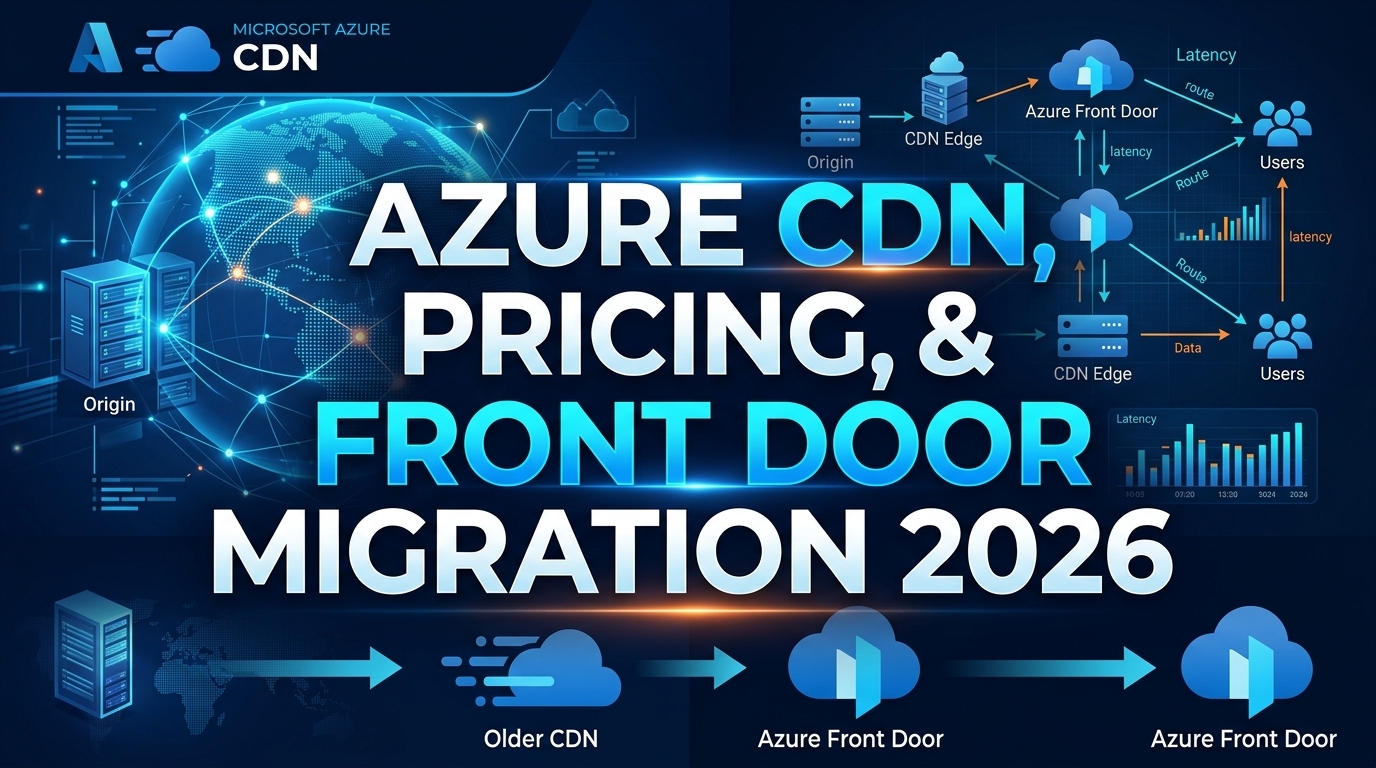
New Azure CDN deployments now go only one way: Microsoft stopped accepting new Azure CDN Standard from Microsoft ...
Learn
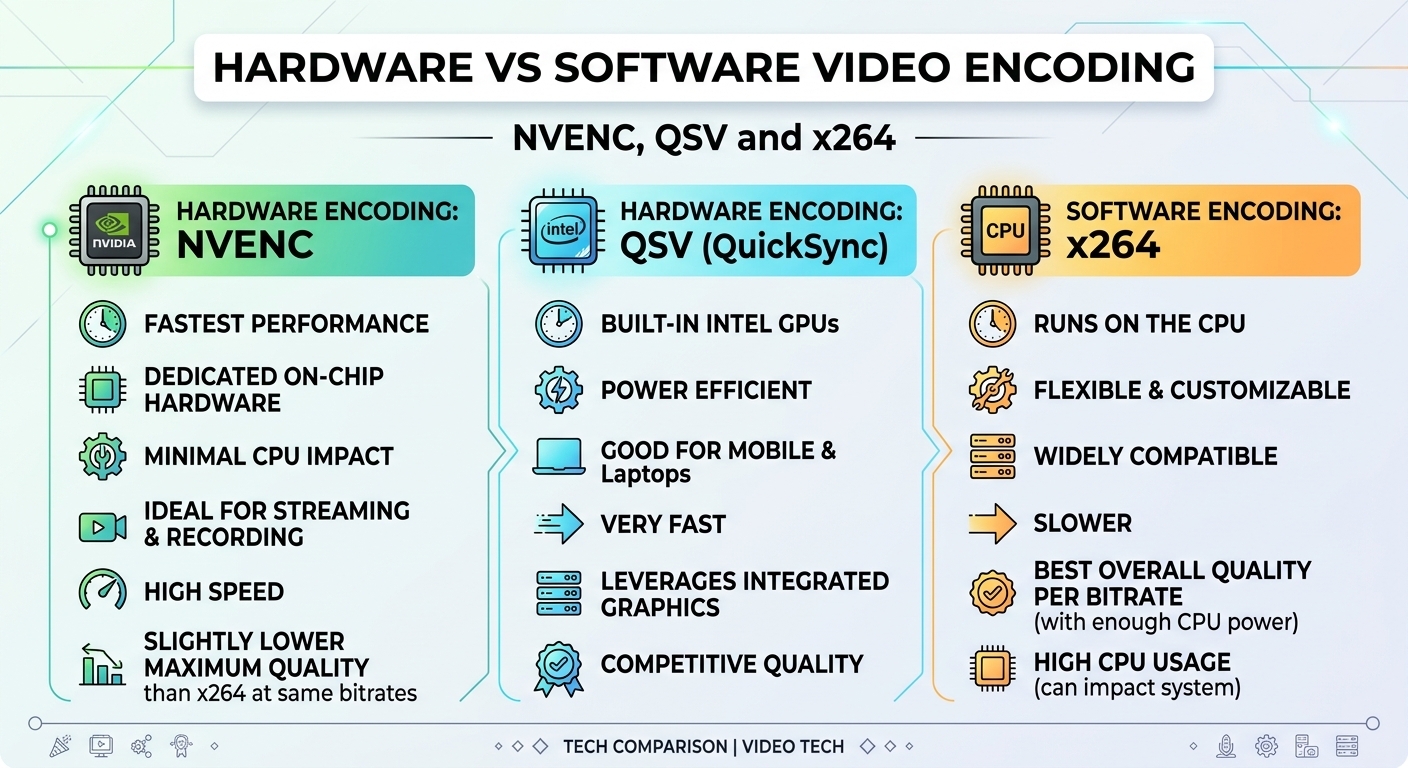
Evaluated October 2026: for live video, a modern GPU hardware encoder (NVIDIA NVENC on Turing or newer, Intel Quick ...