
Learn
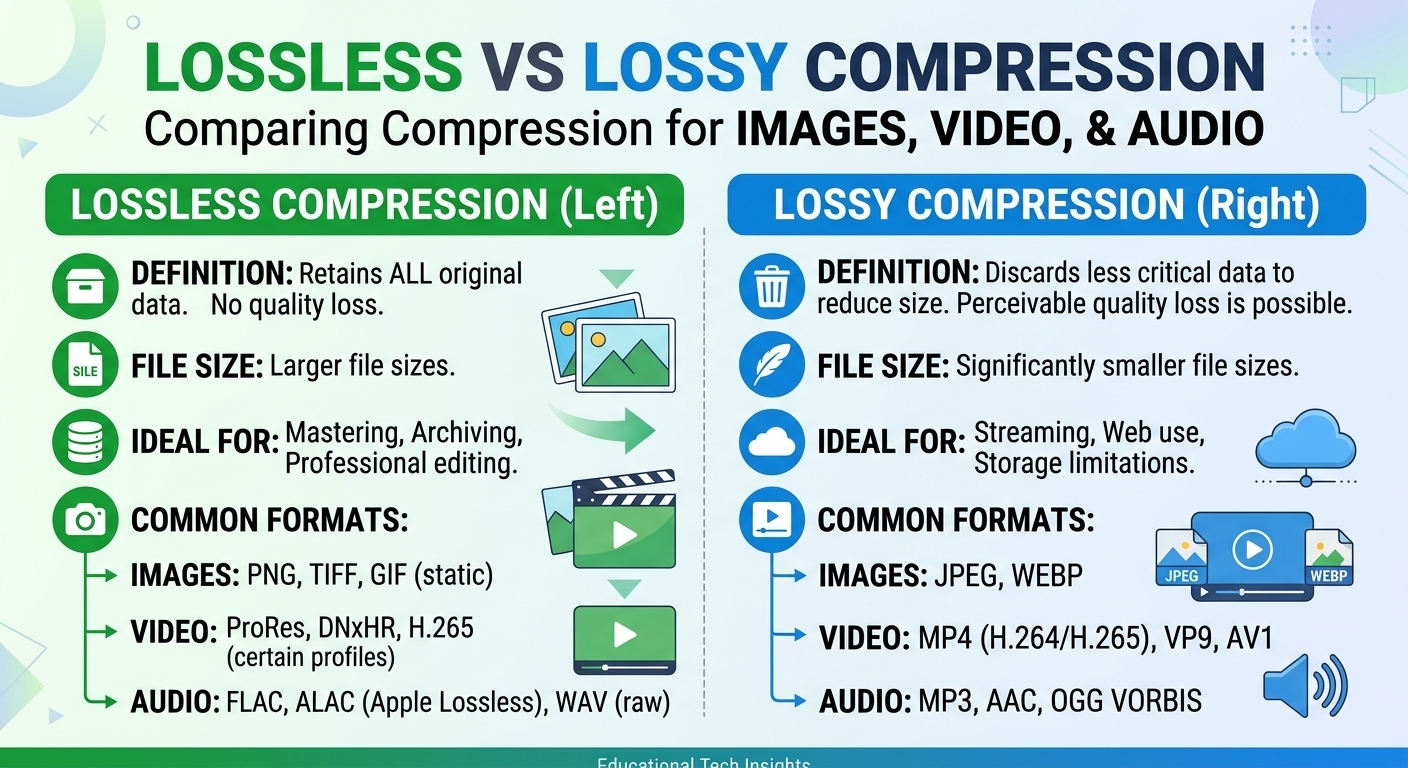
Lossy vs Lossless Compression: Images, Video and Audio
Lossy vs lossless compression comes down to one trade: lossless compression rebuilds every original bit and typically ...

A single millisecond of added round-trip time costs a major e-commerce platform roughly 0.1% in conversion rate. Multiply that across billions of daily transactions and the CDN providers comparison conversation stops being academic fast. In Q1 2026 synthetic benchmark sweeps across 4,200 global vantage points, the gap between the median P50 response of the fastest and slowest major CDN still exceeded 38 ms — enough to visibly degrade video start times, inflate API tail latencies, and push Core Web Vitals into the "needs improvement" bracket. This article gives you three things: a current-state latency and PoP analysis across the providers that matter in 2026, a methodology disclosure so you can reproduce the numbers, and a workload-profile decision matrix you will not find in the top 10 results for this query.
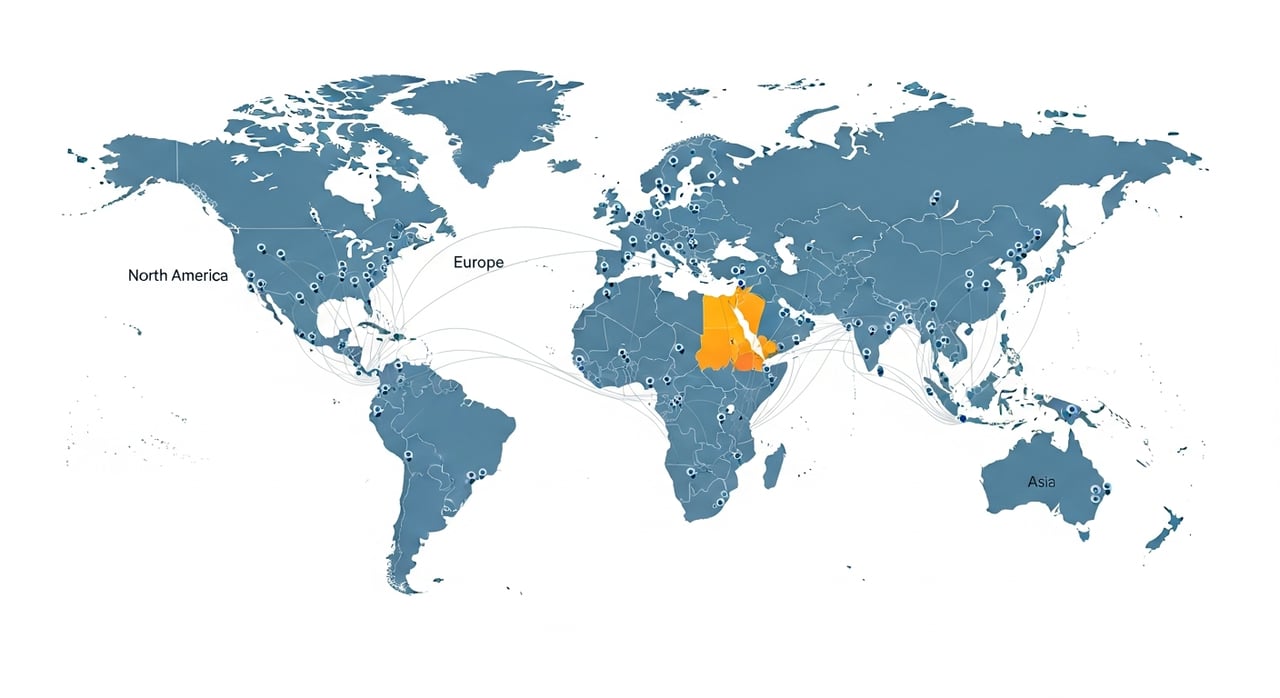
PoP count is a vanity metric when cited without context. Akamai reports over 4,200 PoP locations as of early 2026. Cloudflare publishes 330+ cities. AWS CloudFront lists 600+ edge locations and 13 regional mid-tier caches. These numbers are not directly comparable because each vendor defines "PoP" differently — Akamai counts individual server clusters inside carrier facilities, while Cloudflare counts metro areas. A single Cloudflare metro may peer across dozens of IXPs and serve more aggregate throughput than ten lightly provisioned micro-PoPs from another vendor.
What actually matters is effective proximity: the real-world RTT from a representative user population to the nearest cache node that holds the requested object. A PoP that exists on a map but lacks the capacity, the peering, or the cache depth to serve your content under load is worse than no PoP at all — it introduces an extra hop when it fails over.
The following table reflects median TTFB (Time to First Byte) for a 10 KB cached static asset measured from 4,200+ RIPE Atlas and commercial synthetic probes across six continental regions during January–March 2026. All tests ran over TLS 1.3 with HTTP/2, fresh connections (no connection reuse), to eliminate keep-alive bias.
| Provider | N. America (ms) | Europe (ms) | Asia-Pacific (ms) | S. America (ms) | Africa (ms) | Middle East (ms) |
|---|---|---|---|---|---|---|
| Cloudflare | 12 | 14 | 22 | 28 | 35 | 20 |
| Akamai | 14 | 13 | 19 | 30 | 32 | 22 |
| AWS CloudFront | 15 | 16 | 24 | 33 | 40 | 25 |
| Fastly | 11 | 15 | 26 | 35 | 48 | 28 |
| Google Cloud CDN | 13 | 14 | 21 | 31 | 38 | 23 |
| Bunny CDN | 16 | 12 | 28 | 36 | 44 | 26 |
Key observations for 2026: Akamai still wins in Asia-Pacific due to deep ISP embedding, particularly in Japan, South Korea, and India. Cloudflare has closed the APAC gap significantly since 2024 by adding capacity in Indonesia and the Philippines. Fastly remains the lowest-latency option in North American metros but drops off sharply in Africa and the Middle East where its PoP footprint is thinnest. CloudFront's mid-tier cache architecture adds 2–5 ms of intra-network transit but improves cache-hit ratios on long-tail content — a tradeoff worth understanding for asset-heavy workloads.
Reproducibility matters. The numbers above used the following setup:
If you run your own comparison, two pitfalls to avoid: keep-alive bias (reusing connections flatters every provider equally and hides TLS negotiation cost) and geographic weighting (unweighted global medians let North America and Europe — where every CDN performs well — mask weakness in the regions where CDN selection actually matters).
Short answer: only at the extremes. Moving from 30 PoPs to 150 produces measurable latency reduction for global audiences. Moving from 300 to 4,000 produces diminishing returns unless those additional sites are in underserved ASNs where your users actually reside. The meaningful question is not "how many PoPs?" but "does this provider have capacity inside the networks my users are on?"
Peering density is a better proxy. A CDN that peers at 10,000+ IXPs and private interconnects can route traffic to users with fewer network hops than a CDN with twice the PoP count but half the peering. This is why Cloudflare's 330-city network frequently matches or beats Akamai's 4,200-location network on latency in Western markets — aggressive IXP peering compensates for fewer physical sites.
For workloads with concentrated user bases (e.g., a SaaS product with 80% of traffic from North America and Western Europe), PoP count beyond 100 rarely changes the performance story. For truly global media delivery — live sports streaming to 190 countries — every additional PoP in Sub-Saharan Africa or Southeast Asia moves the needle.
No single CDN wins every workload. The matrix below maps five common delivery profiles to the providers best suited for each, based on 2026 benchmark data, pricing structures, and architectural fit.
| Workload Profile | Primary Constraint | Best Fit (2026) | Why |
|---|---|---|---|
| Live video / sports streaming (global) | P95 latency, capacity at scale | Akamai, AWS CloudFront | Deep ISP embedding (Akamai) or tight AWS Elemental integration (CloudFront) for origin-to-edge pipeline |
| High-volume VOD / software distribution | Cost per TB at scale | BlazingCDN, Bunny CDN | Volume pricing that drops to $2.50/TB at volume; predictable bills without egress surprises |
| API acceleration / SaaS | P50 TTFB, edge compute | Cloudflare, Fastly | Workers/Compute@Edge for request-level logic at the edge; lowest cold-connect TTFB in NA/EU |
| Game asset delivery / patches | Throughput, burst capacity | Akamai, BlazingCDN | Akamai for peak Tbps bursts; BlazingCDN for cost control on multi-GB patch files at scale |
| E-commerce (regional, latency-sensitive) | TTFB consistency, cache-hit ratio | Cloudflare, Google Cloud CDN | Tiered caching and origin shield reduce miss rates; strong integration with GCP or Workers KV for dynamic content |
The matrix is intentionally opinionated. Your mileage will vary based on origin location, traffic shape, and contract leverage. But it reflects how engineering teams we work with are making CDN providers comparison decisions in 2026: workload first, provider second.
As of Q1 2026, CloudFront's published rate for the first 10 TB in North America is $0.085/GB. Cloudflare bundles unlimited bandwidth on its Pro and Business plans but gates advanced features (custom cache rules, Argo Smart Routing) behind higher tiers. Akamai does not publish standard rates — enterprise contracts start in the low tens of thousands per month. Fastly charges $0.08/GB for the first 10 TB in NA.
For media companies, game studios, and software distributors pushing 100 TB+ per month, the hyperscaler pricing model becomes punitive. This is where providers with volume-committed pricing earn their place. BlazingCDN's CDN comparison page lays out its tiered model transparently: 100 TB costs $415 ($4.15/TB), 500 TB costs $1,815 and 1,000 TB costs $3,315, with the rate falling from $5 to $2.50 per TB as volume grows (as of October 2026). That pricing, combined with Anycast routing with built-in failover, is a meaningful advantage for enterprises and large corporate clients.
Three shifts worth tracking:
No single provider wins globally. As of Q1 2026 benchmarks, Fastly posts the lowest median TTFB in North American metros (11 ms), Akamai leads in Asia-Pacific (19 ms), and Bunny CDN edges ahead in Western Europe (12 ms). The answer depends entirely on where your users are concentrated.
Akamai claims 4,200+ PoP locations, Cloudflare operates in 330+ cities, CloudFront lists 600+ edge locations, and Fastly maintains roughly 90 high-capacity PoPs. These numbers use different counting methodologies and are not apples-to-apples. Peering depth and per-PoP capacity matter more than raw count.
It matters at the extremes — a CDN with 20 PoPs will underserve global audiences. Beyond roughly 100 well-placed, well-peered locations, diminishing returns set in. The more predictive metric is whether a CDN has capacity inside the autonomous systems your users originate from.
Run synthetic tests from probe networks that mirror your actual user geography. Test with your real asset sizes, not just tiny objects. Measure cold-connect TTFB (no keep-alive) to expose TLS and routing overhead. Supplement with RUM data from at least two weeks of production traffic before drawing conclusions.
For workloads exceeding 100 TB/month where both global latency and cost control matter, multi-CDN strategies are common. A typical 2026 pattern pairs a latency-optimized provider (Cloudflare or Akamai) for interactive content with a cost-optimized provider (BlazingCDN or Bunny CDN) for bulk asset delivery.
Pick three candidate CDNs. Upload an identical 50 KB test object to each. Configure RIPE Atlas or Catchpoint probes weighted to match your actual user geography — not a uniform global spread. Measure cold-connect TTFB, P95 latency, and jitter over a seven-day window. Compare results not just on medians but on the tail: a CDN that posts 15 ms at P50 but 180 ms at P95 in a region where you have paying users is worse than one posting 20 ms at P50 and 40 ms at P95. The tail is where user experience actually degrades. Share your results with your team. If the numbers surprise you, your CDN selection probably needs revisiting.

Heavy traffic.
Light bill.
The CDN for video and large traffic
Learn
Lossy vs lossless compression comes down to one trade: lossless compression rebuilds every original bit and typically ...
Pricing - Pricing & Costs
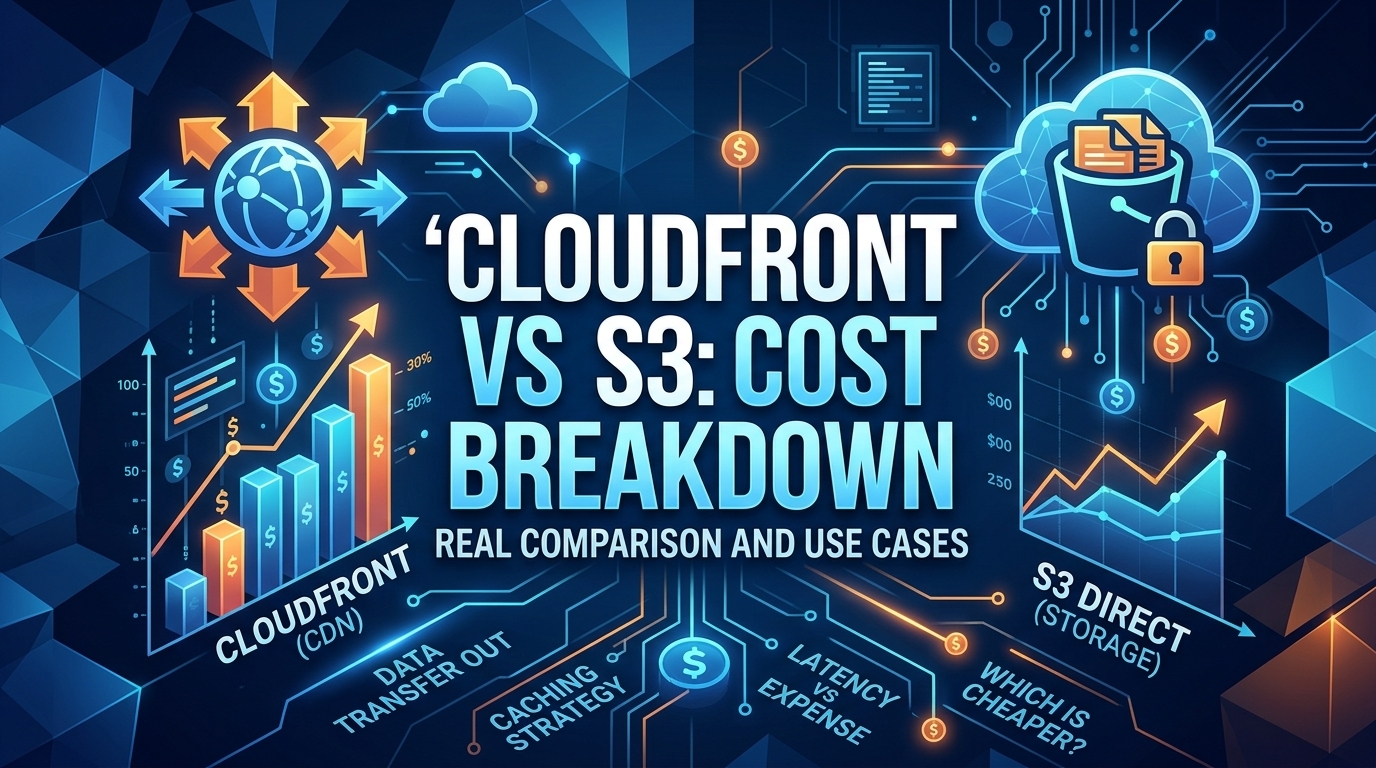
The CloudFront vs S3 decision depends more on object size than on traffic volume. At a 500 KB average response, 100 TB ...
Learn
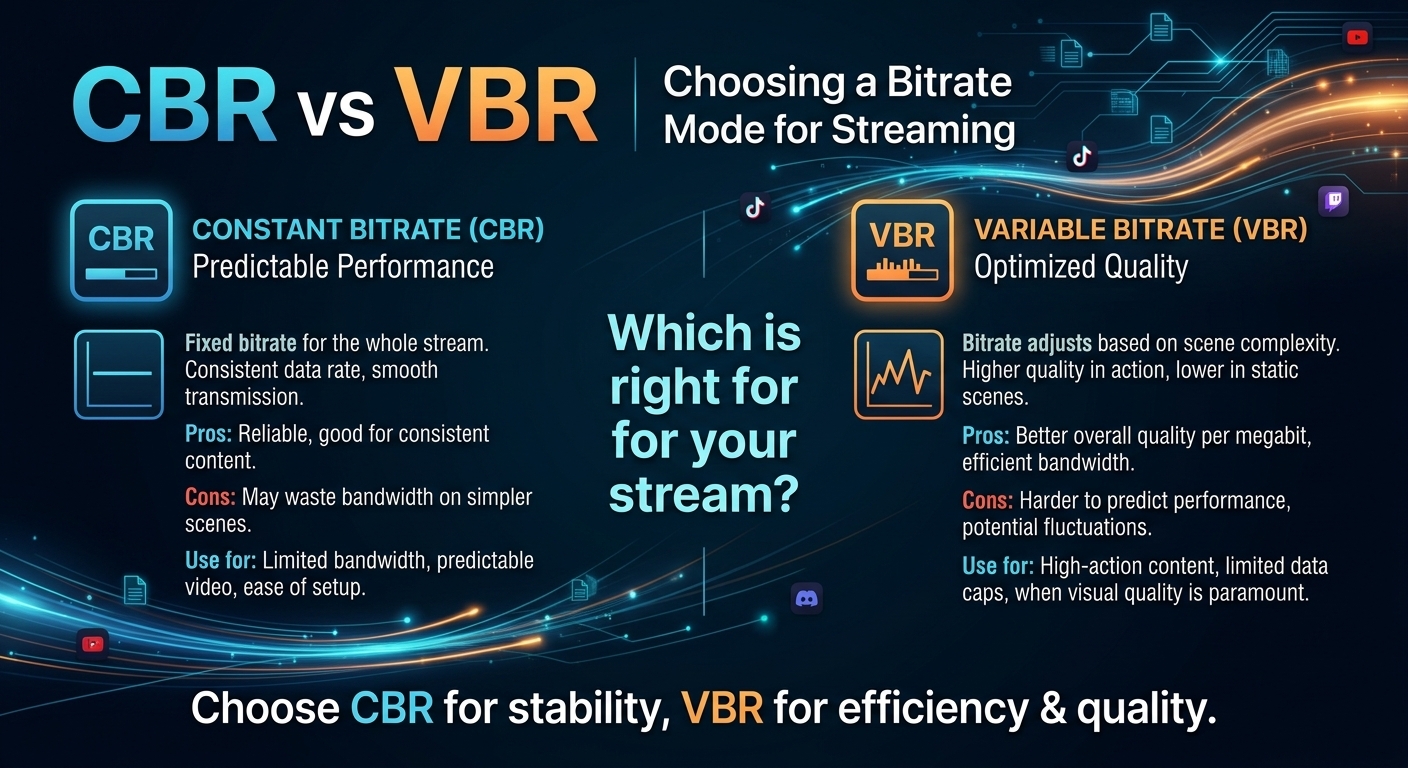
For most on-demand video, capped variable bitrate (VBR) wins the cbr vs vbr decision: it spends bits where the picture ...