
Learn
Lossy vs Lossless Compression: Images, Video and Audio
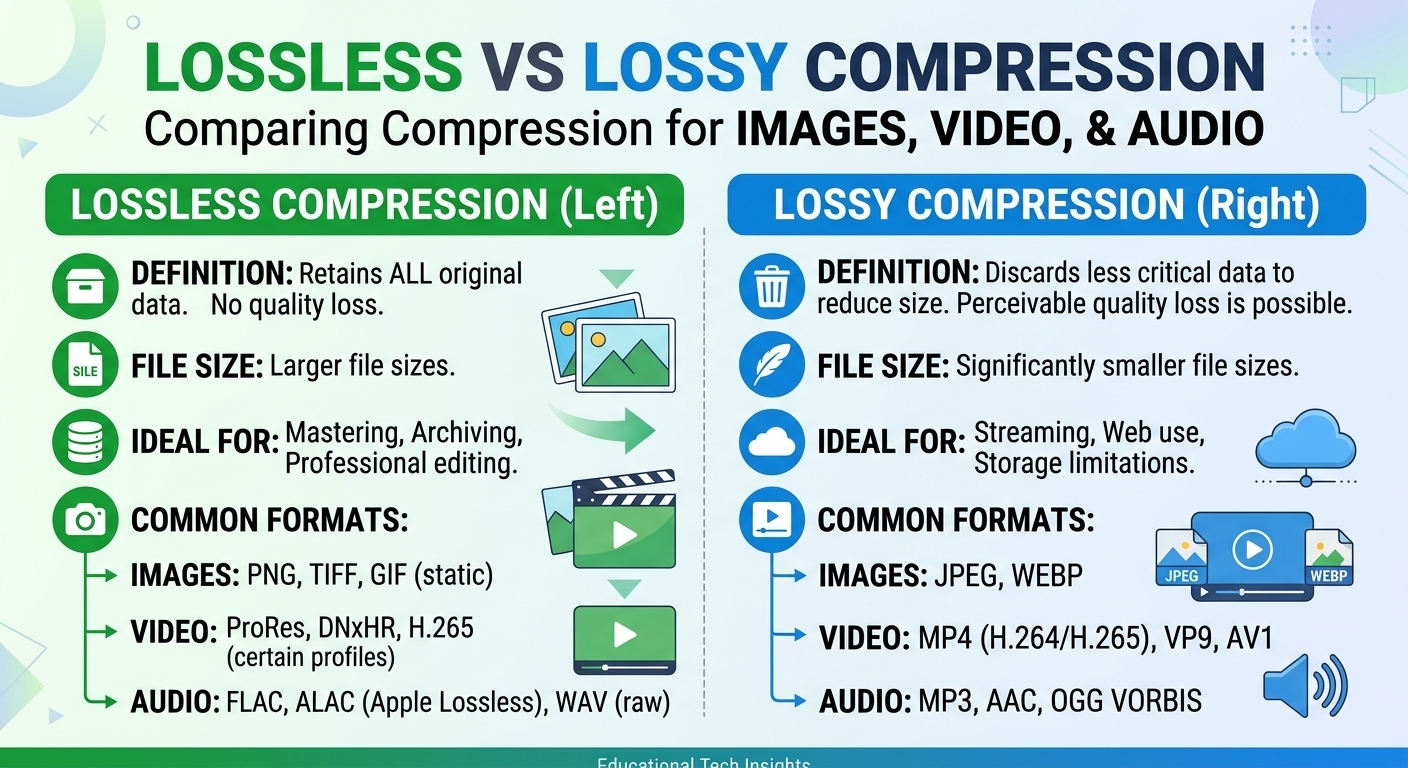
Lossy vs lossless compression comes down to one trade: lossless compression rebuilds every original bit and typically ...
In January 2026, a major European streaming platform lost CDN edge capacity across three availability zones for 11 minutes during a Champions League match. Estimated revenue loss: €2.1 million. The post-incident review revealed a single cause — their CDN failover logic depended entirely on DNS TTL expiration, which meant millions of clients kept hammering dead edges for the full TTL window. Eleven minutes, five nines blown for the quarter. This article gives you the architectural playbook to avoid exactly that outcome: a decision matrix for choosing between DNS-based, application-layer, and hybrid CDN failover; concrete threshold values for health-check tuning; a failure-mode analysis most top-10 results skip entirely; and multi-CDN traffic steering patterns drawn from production systems shipping petabytes per month in 2026.
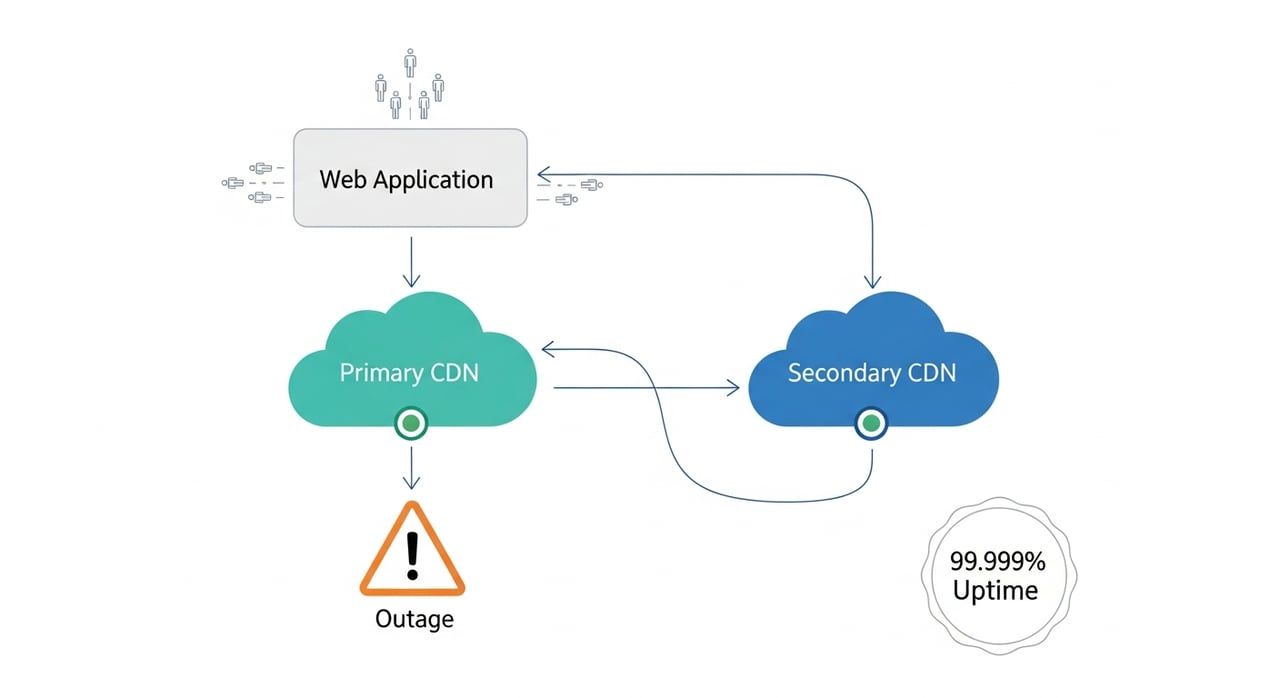
99.999% availability permits 5 minutes and 15 seconds of total downtime per year. That budget includes every partial degradation event — not just full outages. As of Q1 2026, the median single-CDN provider delivers between 99.95% and 99.99% measured availability when you account for regional edge failures, certificate rotation blips, and cache purge storms. The math is clear: a single provider cannot reliably deliver five nines. You need CDN failover that operates faster than your users notice.
The cost of downtime has also shifted. 2026 benchmarks from the e-commerce sector put the per-minute revenue impact for a top-500 retailer at $13,000–$18,000 during peak traffic. For live streaming, the damage is worse — viewer churn during a failover event is nearly permanent. These numbers make multi-CDN failover the cheapest insurance policy in your infrastructure budget.
Not all failover is created equal. The right mechanism depends on your latency budget, client diversity, and operational complexity tolerance. Here is how the three primary patterns compare for production workloads as of 2026:
| Dimension | DNS-Based Failover | Application-Layer (L7) Failover | Hybrid (DNS + L7) |
|---|---|---|---|
| Failover speed | 30s–300s (TTL-bound) | Sub-second to 5s | Sub-second for active sessions; 30s+ for new |
| Client dependency | Resolver TTL honoring (unreliable on mobile) | None — server-side decision | Minimal |
| Operational complexity | Low | High — requires edge logic or smart proxy | High |
| Best for | Static asset delivery, marketing sites | Live streaming, API gateways, transactional flows | Large-scale platforms with mixed workloads |
| Five-nines viable alone? | No | Yes, with sufficient provider diversity | Yes |
The key insight: DNS-based CDN failover is necessary but never sufficient for five nines. Resolver caching, mobile OS TTL overrides (Android 14+ caches aggressively), and EDNS Client Subnet inconsistencies mean DNS alone leaves a failover gap measured in minutes. Application-layer failover — where your edge proxy or traffic-steering service retries against a secondary CDN on a per-request basis — closes that gap.
A production multi-CDN strategy in 2026 typically has three layers:
Weighted DNS routing distributes baseline traffic across two or more CDN providers based on latency, cost, or geographic policy. Health checks run at 10–15 second intervals. When a provider fails consecutive checks (typically 2–3 failures), DNS stops advertising that provider's edges. TTLs of 30–60 seconds are the practical floor — shorter TTLs increase DNS query volume without meaningfully improving failover speed because resolvers and browsers don't always respect them.
A reverse proxy, edge worker, or client-side player logic intercepts failed responses (5xx, timeouts beyond a threshold, TLS handshake failures) and retries against the next CDN in a priority list. This is where sub-second failover happens. For video, the HLS/DASH player's manifest can include redundant segment URLs pointing to different CDN origins. For web, an edge function or service-mesh sidecar handles the retry transparently.
CDN failover is pointless if the origin is the bottleneck. Active-passive or active-active origin pairs, with object storage replication (S3 Cross-Region Replication, GCS multi-region buckets) and database failover (Aurora Global Database, CockroachDB multi-region), ensure the CDN always has a healthy upstream to pull from. As of 2026, best practice is to shield origins behind at least two independent CDN origin-pull paths so that a single CDN's origin connectivity failure doesn't cascade.
Poorly tuned health checks cause more outages than they prevent. Overly aggressive checks trigger false-positive failovers during brief latency spikes. Overly conservative checks let real failures bleed through.
Production-tested thresholds for 2026 workloads:
This is the section most guides skip. Five-nines architecture requires understanding not just how failover works, but how it fails. These are the failure modes we've seen in real production incidents during 2025–2026:
If both your CDN providers peer through the same transit provider or IX in a region, a fiber cut takes both down simultaneously. Mitigation: map your providers' upstream transit diversity before signing contracts. Ask for peering maps. If they won't share them, that tells you something.
During a failover, if the secondary CDN's TLS certificate isn't pre-warmed or the OCSP staple is stale, clients see certificate errors instead of content. In 2026, this still happens with providers that rely on lazy certificate issuance. Mitigation: pre-provision certificates on all CDN providers and monitor certificate expiry as part of your health-check suite.
You fail over to a CDN that has zero cached objects. Every request becomes an origin pull. Your origin, already potentially stressed, gets slammed with a thundering herd. Mitigation: maintain warm caches on secondary CDNs by steering a small percentage of live traffic (5–10%) through them at all times. This also validates the failover path continuously.
Recursive resolvers in certain ISPs and regions cache well beyond your TTL. During a DNS-based failover, 3–8% of users may continue hitting the failed provider for 5–15 minutes. Mitigation: treat DNS failover as coarse-grained and always pair it with L7 retry logic.
Your health checks pass, but real users in a specific ASN or region are experiencing packet loss due to a peering dispute. Synthetic checks from your monitoring locations don't see it. Mitigation: supplement active health checks with real-user measurement (RUM) signals feeding back into your traffic-steering decisions.
The traffic-steering layer has matured significantly. As of Q2 2026, the most capable multi-CDN orchestration platforms ingest RUM data, synthetic probe results, cost signals, and provider capacity APIs to make per-request routing decisions. The shift from static weighted routing to real-time, signal-driven steering is the single biggest operational improvement for multi-CDN failover in the past 18 months.
For teams building this in-house, the pattern is: collect latency and error-rate telemetry per CDN per region per ASN, feed it into a decision engine (often a lightweight service running at your DNS or edge proxy layer), and adjust traffic weights every 30–60 seconds. The decision engine should optimize for a blended objective — typically 70% performance, 20% cost, 10% provider diversity — not just lowest latency.
Cost matters here. CDN egress pricing varies dramatically across providers and commitment tiers. For enterprises running high-volume delivery, a provider like BlazingCDN offers pay-as-you-go pricing from $5 per TB down to $2.50 per TB at volume (as of October 2026), below typical hyperscaler list rates. When your traffic-steering engine factors in cost, having a high-quality, cost-effective provider in your multi-CDN mix directly improves the economics of maintaining warm secondary capacity and running continuous traffic across multiple providers.
A failover path you haven't tested is a failover path that doesn't work. Schedule quarterly CDN failover drills. The procedure:
Teams running this discipline consistently report that their first drill uncovers at least two previously unknown issues — stale certificates, missing origin-pull configurations on the secondary, or monitoring alerts that fire too late.
Combine DNS-layer routing (TTL 30–60s, health checks every 10s) with application-layer retry logic that redirects failed requests to a secondary CDN in under 1 second. Maintain warm caches on all providers by routing 5–10% of live traffic through each. Test quarterly.
DNS-based failover changes which CDN edges resolvers return, but is limited by TTL caching and resolver behavior — typical failover takes 30–300 seconds. Application-layer failover operates per-request at your proxy or edge worker, retrying against an alternate CDN within milliseconds. L7 failover is faster and more reliable but operationally more complex.
5–10% of production traffic is the widely adopted baseline as of 2026. Less than 5% risks cold caches during failover, causing origin overload. More than 15% increases cost without proportional reliability benefit unless your secondary also serves as a performance optimization for specific regions.
Use active-active origin pairs in separate cloud regions with asynchronous data replication. Shield origins behind at least two CDN providers' origin-pull paths. Implement connection-level timeouts at the CDN-to-origin layer (3–5 seconds) so a hung origin doesn't block edge capacity. Monitor origin health independently from CDN edge health.
Quarterly is the minimum cadence for full failover drills. Additionally, run continuous synthetic failover probes — requests that intentionally bypass your primary CDN — to validate that the secondary path is functional at all times. Every infrastructure change (new CDN provider, certificate rotation, origin migration) should trigger an ad-hoc failover test.
Pull your CDN provider's real availability numbers for the past 90 days — not their SLA, their actual measured uptime including partial degradations. If you're above 99.99%, you have budget for quarterly drills. If you're below, you have evidence for a multi-CDN business case. Either way, instrument one metric today: time-from-edge-failure-to-first-successful-response-on-secondary. That single number tells you whether your CDN failover architecture is five-nines-capable or just a diagram on a wiki page. Share what you find — the gap between design and measurement is where the real engineering happens.

Heavy traffic.
Light bill.
The CDN for video and large traffic
Learn
Lossy vs lossless compression comes down to one trade: lossless compression rebuilds every original bit and typically ...
Pricing - Pricing & Costs
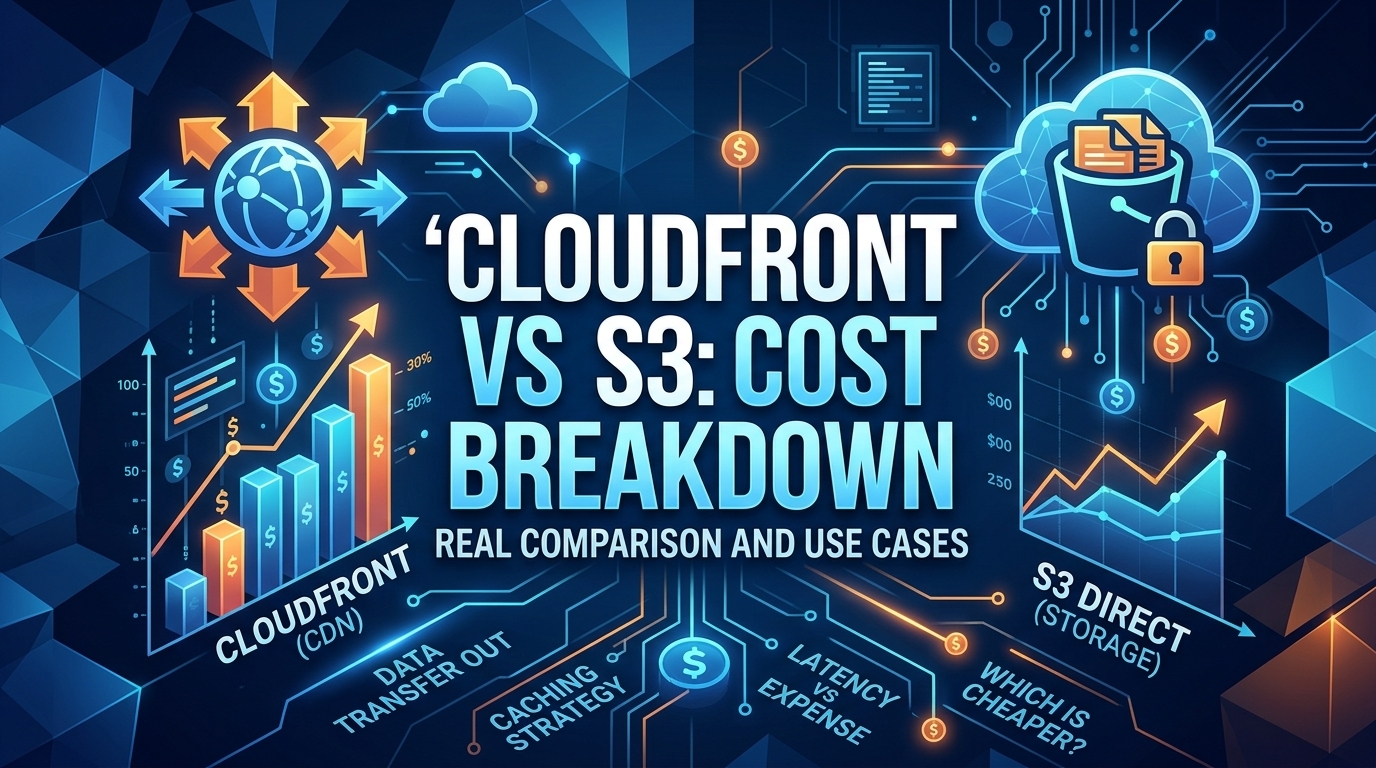
The CloudFront vs S3 decision depends more on object size than on traffic volume. At a 500 KB average response, 100 TB ...
Learn
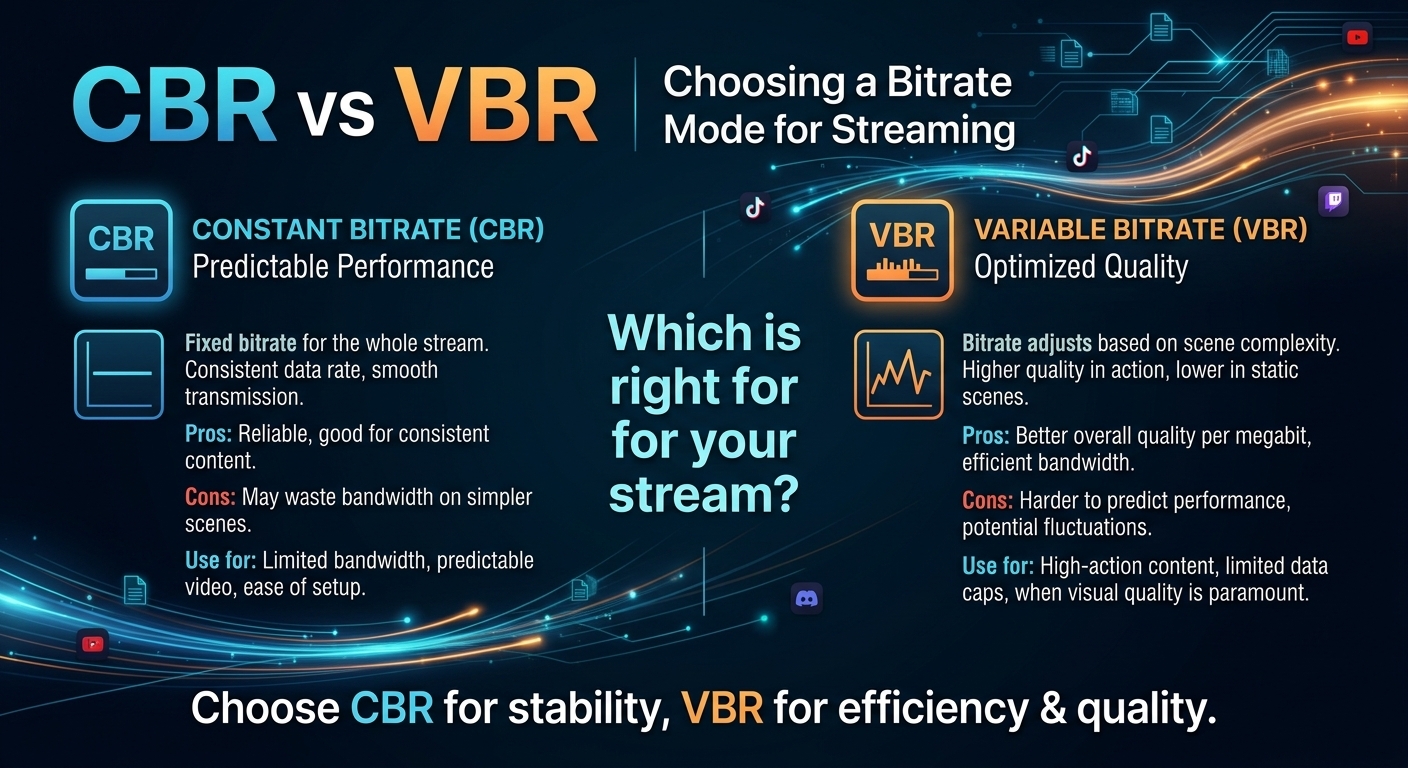
For most on-demand video, capped variable bitrate (VBR) wins the cbr vs vbr decision: it spends bits where the picture ...