
Learn
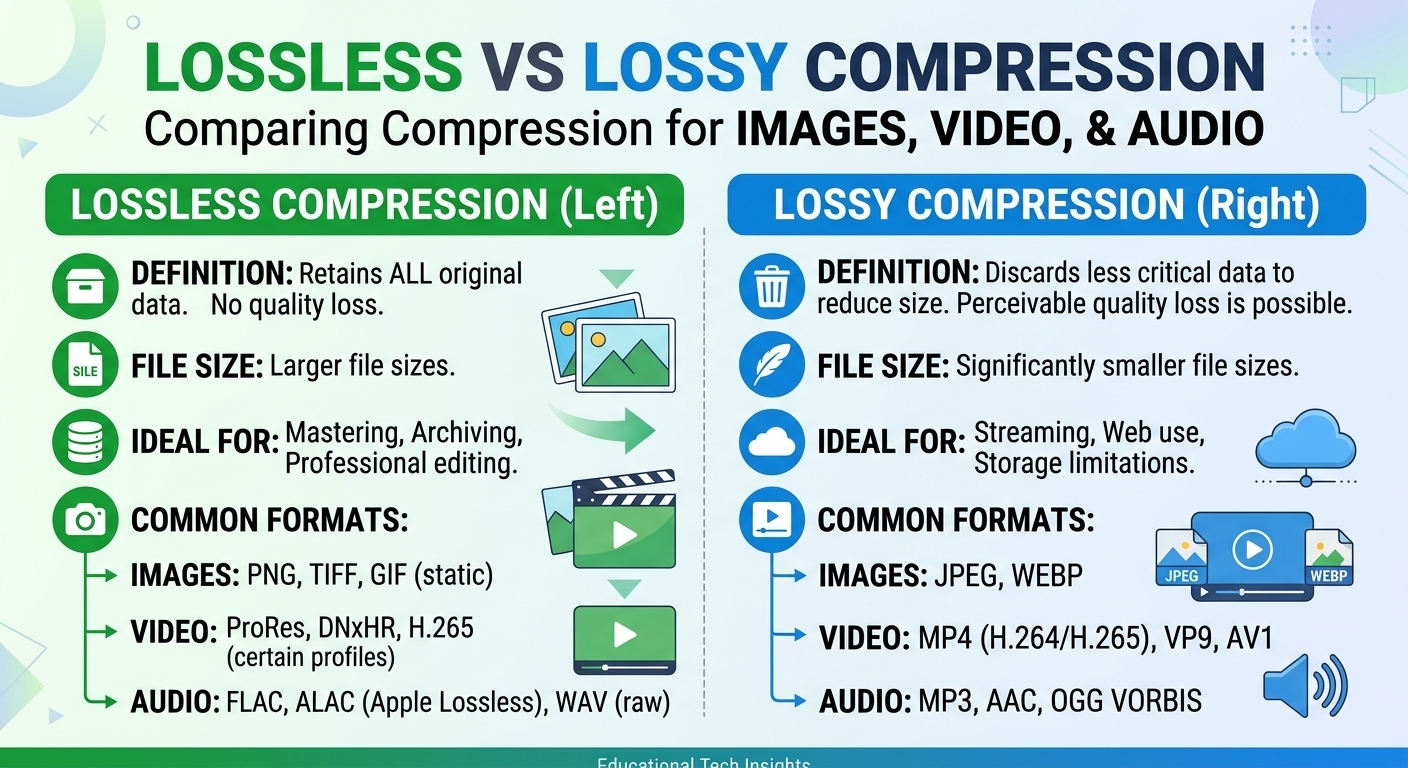
Lossy vs Lossless Compression: Images, Video and Audio
Lossy vs lossless compression comes down to one trade: lossless compression rebuilds every original bit and typically ...
A single rebuffer event during a live Premier League match in February 2026 caused a measurable 14% session-abandonment spike across one major European OTT platform. The root cause was not origin failure or encoder crash. It was a cache-miss cascade at the edge tier during a traffic surge that exceeded pre-warmed capacity by 38%. The incident is a useful reminder: a video CDN is only as good as its worst five seconds under load.
This article gives you a concrete framework for evaluating and tuning video CDN architectures in 2026. You will get an updated cost-model walkthrough, a failure-mode analysis section not covered in the current top-10 results for this keyword, a workload-profile decision matrix, and specific threshold values for rebuffer ratio, segment cache-hit rates, and time-to-first-frame targets that reflect Q1 2026 measurement baselines.
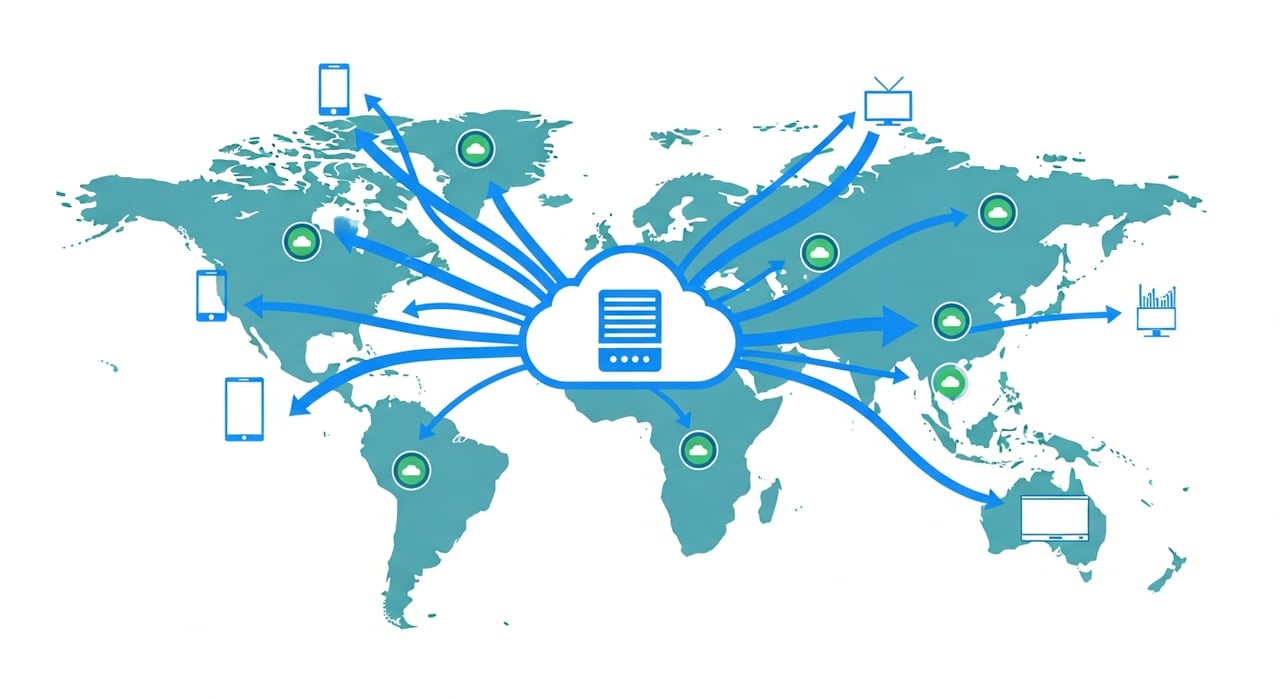
Two shifts redefined how streaming services architect their video delivery CDN layers this year. First, CMAF with ultra-low-latency extensions (CMAF-CTE) reached majority adoption for live workflows, compressing glass-to-glass latency to under 3 seconds on well-tuned stacks. Second, the economics of egress pricing continued to compress. Major cloud providers dropped egress rates by 8–12% between late 2025 and Q1 2026, but multi-CDN orchestration layers simultaneously matured, making it practical to route traffic across providers based on real-time cost and performance signals rather than static DNS weighting.
For video streaming CDN deployments specifically, the consequence is that origin-shield design and mid-tier cache topology now matter more than raw edge node count. A 2026-era live streaming CDN stack that cannot dynamically rebalance across mid-tier nodes during a traffic spike will produce the exact cache-miss cascades that caused the incident described above.
If you are operating a VOD CDN or live streaming CDN at scale and not measuring against current baselines, you are flying blind. As of Q1 2026, competitive thresholds for premium streaming services look like this:
| Metric | VOD Target | Live Target |
|---|---|---|
| Rebuffer ratio | < 0.15% | < 0.30% |
| Time-to-first-frame (TTFF) | ≤ 1.2s (p95) | ≤ 2.0s (p95) |
| Edge segment cache-hit ratio | ≥ 95% | ≥ 88% |
| Bitrate switching frequency | < 2 per session | < 4 per session |
| Glass-to-glass latency | N/A | ≤ 3s (CMAF-CTE) |
These numbers are not aspirational. They reflect what the top quartile of measured streams achieved in early 2026 based on real-user monitoring data aggregated across multiple QoE analytics platforms. If your live streaming CDN rebuffer ratio sits above 0.5%, you are losing 8–12% of concurrent viewers per additional tenth of a percent, based on session-abandonment curves published across the industry over the past 18 months.
The conventional edge-cache model works well for VOD: content is popular, segments are requested repeatedly, hit ratios stay high. Live is harder. Every segment is new, requested once per viewer within a narrow time window, and never requested again. This is where multicast ABR becomes critical for a CDN for video streaming at scale.
Multicast ABR allows the mid-tier to distribute a single inbound segment to multiple edge nodes simultaneously rather than forcing each edge node to independently request the segment from the origin shield. In 2026 deployments using multicast ABR, origin load during peak concurrent live events dropped by 60–70% compared to conventional pull-through models, with corresponding improvements in segment availability at the edge.
Adding edge nodes is the brute-force approach to scaling a video delivery CDN. It works until it does not. The failure mode is well understood: when a popular live segment has not yet propagated to a newly provisioned edge node, the node issues a fill request. If thousands of edge nodes all issue fill requests within the same 2-second segment window, the mid-tier collapses. This is the cache-miss cascade.
The engineering fix in 2026 is hierarchical consistent hashing at the mid-tier, where segment requests are routed to a small set of mid-tier nodes that are pre-warmed for that specific channel or asset. Netflix's Open Connect has operated this way for years. What changed this year is that commercial CDN providers have started exposing mid-tier affinity controls via API, giving operators direct control over which mid-tier nodes serve which content paths.
This section covers the four most common failure modes observed in live video CDN stacks during high-concurrency events in 2025–2026. Each is described with root cause, observable symptoms, and mitigation strategy.
Root cause: rapid horizontal edge scaling without pre-warming. Symptoms: origin shield CPU saturation, segment 404 or 503 errors propagated to players, bitrate downshift across all viewers. Mitigation: implement segment pre-push from mid-tier to edge on channel-start, cap edge scale-out rate to match mid-tier fill capacity.
Root cause: multi-CDN failover triggered by health check, but stale manifest cached at new CDN edge references segment URLs on old CDN. Symptoms: 404 errors on segment fetch, player stall, eventual session restart. Mitigation: use relative segment URLs in manifests, set manifest TTL below segment duration, validate manifest freshness in the player layer before rendering.
Root cause: connection reuse failure during rapid viewer influx (common during live event kickoff). Symptoms: TTFF spikes to 5s+, player timeout errors, edge node CPU pinned on TLS negotiation. Mitigation: enable 0-RTT where supported, ensure TLS session ticket rotation is not too aggressive, pre-provision keep-alive capacity proportional to expected concurrency.
Root cause: single ABR ladder configured globally, but viewers in bandwidth-constrained regions (parts of Southeast Asia, Sub-Saharan Africa) oscillate between lowest and second-lowest rendition. Symptoms: high bitrate switching frequency, degraded viewer-experience scores in specific geos. Mitigation: regionalized ABR ladders with a floor rendition engineered for observed p10 throughput in each region.
Egress cost remains the single largest line item for any video streaming CDN deployment. As of Q1 2026, pricing across major providers sits in the following ranges for committed-volume contracts:
| Monthly Volume | Major Cloud CDN Range | BlazingCDN |
|---|---|---|
| Up to 25 TB | $0.05–$0.08/GB | $115/mo ($4.60/TB) |
| Up to 100 TB | $0.04–$0.06/GB | $415/mo ($4.15/TB) |
| Up to 500 TB | $0.03–$0.05/GB | $1,815/mo ($3.63/TB) |
| Up to 1 PB | $0.02–$0.04/GB | $0.0025/GB ($2,500/mo) |
| Up to 2 PB | $0.015–$0.03/GB | From $2.50/TB, quoted individually |
At 500 TB/month, a mid-size streaming service paying $0.04/GB to a hyperscaler CDN spends roughly $20,000/month on egress alone. The same traffic through BlazingCDN's media delivery infrastructure costs $1,815/month (as of October 2026). That is about a 91% reduction in CDN spend ($1,815 versus roughly $20,000) for equivalent delivery capacity. BlazingCDN runs NVMe SSD servers with Anycast routing and built-in failover, and scales under demand spikes.
Not every video streaming CDN is the right fit for every workload. The matrix below maps workload profiles to the CDN capabilities that matter most for each.
| Workload Profile | Critical CDN Capability | Common Pitfall |
|---|---|---|
| High-concurrency live sports | Multicast ABR, mid-tier pre-warming, elastic edge capacity | Under-provisioned mid-tier causing cache-miss cascade |
| Long-tail VOD catalog (100K+ titles) | Large edge storage, intelligent eviction policies, origin shield efficiency | Low cache-hit ratio on tail content, excessive origin egress |
| UGC live (creator/social platforms) | Fast channel provisioning, per-stream isolation, abuse mitigation | Noisy-neighbor effects when one viral stream starves others |
| Global SVOD with regionalized licensing | Geo-fencing at the edge, token authentication, regionalized ABR ladders | Licensing violation from geo-bypass, VPN tunneling through edge |
| FAST/ad-supported linear channels | Server-side ad insertion compatibility, low-latency manifest manipulation | Ad insertion adding 200–500ms to TTFF, manifest bloat |
Use this matrix as a starting point for vendor evaluation. The best CDN for live video streaming at scale is not the best CDN for a long-tail VOD catalog, and evaluating both against the same scorecard produces bad procurement decisions.
A video CDN caches encoded segments at edge nodes geographically close to viewers, reducing round-trip time for segment fetch and lowering rebuffer probability. The impact is measurable: well-configured CDN deployments in 2026 achieve sub-0.15% rebuffer ratios for VOD and sub-0.3% for live, directly correlating with higher viewer retention and longer average session duration.
For VOD, CDN primarily affects TTFF and mid-session rebuffer rate by keeping segments within a few milliseconds of the player. For live, CDN architecture determines glass-to-glass latency. CMAF-CTE deployments in 2026 achieve sub-3-second latency when the CDN supports chunked transfer encoding and avoids full-segment caching delays at the edge.
It depends on the concurrency profile. For events exceeding 1M concurrent viewers, you need multicast ABR support, hierarchical mid-tier caching, and elastic edge capacity. For cost-sensitive deployments below that threshold, providers like BlazingCDN offer pay-as-you-go egress rates starting at $5 per TB and falling to $2.50 per TB at volume (as of October 2026), which changes the economics of live streaming.
Three levers: maximize edge cache-hit ratio (target 95%+ for VOD, 88%+ for live), tune ABR ladders to regional bandwidth profiles rather than using a global ladder, and implement segment pre-push for live channels to eliminate cold-cache edge nodes during traffic spikes. Monitoring rebuffer ratio and bitrate switching frequency at the player level gives you the feedback loop to iterate.
Hyperscaler CDN pricing in 2026 ranges from $0.015/GB to $0.08/GB depending on volume and commitment. Specialized providers like BlazingCDN start at $5 per TB and scale down to $2.50 per TB at volume (as of October 2026). For a streaming service delivering 500 TB/month, the difference between $20,000 at $0.04/GB and $1,815 on BlazingCDN is $18,185/month, or $218,220/year.
Multi-CDN is standard practice for any service with global reach or SLA requirements above 99.95%. The operational cost of multi-CDN orchestration (switching logic, manifest rewriting, per-CDN QoE telemetry) is non-trivial but pays for itself in reduced single-provider outage exposure. As of 2026, most multi-CDN orchestrators support real-time cost-and-quality weighted routing, making it practical to blend a cost-efficient provider like BlazingCDN with a hyperscaler for geographic coverage gaps.
Pick one live channel or one high-traffic VOD title. Instrument it with per-segment cache-hit logging at the edge, mid-tier, and origin shield. Measure the actual cache-hit ratio at each tier for 72 hours. Compare what you find against the baselines in the table above. If your edge hit ratio for live falls below 88%, your mid-tier topology is the first place to look. If your VOD TTFF exceeds 1.2 seconds at p95, check whether your TLS session resumption is actually working or silently falling back to full handshakes. The data will tell you exactly where your video CDN stack is leaking performance and money.

Heavy traffic.
Light bill.
The CDN for video and large traffic
Learn
Lossy vs lossless compression comes down to one trade: lossless compression rebuilds every original bit and typically ...
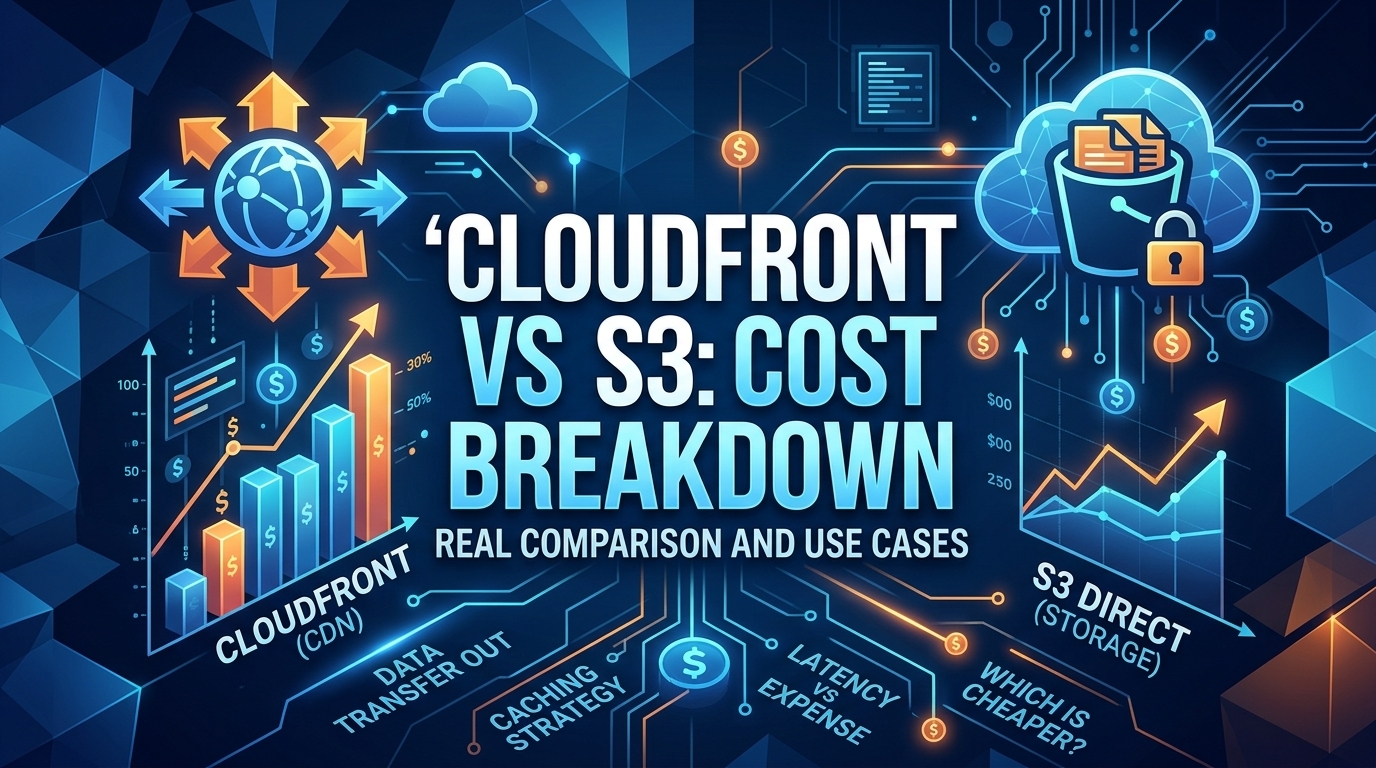
Pricing - Pricing & Costs
The CloudFront vs S3 decision depends more on object size than on traffic volume. At a 500 KB average response, 100 TB ...
Learn
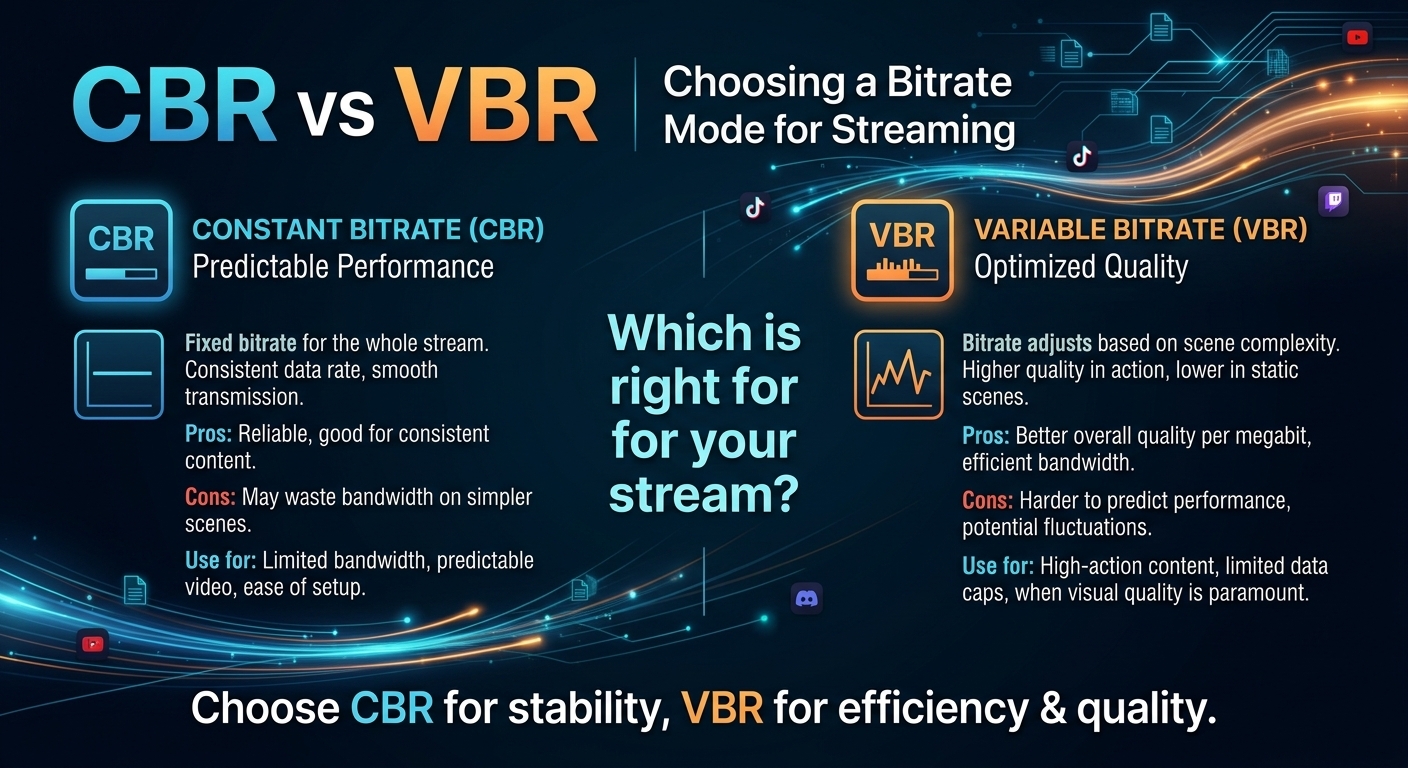
For most on-demand video, capped variable bitrate (VBR) wins the cbr vs vbr decision: it spends bits where the picture ...