
Learn
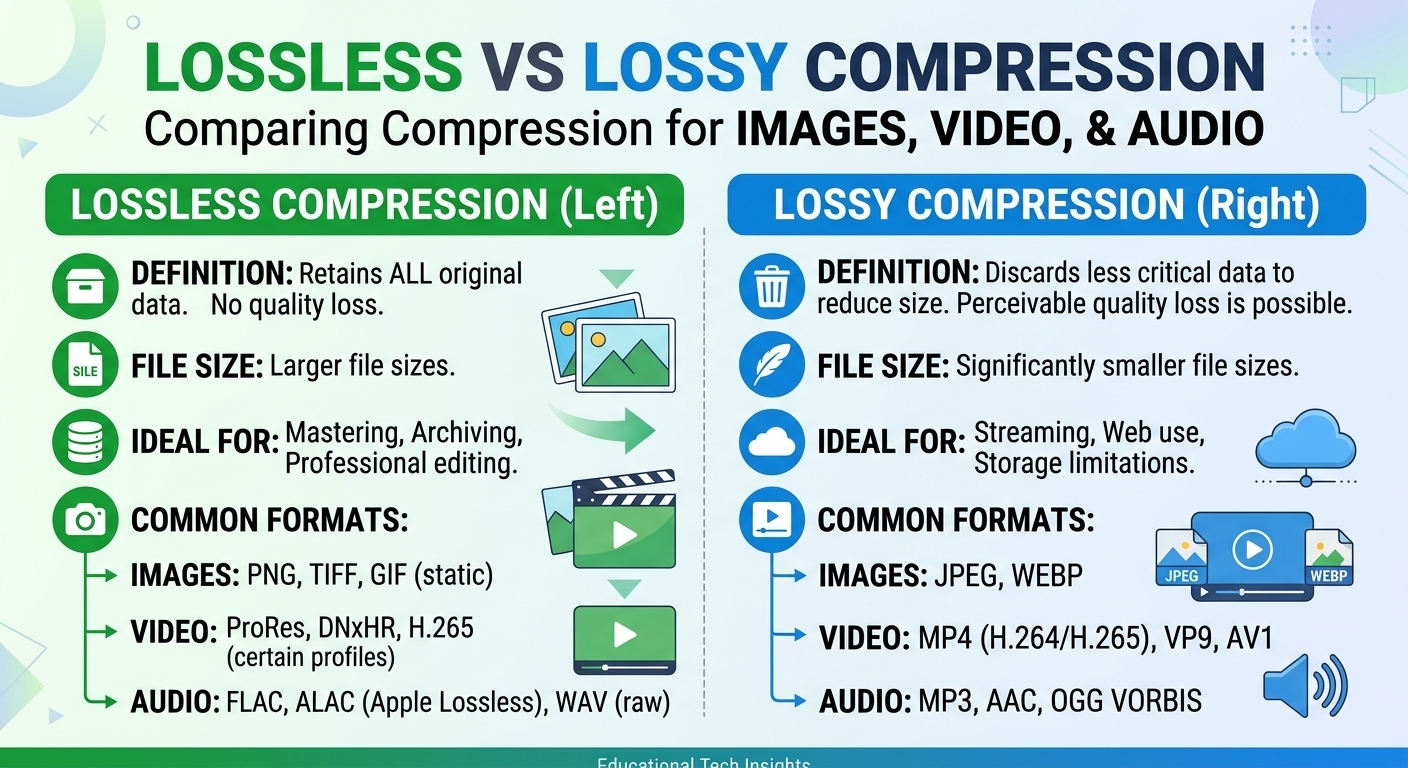
Lossy vs Lossless Compression: Images, Video and Audio
Lossy vs lossless compression comes down to one trade: lossless compression rebuilds every original bit and typically ...

Most teams searching for a BunnyCDN alternative are not chasing a lower headline per-GB rate. They are chasing predictability. Bunny.net's list price still starts around $0.005/GB in North America and Europe, but the Volume tier's regional multipliers push South America and Africa toward $0.03/GB and Oceania near $0.02/GB. A workload with 15% traffic outside NA/EU can land 40–70% above the number you modelled from the front page. That is the gap this comparison closes: current published rates as of 2026, the zone math that actually drives your invoice, a workload decision matrix, and an honest list of cases where Bunny.net remains the right answer.

Bunny.net is a genuinely good product. Perma-Cache, Bunny Stream, Edge Scripting, DNS, and Magic Containers make it one of the broadest platforms in the value tier, and the control panel is still the fastest way to get a pull zone live in under five minutes. The reasons engineers leave are narrower than "it's expensive."
All figures below are list prices for standard HTTP delivery, excluding negotiated enterprise discounts. Regional multipliers apply to every provider here; the NA/EU column is the honest baseline, not the whole story.
| Provider | NA/EU entry price | Cost at ~500 TB/mo | Notable trade-off |
|---|---|---|---|
| Bunny.net | $0.005/GB (Volume), $0.01/GB (Standard) | ~$2,500 blended, higher with LATAM/APAC mix | Zone multipliers up to 6× baseline; no standard committed contract |
| BlazingCDN | $5/TB ($0.005/GB), $25 monthly minimum | $1,815/mo for 500 TB (as of October 2026) | Smaller feature surface than Bunny's platform suite |
| CDN77 | Custom quote, typically ~$0.004–0.01/GB committed | Negotiated, commonly $1,800–3,000 | No self-serve public price list; sales cycle required |
| KeyCDN | $0.04/GB first 10 TB, dropping to $0.01–0.02/GB | Roughly $6,000+ at list | Clean API and instant purge, but priced well above volume tier |
| Gcore | Free tier, then from ~$0.011/GB | Committed plans, generally $3,000+ | Strong CIS/Asia reach; bundled cloud pricing complicates comparison |
| Fastly | $0.12/GB NA/EU on-demand | Enterprise contract, order of magnitude higher | Compute@Edge and VCL depth justify the premium only if you use them |
| Amazon CloudFront | $0.085/GB NA after 1 TB free | $20,000+ at list, less with private pricing | Deep AWS integration; request fees and regional tiers add complexity |
List price per GB is the wrong unit. The number that predicts your invoice is blended cost per delivered TB, which is a function of four things: geographic distribution of requests, cache hit ratio at the edge, origin egress you still pay to your cloud provider, and request-count fees where they exist.
Work it in this order. First, pull 30 days of access logs and bucket bytes by continent. Second, apply each provider's regional multiplier to that distribution rather than to the NA/EU headline. Third, model the miss traffic: at 92% CHR versus 97% CHR on 500 TB delivered, origin egress differs by 25 TB, which at typical cloud rates is $2,000–2,500 per month — often larger than the delta between two CDN vendors. Fourth, add request fees. Providers that bill per 10,000 requests punish small-object APIs far more than large-file delivery.
Teams that run this exercise usually discover the same thing: for large-object workloads (video segments, game patches, installers, OTA firmware), flat committed tiers beat per-GB pay-as-you-go once monthly volume passes roughly 100 TB. For small-object, request-heavy workloads, per-GB pricing with no request fee stays cheaper much longer.
| Workload profile | Primary constraint | Strongest fit |
|---|---|---|
| Under 10 TB/mo, NA/EU only, small objects | Absolute floor cost, self-serve | Bunny.net Volume tier |
| 100 TB–2 PB/mo large-file delivery, spiky release days | Predictable line item, burst headroom | BlazingCDN or CDN77 committed tiers |
| VOD and live streaming with manifest manipulation | Edge logic, low rebuffer | Fastly, or Bunny Stream for packaged simplicity |
| Heavy CIS, Middle East or Southeast Asia audience | Regional peering quality | Gcore, Medianova for Turkey/MENA |
| Origin already in AWS, tight IAM and S3 coupling | Integration and egress waivers | CloudFront, despite the price |
| Reseller or white-label delivery under your own brand | Margin, branded control plane | BlazingCDN white-label, KeyCDN API-first setup |
BlazingCDN sits in the same league as Bunny.net, CDN77 and Gcore: high-volume delivery where cost per TB is the deciding metric, not edge compute runtimes. Pricing is pay-as-you-go with progressive tiers (as of October 2026): $415 for 100 TB, $1,815 for 500 TB and $3,315 for 1,000 TB, falling from $5 to $2.50 per TB at volume. NVMe SSD edge storage keeps large-object hit latency low on cold-ish content, and onboarding for a standard pull configuration typically completes within an hour.
The practical argument for enterprises and large corporate clients is cost per TB: 100 TB is $415 on BlazingCDN against about $6,965 on CloudFront pay-as-you-go, with Anycast routing and built-in failover included. If you are modelling a migration, the fastest path is to compare your own blended cost per TB against BlazingCDN's published volume tiers before you open a sales conversation with anyone. Where Bunny.net wins is breadth: Stream, Edge Scripting, DNS and Magic Containers under one account is a real advantage if you want a platform rather than a delivery layer.
At sustained volume above 100 TB per month, flat committed tiers generally beat per-GB pay-as-you-go. BlazingCDN publishes $1,815/month for 500 TB and $5,815/month for 2,000 TB (as of October 2026), which works out to about $3.63/TB and $2.91/TB respectively. CDN77 lands in similar territory but requires a quote rather than a published price list.
Only on the Volume tier and only in North America and Europe. Regional multipliers apply to every other zone, with South America and Africa several times the baseline. Model your real geographic distribution before treating $0.005/GB as your effective rate.
BlazingCDN offers a white-label control plane for resellers and platform vendors, and KeyCDN's API-first design makes wrapping it in your own UI straightforward. Bunny.net supports custom hostnames and multi-tenant pull zones but does not present a fully rebranded portal by default.
Not inherently, but a cache hit ratio regression will. Field LCP is dominated by TTFB on cache misses, so the risk is warming a cold edge population at cutover rather than the CDN change itself. Pre-warm popular objects and run parallel traffic for two weeks before full cutover.
You cannot, reliably. Synthetic single-region probes measure the probe network more than the CDN. Split real production traffic at 5–10% with weighted DNS and compare p75 and p95 TTFB segmented by region and object size class.
When your origin, auth, and observability are already deeply coupled to AWS, and when negotiated private pricing plus egress waivers close most of the gap. If your workload is straightforward large-object HTTP delivery from a neutral origin, that integration premium buys you very little.
Pull last month's access logs, bucket bytes by continent, and calculate your true blended cost per TB against three price lists rather than one headline rate. Then split 5% of production traffic to a second provider behind weighted DNS and compare p95 TTFB by region for fourteen days. If the delta is under 15 ms and the cost per TB drops by a third, the migration justifies itself on the spreadsheet alone. If you have already run this exercise, the interesting question is what your cache hit ratio did in the first 72 hours after cutover — that number, not the per-GB rate, is where most migrations quietly lose their savings.

Heavy traffic.
Light bill.
The CDN for video and large traffic
Learn
Lossy vs lossless compression comes down to one trade: lossless compression rebuilds every original bit and typically ...
Pricing - Pricing & Costs
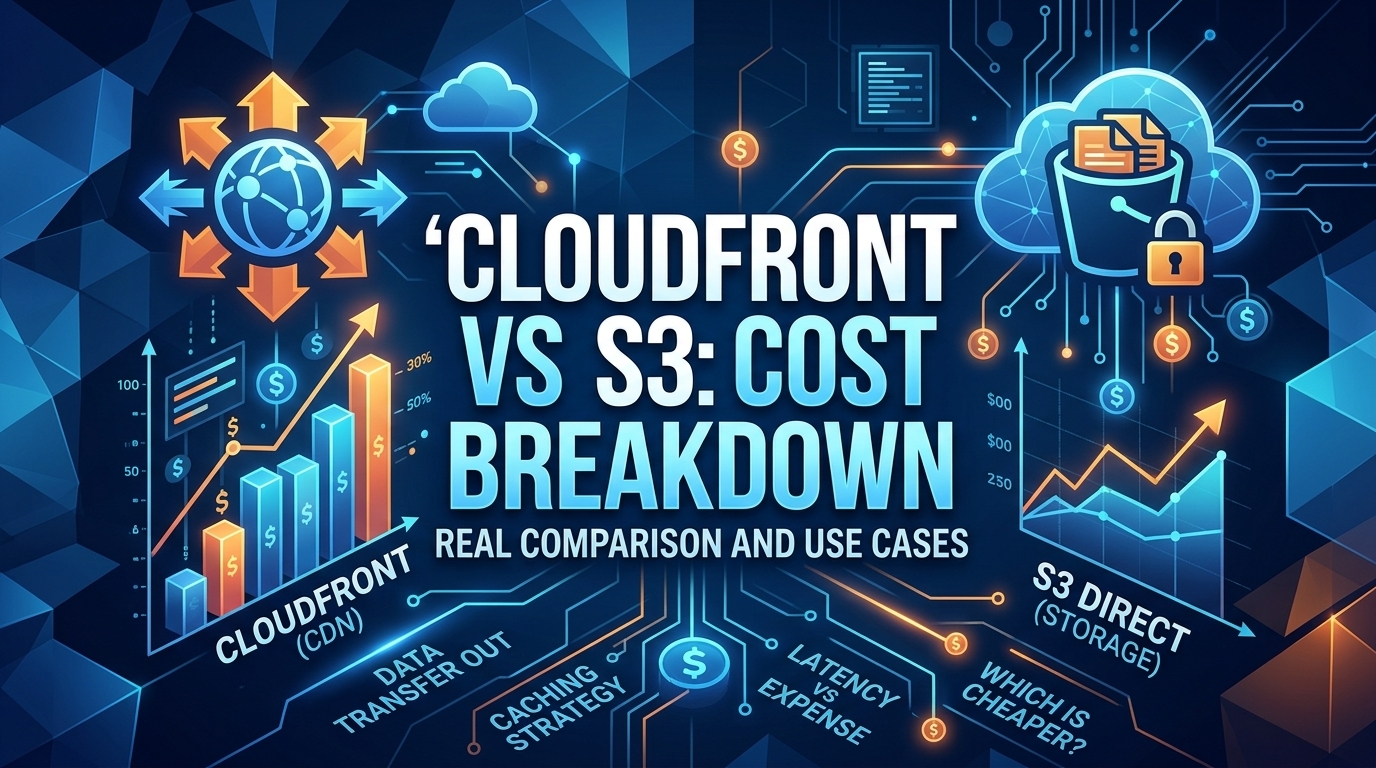
The CloudFront vs S3 decision depends more on object size than on traffic volume. At a 500 KB average response, 100 TB ...
Learn
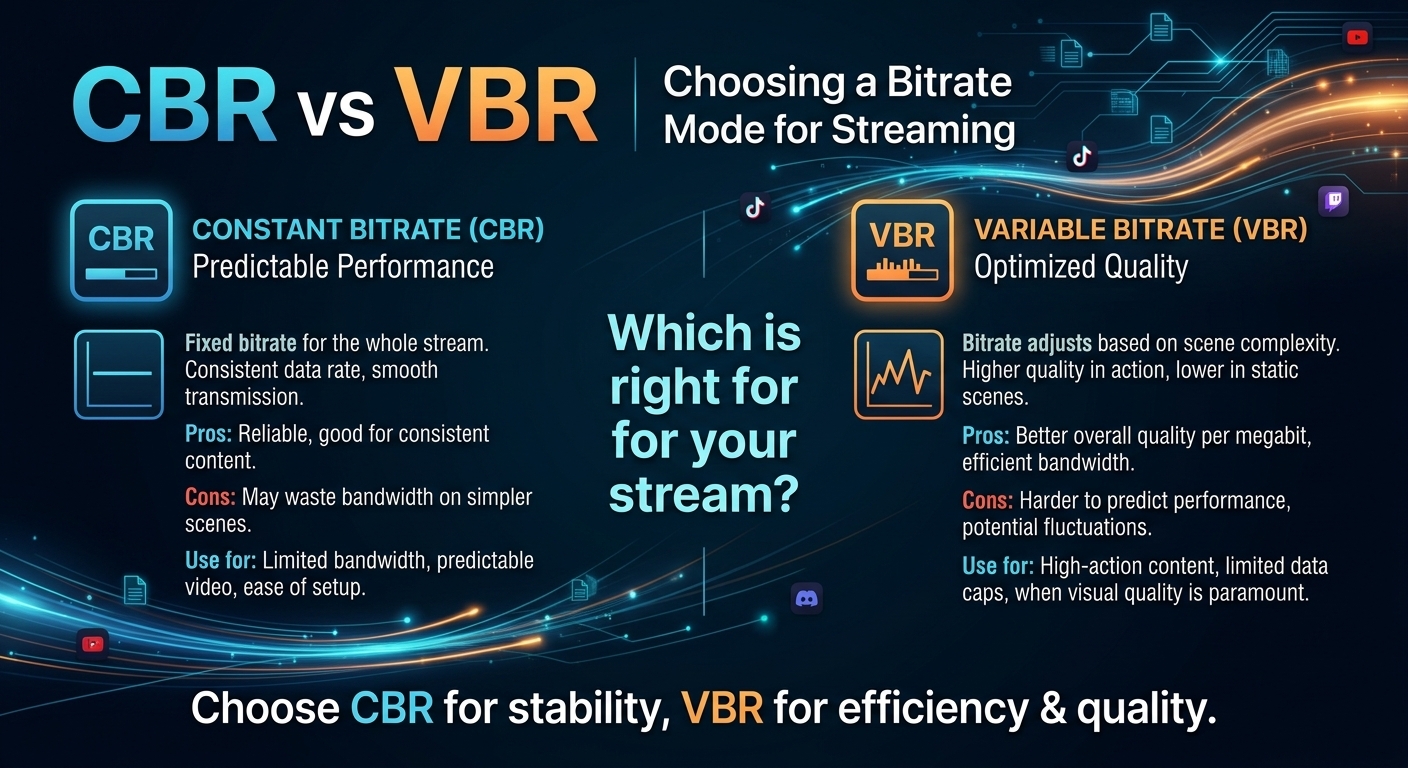
For most on-demand video, capped variable bitrate (VBR) wins the cbr vs vbr decision: it spends bits where the picture ...