
Learn
Lossy vs Lossless Compression: Images, Video and Audio
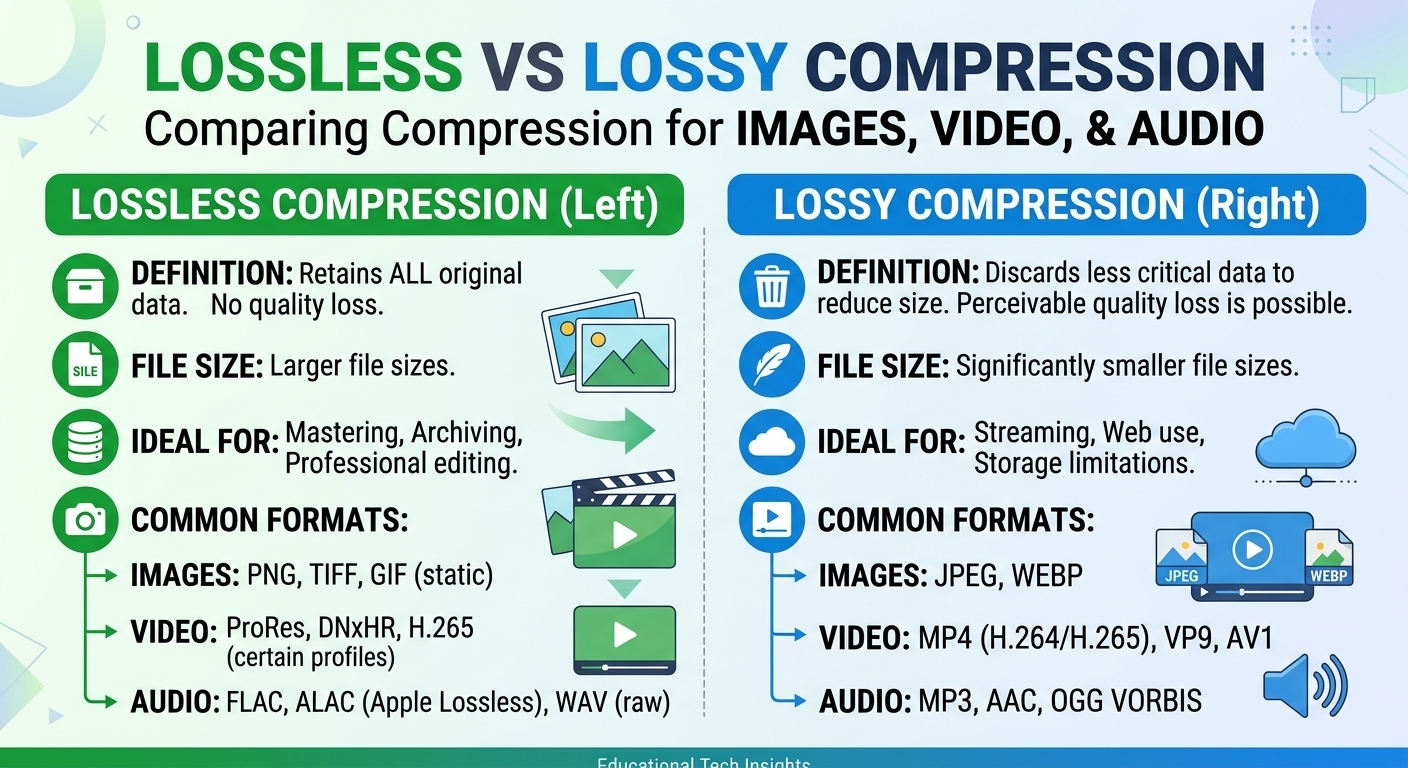
Lossy vs lossless compression comes down to one trade: lossless compression rebuilds every original bit and typically ...
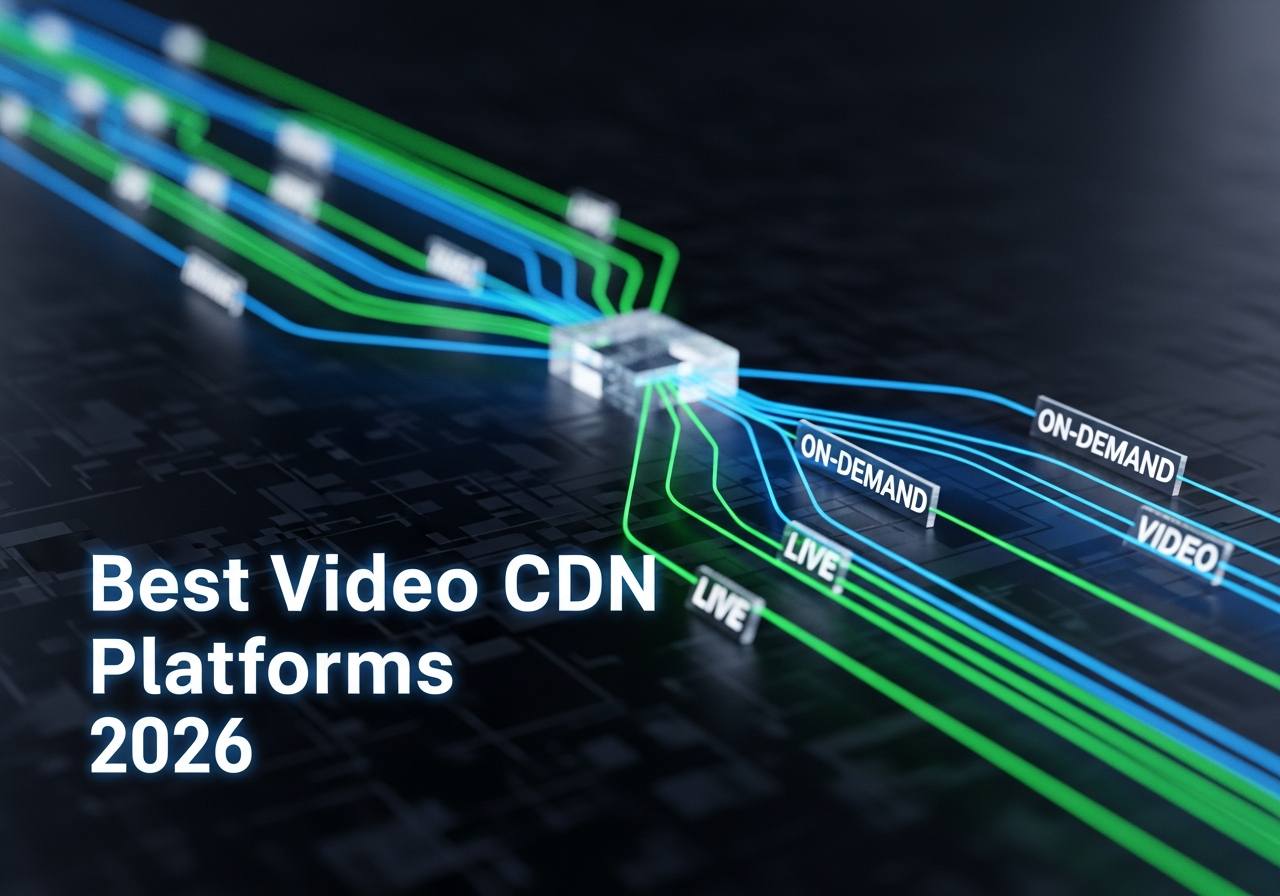
If you are choosing the best video CDN platforms for a new OTT build, migrating an existing live and on-demand streaming CDN, or defending a renewal to procurement, the actual question is usually narrower than "which CDN is best." It is which platform fits your traffic shape, latency target, player stack, contract model, and operational tolerance at the scale you already have or expect within 12 months.
This comparison covers five vendors that appear repeatedly in enterprise video CDN evaluations in 2026: BlazingCDN, Amazon CloudFront, Akamai, Cloudflare, and Fastly. These are included because they show up most often in RFPs for global video delivery, low-latency live events, hybrid live plus VOD libraries, and multi-CDN architectures. This article focuses on delivery economics, cache behavior, purge and control-plane characteristics, protocol support relevant to live video, enterprise contracting shape, and operational fit. It does not evaluate transcoding, DRM packaging, player analytics, ad decisioning, or full online video platform features except where they materially affect CDN selection.
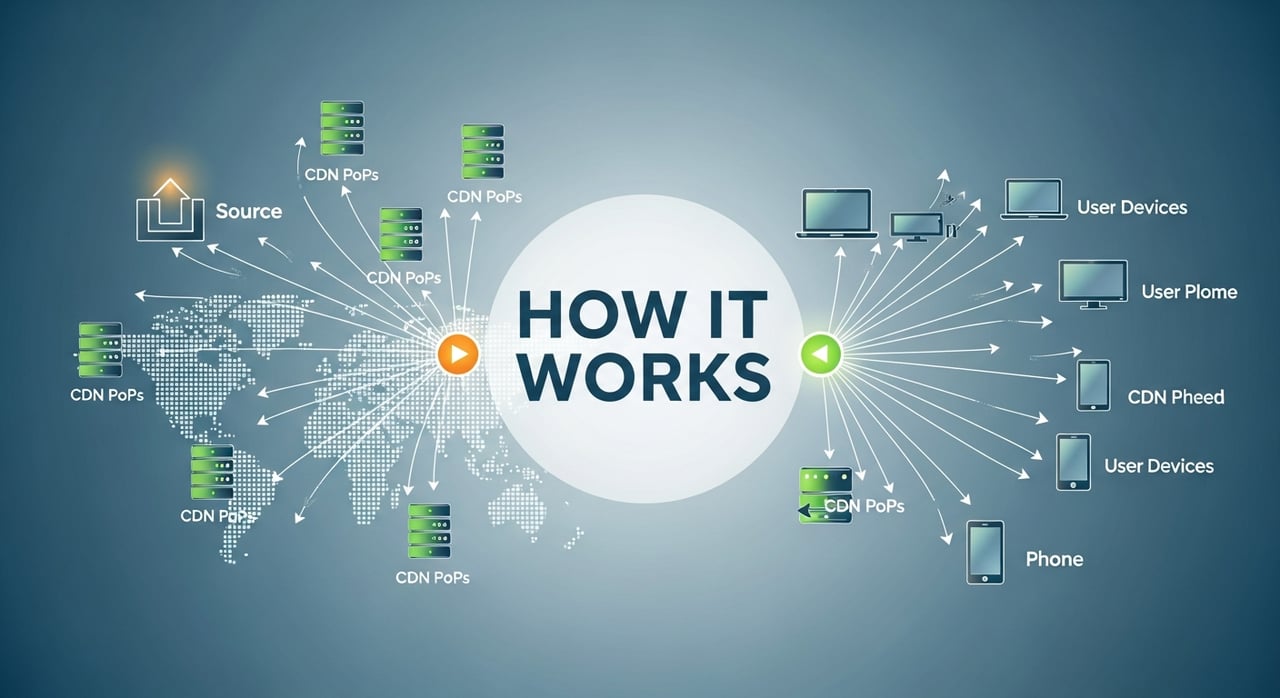
The criteria here are intentionally measurable. For architects comparing a video streaming CDN or building an RFP scorecard, vague labels are not useful. The comparison uses these dimensions:
If you want a weighted model, a reasonable default for most live and VOD buyers is: 30% delivery cost and commit flexibility, 20% live latency and burst handling, 15% purge and cache control, 15% security and tokenization features, 10% observability and logs, and 10% SLA and support terms. If your workload is mostly premium VOD with predictable traffic, move more weight to egress TCO and less to low-latency live. If you run sports or high-profile events, increase the weight on burst absorption, LL-HLS behavior, origin shielding, and control-plane reliability.
Sources include public vendor pricing and documentation as of 2026, vendor engineering blogs and SLA pages, and public internet performance datasets such as Cloudflare Radar and APNIC where relevant to network reach and routing context. Some dimensions, especially exact p95 video startup delay by region and sustained cache hit ratio under mixed live and VOD traffic, do not have apples-to-apples public data across all vendors. Where no public data exists, this article says so rather than filling the gap with synthetic numbers. Disclosure: BlazingCDN is the publisher's platform and is evaluated here under the same criteria and with the same public-data constraints as the other vendors.
BlazingCDN is the cost-optimized option in this group for teams that need enterprise-grade video delivery without accepting hyperscaler egress pricing. It is best evaluated as a video CDN and general content delivery platform rather than a full edge-compute ecosystem. That distinction matters if your shortlist includes vendors whose commercial model bundles premium compute and security services into the CDN relationship.
For live and on-demand streaming CDN use cases, BlazingCDN is straightforward: deliver large video objects and chunked manifests efficiently, keep cache behavior configurable, and keep the price per TB materially below most enterprise alternatives. The practical architectural question is whether your streaming stack needs advanced edge application logic or whether predictable cache delivery, stable uptime, and flexible configuration are the bigger drivers.
A detail procurement teams sometimes miss: BlazingCDN pricing is published in a way that maps cleanly to commit planning. As of October 2026, pricing starts at $5 per TB and scales down to $2.50 per TB at volume, with a $25 monthly minimum and no request fees. That is unusually transparent in a market where many video CDN deals are still quote-only.
BlazingCDN wins when egress economics dominate the decision, especially for large VOD libraries, mixed software-download plus video workloads, regional broadcasters, and enterprises that need a live and on-demand streaming CDN without paying for a broader edge platform they will not use. It is also attractive when procurement wants stable, legible pricing and engineering wants fewer surprises from commit tiers and add-on charges.
For organizations comparing the best video CDN platforms on TCO first and feature depth second, BlazingCDN is often the shortlist baseline. If your team needs to justify why a premium platform costs materially more, this is the reference point. Publicly disclosed pricing is here: BlazingCDN pricing.
BlazingCDN is not the natural first choice if your architecture depends on a mature proprietary edge runtime, broad integrated cloud services, or a large ecosystem of existing IaC modules and enterprise governance patterns tied to a hyperscaler. Teams already deep in CloudFront plus MediaPackage, or Fastly VCL and Compute, may find migration effort larger than the egress savings alone justify.
There is also less public benchmark material available than for the largest incumbents. That is not the same as poor performance, but for highly formal procurement exercises, the evidence pack may rely more on your own proof-of-concept than on third-party analyst shorthand.
As of October 2026: $415 per month for 100 TB, $1,815 for 500 TB, and $3,315 for 1,000 TB, with the per-TB rate falling as volume grows. For buyers whose first sorting dimension is egress cost per TB, this is one of the clearest price advantages in the best video CDN platforms set.
CloudFront is the default choice for teams already standardized on AWS media and application services. For live streaming CDN and VOD CDN deployments that sit next to S3, MediaPackage, MediaTailor, Lambda, Shield, and CloudWatch, the integration value is real and often stronger than any single delivery metric.
CloudFront fits best when the CDN is one layer in a larger AWS architecture. Signed URLs and cookies, origin access controls, field-level encryption options, origin shielding patterns, and established IAM and logging workflows all reduce integration friction. It is less compelling when evaluated as pure video egress alone.
An engineering fact worth noting: CloudFront's pricing and feature surface are broad enough that many teams underestimate the operational cost of choosing multiple adjacent AWS services to make the final video platform behave the way product expects. The CDN itself may not be the expensive line item in isolation; the surrounding stack often is.
CloudFront wins for AWS-centric organizations that care about governance consistency, account-level controls, and tight coupling with existing media workflows. It is especially strong for enterprises with compliance review tied to AWS-native controls, for teams already using MediaPackage or S3 as origin, and for organizations that want one commercial relationship across storage, delivery, logs, and supporting security services.
Cost is the obvious issue. Public list pricing is rarely what large buyers actually pay, but CloudFront still tends to be expensive relative to cost-focused video delivery vendors. The second issue is complexity: if all you need is efficient global HLS and DASH delivery, the surrounding AWS machinery can become operational drag. For some teams, CloudFront is the best CDN for video on demand streaming only because the rest of their estate makes alternatives harder to justify, not because it wins pure delivery economics.
Public pricing remains region-dependent and tiered, with enterprise discounting via private negotiation. As of 2026, exact effective rates vary significantly by geography and commit. Budgeting requires modeling request charges, log/storage costs, and adjacent AWS services, not egress alone.
Akamai remains a serious option for very large media footprints, major broadcasters, and organizations that buy for operational depth in difficult global traffic conditions rather than for the cleanest public price sheet. In many video RFPs, Akamai is the incumbent that others are asked to beat on both cost and operational confidence.
Akamai's value comes from long-standing media delivery depth, extensive enterprise support motions, and a platform built around serving high-volume traffic for demanding customers. For large-event streaming, its historical strength is less about a single feature and more about institutional competence around complicated customer deployments, policy controls, and edge tuning over time.
A practical detail: Akamai deals are often highly customized, and two customers can be using "Akamai" while living with materially different contract terms, feature entitlements, and operational setups. That makes public comparison harder and makes RFP discipline more important.
Akamai wins for buyers who need a proven enterprise operating model, broad support coverage, and confidence for global premium-media delivery where internal stakeholders are risk-sensitive. If you are replacing an incumbent in a board-visible streaming business, Akamai is often chosen because the procurement and operations story is easy to defend. It also remains strong for multi-region media companies with demanding service-level expectations.
The trade-off is cost opacity and contract complexity. Akamai can be difficult to compare line by line against more transparent vendors, and smaller teams often find the platform heavier than they need. If your evaluation centers on the best low-latency CDN for live video streaming at the lowest possible egress cost, Akamai is not usually the cheapest route. If your team does not need its enterprise support depth, you may be buying more operating model than you use.
Pricing is generally custom-quoted. Public rate cards are not the norm for large media delivery. Enterprise deals typically include commit-based discounts, support commitments, and product-bundle variations that need explicit normalization in any TCO model.
Cloudflare is compelling when the video CDN decision intersects with security controls, application delivery, and edge programmability. For teams that want one platform for media delivery, request logic, network services, and policy enforcement, it deserves a place in the best video CDN platforms discussion even if video is only one workload on the platform.
Cloudflare's strengths show up when you need flexible request handling, strong developer ergonomics, and broad integration with the rest of the platform. It is often selected by teams that are less interested in a standalone video streaming CDN and more interested in consolidating internet-facing services under one operating model.
One detail that matters in video environments: Cloudflare has put substantial engineering into cache purge speed and control-plane responsiveness, and that matters for VOD catalog updates, entitlement mistakes, trailer swaps, and near-real-time clip publishing. Purge architecture is not a procurement footnote when your editorial team changes assets constantly.
Cloudflare wins when security, programmability, and CDN need to be bought together. It is a strong fit for video businesses with heavy API traffic, token validation needs, and application logic at the edge. It is also attractive for organizations already using Cloudflare across DNS, network security, and edge services, because the operational unification is significant.
For pure media egress economics, it is not always the cheapest answer. Buyers focused narrowly on best video CDN for live streaming in 2026 should validate live-segment behavior, cache policy tuning, and large-event delivery characteristics for their player and origin pattern rather than assume the broader platform strengths settle the question. Cloudflare is often strongest as a platform decision, not just a CDN line item decision.
Enterprise pricing is mostly custom. Self-serve plans do not map cleanly to large-scale premium video delivery. Effective cost depends on the blend of CDN, security, logs, and edge features consumed under the enterprise contract.
Fastly remains a strong option for teams that want precise edge control, rapid configuration changes, and a developer-heavy operating model. In a multi-CDN video streaming platform for live events and VOD, Fastly often appears as the vendor chosen by engineering-led organizations that care deeply about cache-key control, request manipulation, and low-latency service behavior.
Fastly's architecture and product design traditionally appeal to teams that want explicit control and are comfortable operating a more hands-on delivery layer. For advanced media companies, that can be a feature, not a burden. Fastly's configuration model and purge reputation have made it attractive for dynamic content and high-change environments.
A fact many non-users miss: Fastly's strengths often become more visible after the first 90 days, once the team starts exploiting fine-grained cache and delivery logic. If your engineers are not going to use that control, some of the premium is wasted.
Fastly wins for engineering teams that want detailed edge behavior, fast config iteration, and a CDN that behaves more like an actively managed delivery layer than a generic distribution service. For low-latency live workflows, active event operations, and custom token or routing logic, it can be an excellent fit.
It is not usually the lowest-cost VOD CDN at scale, and some enterprises find the operating model more specialized than they want. If your main KPI is reducing egress spend across a large and stable asset library, Fastly is often harder to justify than lower-cost alternatives. If your traffic mix does not benefit from its control surface, the TCO case weakens quickly.
Enterprise pricing is generally custom-quoted, with rates varying by commit, geography, and feature bundle. Public self-serve pricing is not a reliable predictor of large media-deployment cost.
| Criterion | BlazingCDN | Amazon CloudFront | Akamai | Cloudflare | Fastly |
|---|---|---|---|---|---|
| Primary fit | Cost-optimized enterprise CDN for video and large-object delivery | AWS-native CDN for integrated cloud and media stacks | Large-scale enterprise media delivery with custom contracting | Platform-centric CDN with security and edge services | Engineer-led CDN with fine-grained edge and cache control |
| Public starting price as of 2026 | From $5 per TB, $25 monthly minimum (as of October 2026) | Public regional list pricing; no single global starter figure | No public enterprise media starter pricing | Enterprise pricing custom for large video workloads | Enterprise pricing custom |
| High-volume price shape | Down to $2.50 per TB at volume; 1,000 TB = $3,315 per month | Private discounts by volume and geography | Private discounts by contract | Private discounts by contract and product bundle | Private discounts by commit and service mix |
| Published uptime SLA | Not published | Published SLA available from AWS; exact terms vary by service scope | Contract-specific; no simple public single figure for all media contracts | Published SLA available for enterprise services | Published SLA available; contract scope matters |
| HLS and DASH delivery | Yes | Yes | Yes | Yes | Yes |
| LL-HLS / CMAF suitability | Suitable; validate with your player and segment strategy | Suitable; strongest when paired with AWS media stack | Suitable; often used in premium media environments | Suitable; validate with cache rules and edge logic | Suitable; strong for tuned low-latency workflows |
| Instant or near-instant purge | No public timing figure | Supports invalidation; timing depends on scope | Available; contract/product dependent | Yes, strong public engineering emphasis | Yes, widely used for high-churn content |
| Edge compute / request logic | More limited than platform-centric rivals | CloudFront Functions and Lambda@Edge | Available through broader platform features | Workers and broad edge platform | VCL and Compute |
| Best commercial attribute | Transparent low egress cost and flexible volume pricing | AWS procurement consolidation | Enterprise support depth | Consolidated platform buying | Engineering control surface |
| Main caution | Less public third-party benchmark data than incumbents | Can become expensive and operationally broad | Opaque pricing and heavier enterprise process | May be overbought if video is the only workload | Premium control may not justify TCO for simple VOD |
| Public apples-to-apples video performance data | No public data | No public data | No public data | No public data | No public data |
No vendor here is "best" across every workload. But the trade-offs are not mysterious. If you care most about price per TB, start with BlazingCDN. If you care most about AWS integration, start with CloudFront. If you care most about enterprise operating model, start with Akamai. If you care most about platform consolidation, start with Cloudflare. If you care most about edge control, start with Fastly.
The real switching cost in a video CDN migration is rarely DNS alone. It is usually a mix of tokenization changes, cache-key logic, signed URL rewrites, log pipeline updates, monitoring recalibration, and contract mechanics.
Typical effort is 1 to 3 engineer-weeks for straightforward HLS or DASH delivery if your current setup uses standard origins, standard signed access, and limited edge logic. The main risks are re-implementing any vendor-specific request logic you previously pushed into edge runtimes and updating observability integrations. If your current CDN configuration is simple, switching cost is low.
Typical effort is 2 to 6 engineer-weeks if you are not already operating on AWS, because teams often add IAM policy work, logging integration, origin access controls, and adjacent service configuration during the migration. Lock-in risk increases if you adopt Lambda@Edge, CloudFront Functions, or deeper AWS media workflows that are not portable.
Typical effort is 3 to 8 engineer-weeks depending on contract setup, onboarding process, and how much policy logic is embedded in the platform. The migration is often less technically hard than organizationally heavy. Lock-in risk tends to come from custom property configurations, support-led tuning, and contract structures rather than from application code alone.
Typical effort is 2 to 6 engineer-weeks. Basic delivery is quick, but teams frequently choose Cloudflare because they also want Workers, security controls, and network consolidation. That expands scope. Lock-in risk is specific: once request validation, authorization, personalization, or routing lives in Workers or related services, portability drops.
Typical effort is 2 to 5 engineer-weeks for organizations comfortable with a more hands-on CDN model. The main switching cost sits in VCL or Compute logic, custom cache keys, and purge workflows. If your current configuration is static and simple, Fastly can be overkill. If your current CDN is already heavily customized, the migration may be cleaner than expected because the control model is explicit.
For any vendor, add time for player QA, entitlement regression testing, regional playback validation, and failover drills. A realistic critical path is usually token validation, origin shielding, cacheability review, logs to SIEM or data lake, and contract approval for the traffic commit.
Run a 30-day proof-of-concept with your own traffic mix. Use one live event profile and one VOD profile, and measure four things only: delivered cost per TB, player startup time by region, rebuffer ratio under burst, and purge-to-availability time for changed manifests and assets. If a vendor cannot support that evaluation cleanly, that is already useful signal.
Then ask each shortlisted vendor one procurement question that changes the economics: can they contractually lock your overage rate, support response SLA, and purge behavior for the full term. For most teams evaluating the best video CDN platforms, that single discussion reveals more about long-term fit than another feature checklist.
If you are comparing providers now, the most productive next step is not another generic demo. It is a traffic-shaped benchmark with your manifest sizes, segment durations, auth model, and regional audience split.

Heavy traffic.
Light bill.
The CDN for video and large traffic
Learn
Lossy vs lossless compression comes down to one trade: lossless compression rebuilds every original bit and typically ...
Pricing - Pricing & Costs
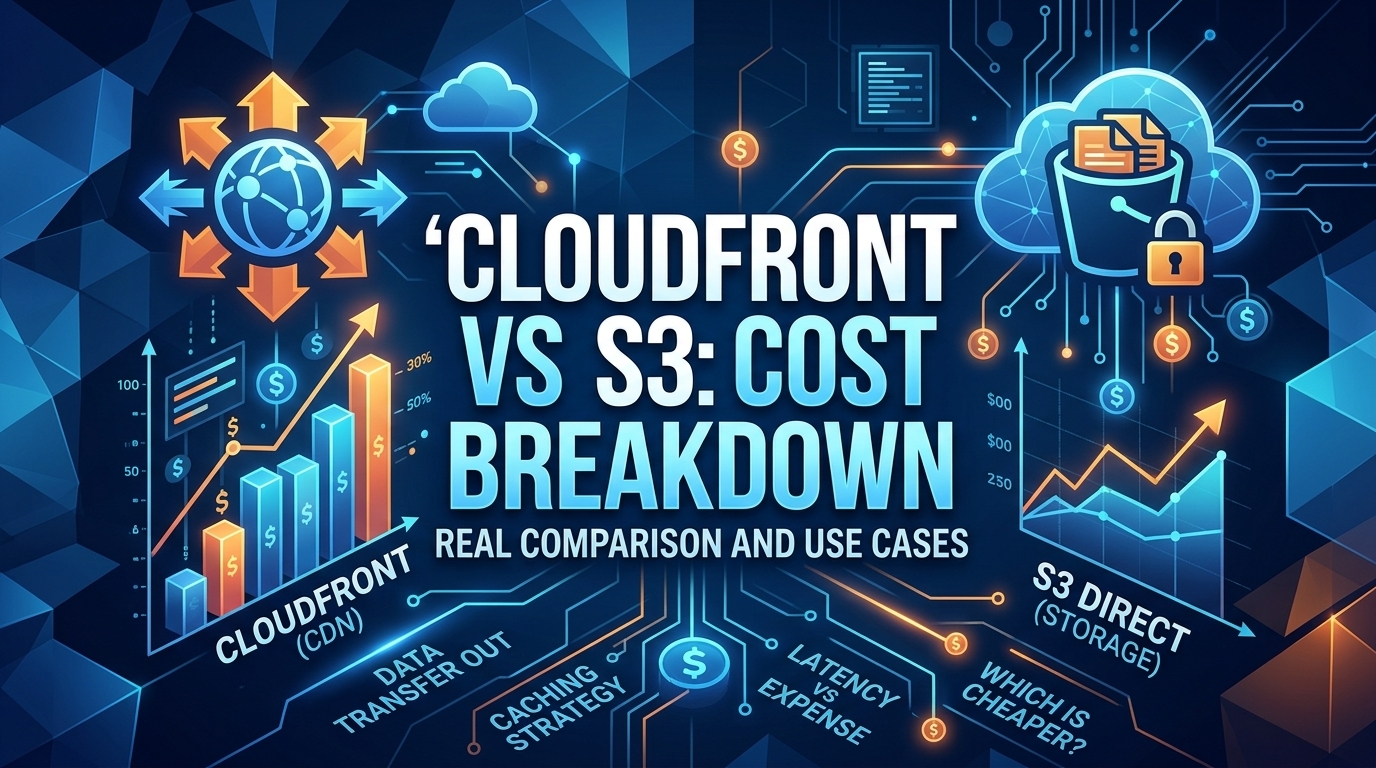
The CloudFront vs S3 decision depends more on object size than on traffic volume. At a 500 KB average response, 100 TB ...
Learn
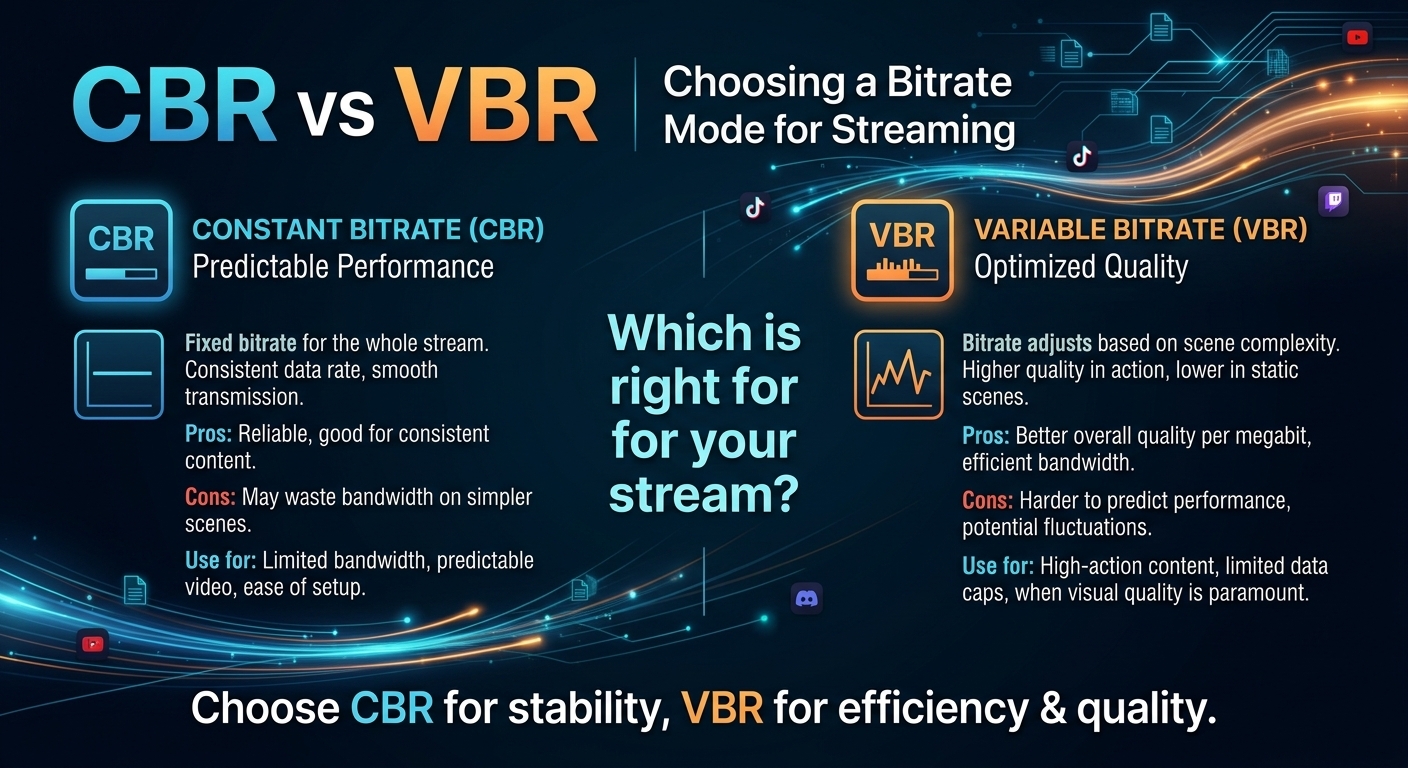
For most on-demand video, capped variable bitrate (VBR) wins the cbr vs vbr decision: it spends bits where the picture ...