
Learn
Lossy vs Lossless Compression: Images, Video and Audio
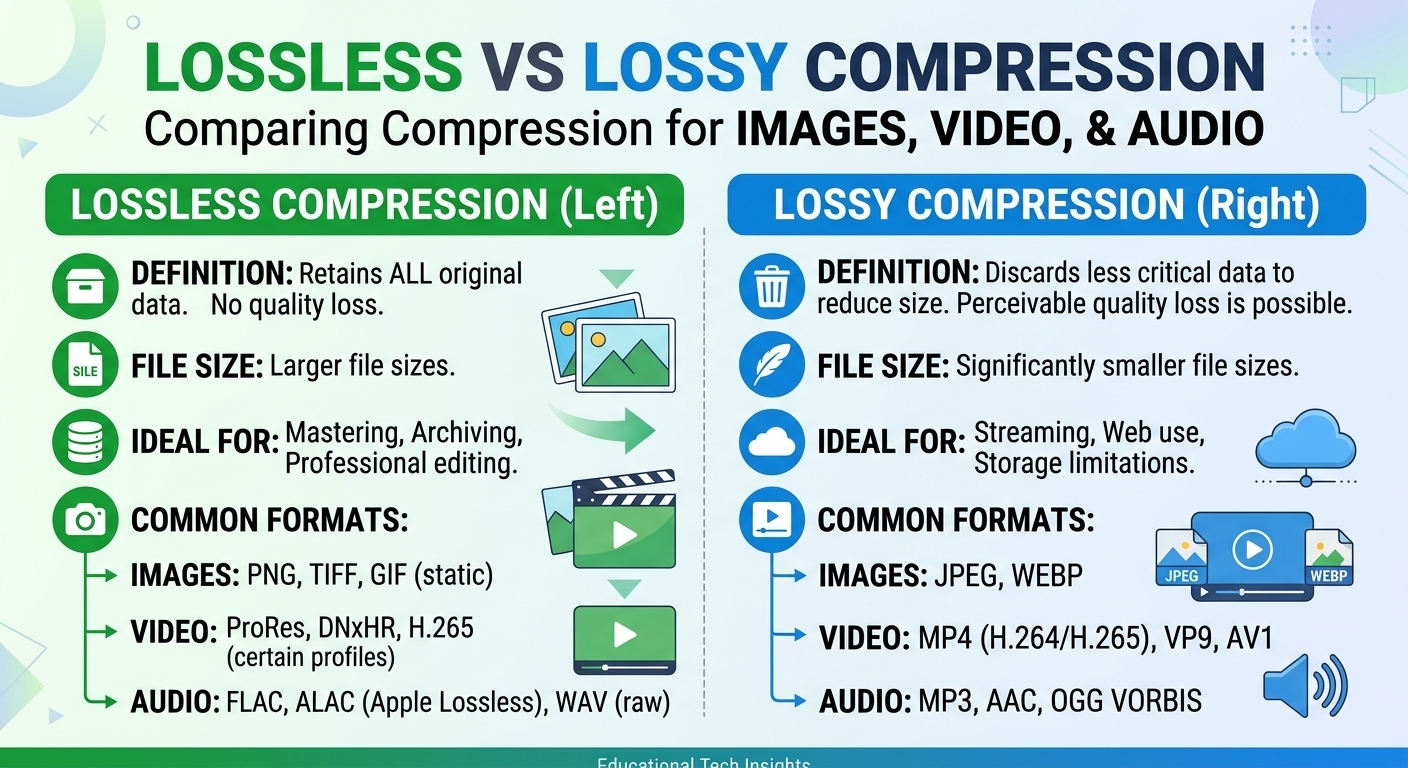
Lossy vs lossless compression comes down to one trade: lossless compression rebuilds every original bit and typically ...

Cisco's latest Visual Networking Index update forecasts that video will consume 84% of all downstream internet traffic by the end of 2026. That number is not surprising. What is surprising: median rebuffer rates across commercial VOD platforms still hover around 1.2% of total play time as of Q1 2026, and every 1% increase in rebuffering correlates with roughly 8% higher session abandonment. If you are evaluating the best video CDN for hosting and on-demand streaming, the decision is less about brand recognition and more about sustained throughput economics, segment-level cache behavior, and how well the provider handles adaptive bitrate logic at the edge. This article gives you a workload-profile decision matrix, an honest comparison of 11 providers with 2026 pricing where available, and the architectural criteria that actually move playback quality metrics.
Two shifts define the 2026 landscape. First, CMAF with low-latency extensions (LL-HLS, LL-DASH) is now the baseline expectation, not a differentiator. Any CDN that still struggles with chunked transfer encoding for partial segments is disqualified for serious VOD or near-live use cases. Second, egress pricing compression has accelerated. Hyperscaler CDNs dropped per-GB rates by 15–20% over the past 18 months, but independent and specialized CDNs responded with volume tiers that undercut them further, especially above 100 TB/month.
The result: selection criteria have shifted from "who has the most PoPs" toward protocol-level behavior, cache-fill efficiency on long-tail catalogs, and per-TB cost at your actual traffic volume. Engineers who last evaluated CDNs in 2024 are working with outdated assumptions.
Skip the marketing pages. When benchmarking a video CDN, instrument these six dimensions:
Below is a direct comparison. Pricing reflects publicly available rates or confirmed enterprise quotes as of Q2 2026. Where providers do not publish pricing, that is noted.
| Provider | Best For | Approx. Price per TB (2026) | Notable Strength |
|---|---|---|---|
| Amazon CloudFront | AWS-native stacks | $60–$85 (volume-dependent) | Deep MediaConvert/MediaPackage integration |
| Cloudflare Stream | Developer-first VOD | $1/1,000 min stored + $5/1,000 min delivered | Per-minute pricing; no egress model |
| Akamai (Adaptive Media Delivery) | Tier-1 OTT, broadcasters | Custom (typically $20–$40 at high volume) | Prefetch logic and SureRoute for video segments |
| Fastly | Low-latency live + VOD hybrid | $40–$80 (region-dependent) | Instant purge; VCL/Compute@Edge for custom ABR logic |
| Google Cloud CDN / Media CDN | GCP-native, YouTube-tier infra | $20–$40 (Media CDN tier) | Origin connectivity via Google backbone |
| Microsoft Azure CDN (Front Door) | Azure Media Services users | $55–$80 | Tight integration with Azure Blob and Media Services |
| KeyCDN | Budget VOD, small catalogs | $40 (pay-as-you-go) | Simple setup, HTTP/2 push support |
| Limelight (Edgio) | Large-file and software + video hybrid | Custom | Private backbone for origin-to-edge transit |
| Mux | API-first video platforms | $0.007/min delivered (starter) | Built-in QoE analytics (Mux Data) |
| Bunny CDN (Stream) | Mid-size VOD, cost-sensitive | $5–$10 (volume zones) | Integrated transcoding and player |
| BlazingCDN | High-volume VOD, media, gaming | $2–$4 (volume-dependent) | Enterprise-grade stability at independent pricing |
Provider lists are useful. But most teams waste evaluation cycles testing CDNs that are architecturally mismatched to their workload. The matrix below maps five common video delivery profiles to the CDN characteristics that matter most for each. Use it to shortlist before you benchmark.
Priority: multi-region consistency, Widevine/FairPlay token integration at edge, origin shield with high cache-hit ratio on long-tail titles. Budget is secondary to uptime SLAs and rights enforcement. Best fit: Akamai, Google Media CDN, or CloudFront with MediaPackage. At volumes above 500 TB/month, BlazingCDN becomes viable for secondary or regional CDN layers to reduce blended cost.
Priority: token-authenticated playback, predictable monthly cost, low-complexity integration. Peak traffic is predictable (weekday evenings, exam periods). Overpaying for burst capacity you rarely use is the most common mistake. Best fit: Bunny CDN Stream, BlazingCDN, or KeyCDN.
Priority: burst handling for patch-day spikes, low-latency for near-live highlight clips, large-file throughput for game assets. Mixed workload means you need a CDN that does not penalize you for non-video traffic alongside video. Best fit: Fastly, Edgio, or BlazingCDN with split-origin configuration.
Priority: simple API integration, predictable per-minute or per-GB pricing, no minimum commits. Video is a feature, not the product. The CDN should not require a dedicated engineer to maintain. Best fit: Mux, Cloudflare Stream, or Bunny CDN.
Priority: ad-insertion compatibility (SSAI/CSAI), cache efficiency across tens of thousands of short-form clips, real-time analytics for monetization reporting. Best fit: Akamai, Google Media CDN. For cost-optimized secondary delivery, BlazingCDN's media delivery infrastructure provides stability and fault tolerance comparable to CloudFront at significantly lower per-TB rates. At the 1 PB/month tier, that translates to $2,500/month versus $20,000+ on hyperscaler egress, a difference that directly impacts content margin.
Video CDN cost is not just per-GB egress. The real cost function includes origin egress (cache misses), transcoding and packaging (if CDN-managed), storage for manifests and segments, and observability tooling. Teams that optimize only for delivery price often discover that low cache-hit ratios on long-tail content inflate origin costs by 30–50%.
A practical approach: calculate your effective cost per viewer-hour, not per GB. A CDN at $4/TB with a 96% cache-hit ratio is cheaper than a CDN at $3/TB with an 88% cache-hit ratio, because the second one generates 3x the origin egress on a large catalog. As of October 2026, BlazingCDN's volume tiers start at $5/TB and scale down to $2.50/TB at volume.
If you are switching providers or adding a secondary CDN layer, this sequence avoids the common failure modes:
It depends on catalog size and traffic volume. For large OTT catalogs with DRM requirements, Akamai and Google Media CDN lead on features. For high-volume delivery where cost per TB is the primary constraint, BlazingCDN and Bunny CDN offer the most competitive rates without sacrificing protocol support.
Instrument client-side QoE metrics: time to first frame (target under 2 seconds), rebuffer ratio (target under 0.5% of play time), and bitrate stability (fewer than 3 quality switches per session). Server-side 200 rates and cache-hit ratios are necessary but not sufficient.
Yes. Multi-CDN is standard practice at scale. Use a CDN load balancer or client-side switching logic that routes based on real-time performance data. The primary risk is cache fragmentation: each CDN maintains its own cache, so splitting traffic too finely reduces hit ratios on both.
A general CDN optimizes for small-object delivery (HTML, JS, images). A video-optimized CDN handles sustained multi-Mbps sessions, supports HLS/DASH/CMAF segment delivery patterns, provides origin shielding tuned for large-file cache fill, and often includes transcoding or manifest manipulation at the edge.
Rates range widely. Hyperscaler CDNs (CloudFront, Azure, Google) charge $20–$85/TB depending on volume and region. Specialized independent CDNs range from $2–$10/TB. Per-minute models (Mux, Cloudflare Stream) require different math. Calculate your effective cost per viewer-hour for accurate comparison.
On mobile and unstable networks, yes. QUIC's connection migration and elimination of head-of-line blocking reduce rebuffer events by 10–20% compared to HTTP/2 in degraded conditions, based on Q1 2026 measurements from major player SDKs. On stable wired connections, the difference is negligible.
Here is the most useful thing you can do this week: pick your highest-traffic VOD title and your longest-tail title with fewer than 5 daily views. Run a 48-hour A/B test between your current CDN and one alternative. Measure time to first frame, segment delivery P99 latency, and rebuffer ratio on both. If you cannot instrument those three metrics, that is your first problem to solve, before any CDN migration. The data will make the decision obvious.

Heavy traffic.
Light bill.
The CDN for video and large traffic
Learn
Lossy vs lossless compression comes down to one trade: lossless compression rebuilds every original bit and typically ...
Pricing - Pricing & Costs
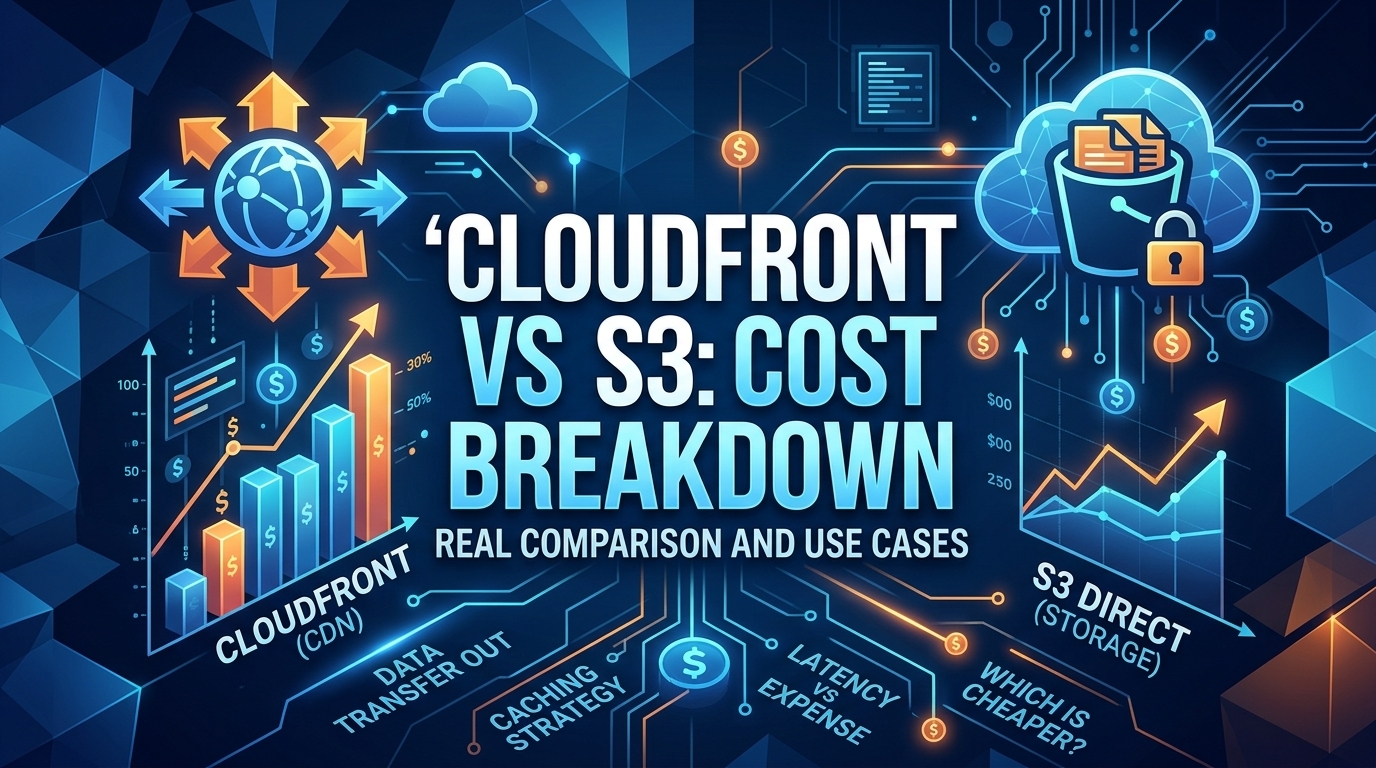
The CloudFront vs S3 decision depends more on object size than on traffic volume. At a 500 KB average response, 100 TB ...
Learn
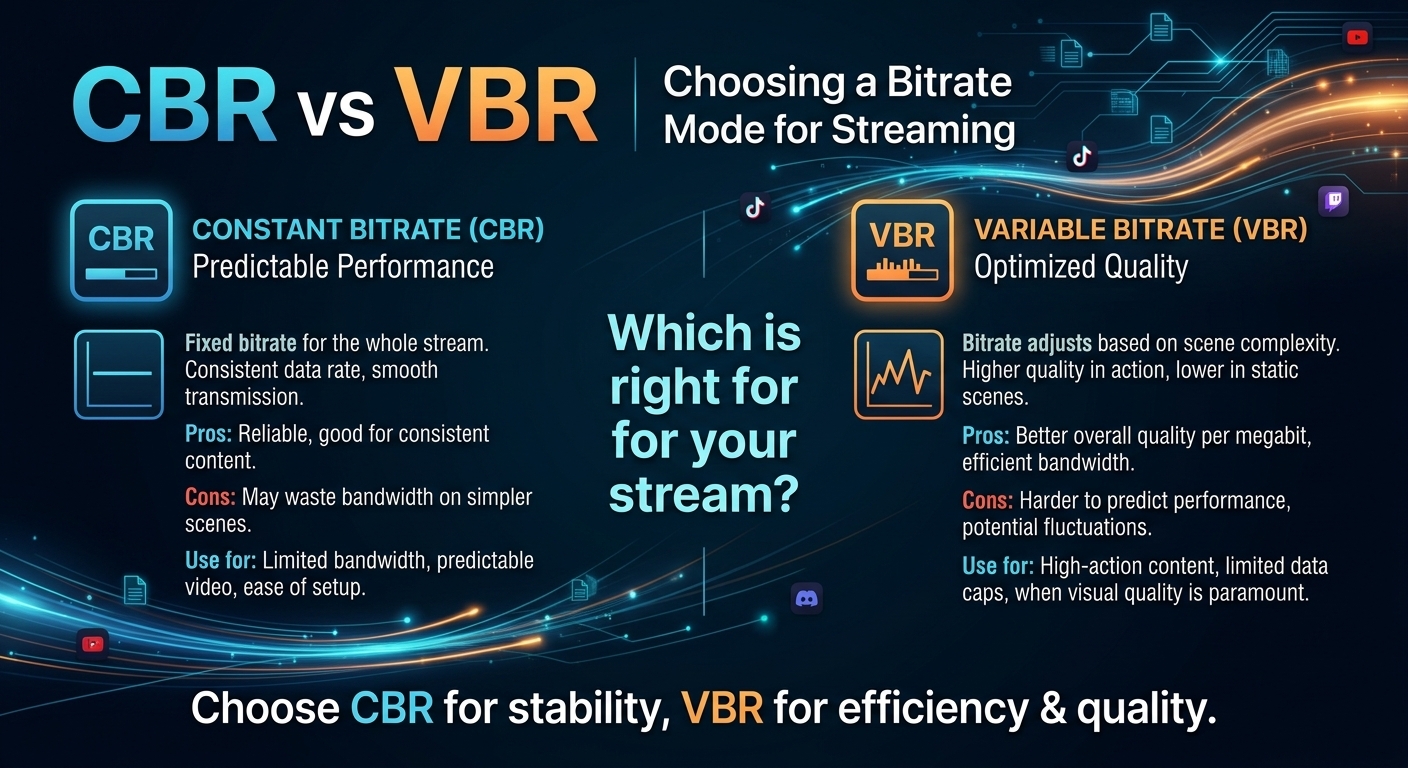
For most on-demand video, capped variable bitrate (VBR) wins the cbr vs vbr decision: it spends bits where the picture ...