
Learn
Lossy vs Lossless Compression: Images, Video and Audio
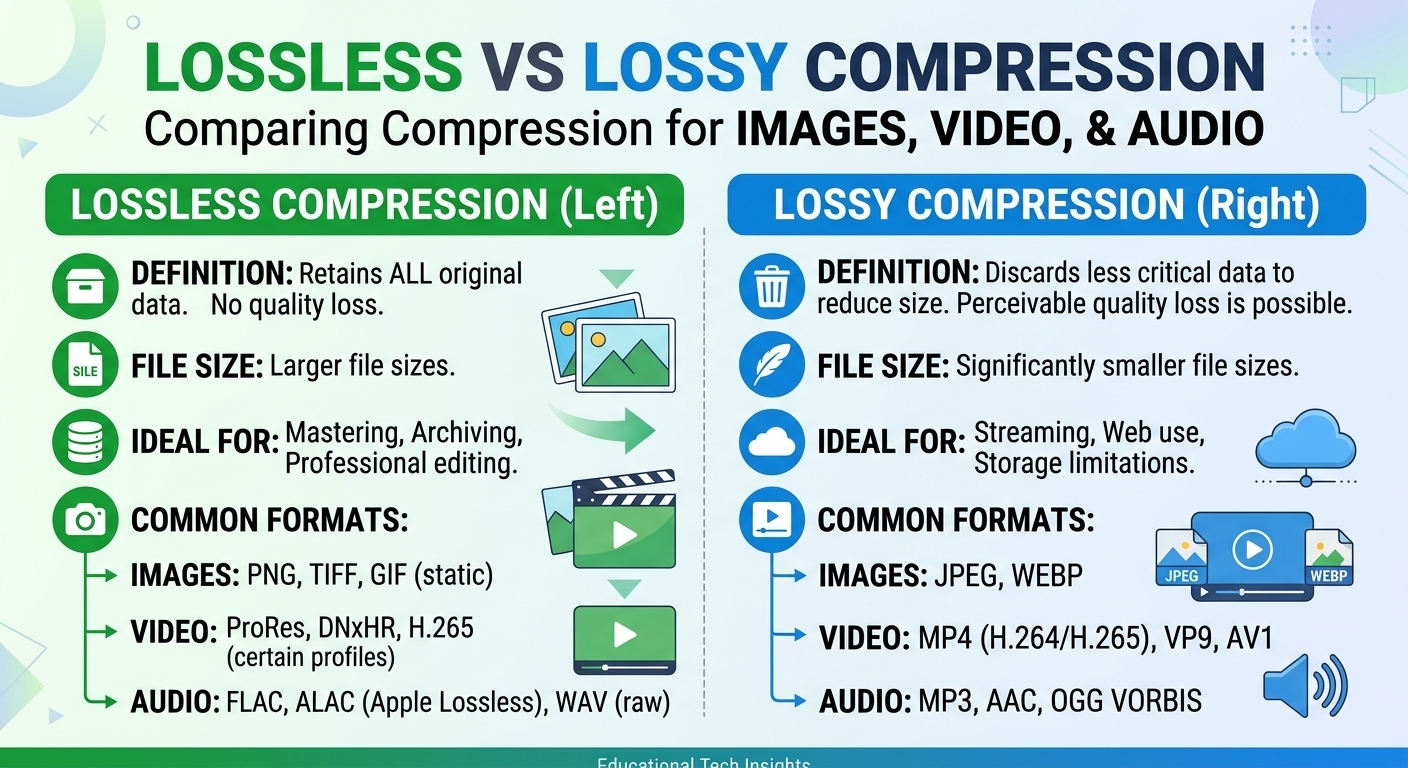
Lossy vs lossless compression comes down to one trade: lossless compression rebuilds every original bit and typically ...

In large mobile markets, more than half of users will abandon a site or app that takes longer than 3 seconds to load on their phone. According to Google, as mobile page load time increases from 1 to 3 seconds, the probability of bounce increases by 32%1. That single statistic quietly kills more product launches, ad campaigns, and feature rollouts than almost any bug in your code.
Think about the last time you opened a banking app on a busy commute. You had 30 seconds before the train went underground. The app showed a spinner, then another spinner, as it waited on a slow API call. You closed it. That was not a design problem; it was a content delivery problem.
For modern mobile products, the best CDN for mobile content delivery is no longer a nice-to-have infrastructure choice. It is the difference between a fast, addictive experience and a churn machine powered by network lag. In this article, we will unpack how mobile CDNs accelerate apps and APIs, what separates an average CDN from a mobile-first one, and how to evaluate providers through the lens of real performance and cost — not marketing slogans.
As you read, keep a simple question in mind: if a 300 ms delay in your mobile API calls cut your retention by 5–10%, how quickly would you want to fix it?
Mobile users are unforgiving because their context is unforgiving. They may be on the move, between cell towers, or juggling multiple tasks. Every extra second of latency increases the chance that a notification, message, or real-world distraction will pull them away from your app.
Several large-scale studies have quantified this:
On mobile, this effect is magnified because network variability (4G, 5G, Wi-Fi handoffs, congestion) often turns a nicely optimized backend into a sluggish user experience. Even if your core API responds in 80 ms from your primary region, a user 10,000 km away on mobile data may experience 300–800 ms of end-to-end latency per request.
Now multiply that by a typical app startup sequence: authentication call, configuration fetch, feature flags, user profile, initial content feed, analytics. It is not uncommon for an app to issue 20–40 requests on first open. Without an optimized content delivery network, that can easily turn into several seconds of visible delay.
Before we talk about the best CDN for mobile content delivery, ask yourself: how many separate network round trips does your app make on cold start today — and how many of those could be offloaded or accelerated at the edge?
Desktop users on wired connections enjoy relatively stable bandwidth and low packet loss. Mobile users do not. That alone changes how you should think about content delivery.
Cellular networks have higher base latency and far more volatility than fiber or cable connections. Radio interference, tower handoffs, and roaming introduce jitter and packet loss that are largely outside your control.
The result: your beautifully tuned backend can still feel slow because the last mile is noisy. A mobile-focused CDN cannot fix the physics of wireless radio, but it can minimize the distance, the number of round trips, and the amount of data you send through that unreliable last mile.
Modern apps rely on APIs for almost everything: authentication, personalization, configuration, payments, content feeds, messaging, analytics. Many of those calls are small in payload size but frequent.
This chatty pattern punishes mobile performance:
A generic CDN built primarily for static web assets may cache images and scripts well, but it might not be optimized for API acceleration, connection reuse, or fine-grained control over caching responses like JSON, GraphQL, or gRPC streams.
Mobile delivery has to handle a larger mix of:
The best CDN for mobile content delivery needs to optimize not just HTTP file delivery, but also real-time APIs, media streaming, and device-specific content negotiation. It is not enough to simply cache static files close to users.
So before you choose a provider, ask: does your current CDN deeply understand your app's API patterns and media needs, or is it treating everything as just another static asset?
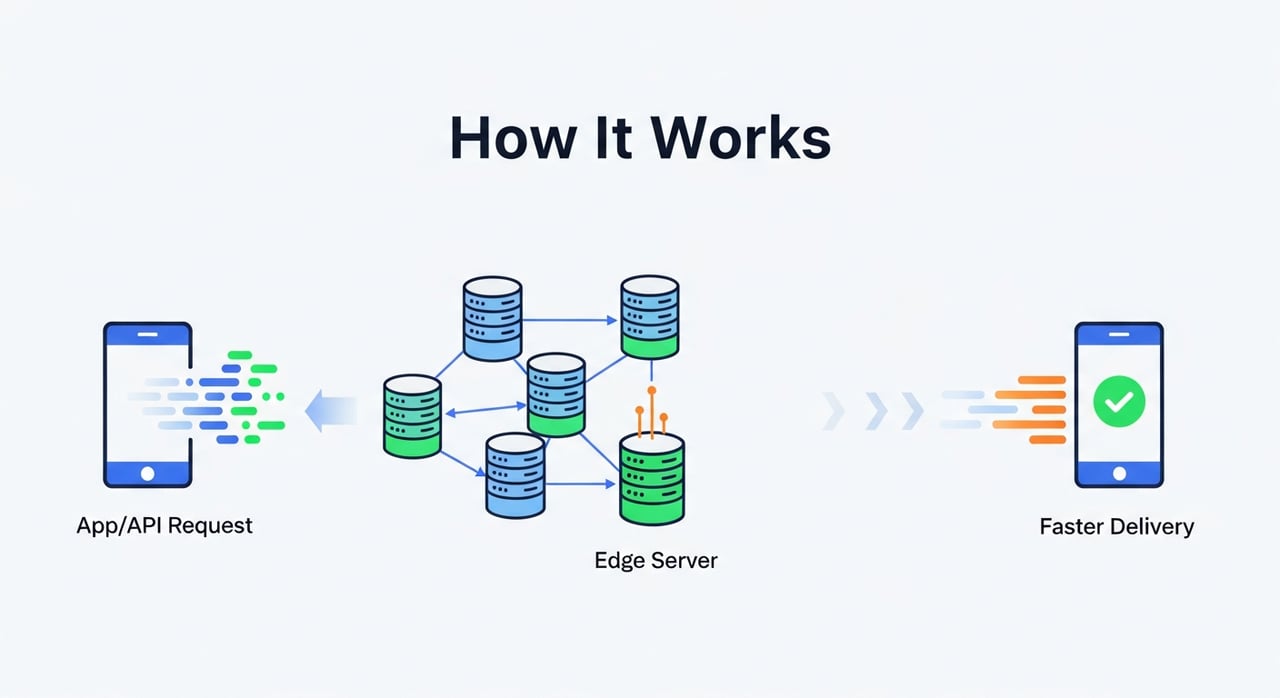
At its core, a CDN improves performance by shortening the distance between users and content, reducing the number of round trips, and optimizing how data flows over the network. For mobile, those principles translate into several critical capabilities.
The classic CDN superpower is simple: cache content at servers geographically closer to users, so each request does not have to hit your origin.
For mobile, this applies to:
Well-tuned cache rules can eliminate dozens of origin trips during app startup. By setting correct cache-control headers and using versioned URLs (like /v5/config.json), you can safely cache semi-static responses for minutes or hours.
The fewer requests that must reach your core infrastructure, the more stable and predictable your mobile performance becomes. Are you aggressively caching everything that does not need to be real time?
Not all mobile traffic is cacheable. Login flows, personalized feeds, account data, and transactions must reach your origin securely and fresh. But even these dynamic calls benefit from a smart CDN.
Important techniques include:
For mobile APIs, these features act as a force multiplier. Instead of optimizing only your HTTP handlers, you are optimizing every hop between the device and your backend.
If you profiled your slowest API endpoints, how much of that latency is actually in your own code versus the network path — and what would happen if you could cut that network time in half?
Modern CDNs are often the easiest way to roll out new protocols like HTTP/2 and HTTP/3 (QUIC) across your stack.
On congested or high-latency mobile networks, HTTP/3 in particular can significantly improve page and app load times by reducing head-of-line blocking. Deploying it end to end across your origins and load balancers might be non-trivial, but a mobile-focused CDN can present HTTP/3 to users while speaking HTTP/1.1 or HTTP/2 to your origin.
When you evaluate a CDN for mobile content delivery, check: does it support HTTP/3 by default, and can you easily enable it per domain or service?
On mobile, payload size matters as much as latency. Many global users face data caps or metered plans, and low-end devices struggle with large, unoptimized resources.
The best CDNs for mobile deliver:
These optimizations often yield double-digit percentage reductions in transferred bytes, which directly translate into faster load times and lower user data consumption.
If you ran a quick audit today, how many of your largest payloads are still being delivered as full-resolution JPEGs or uncompressed JSON blobs to mobile users?
The phrase best CDN is meaningless without context. For mobile apps and APIs, best usually means a combination of:
To make this concrete, here is a simplified matrix of what to look for when choosing a CDN for mobile workloads.
| Evaluation area | What to look for (mobile-specific) | Why it matters |
|---|---|---|
| Latency and throughput | Consistent p95 and p99 latency under real mobile conditions, not just lab tests. | Tail latency drives user frustration, especially on slower devices and networks. |
| Protocol support | HTTP/2 and HTTP/3 enabled, easy TLS config, connection reuse and pooling. | Fewer round trips and better loss recovery on cellular networks. |
| API and dynamic content | Granular cache rules, stale-while-revalidate, edge logic, header-based routing. | Lets you cache safely where possible and keep dynamic responses fast. |
| Media optimization | On-demand image transforms, modern formats, adaptive bitrate streaming. | Reduces payload sizes and startup delay for image- and video-heavy apps. |
| Analytics and observability | Near real-time logs, per-path metrics, breakdown by country, device, and status code. | Helps pinpoint performance issues and misconfigurations quickly. |
| Pricing and scalability | Clear per-GB pricing, no hidden surcharges for basic features. | Prevents cost surprises as your user base scales globally. |
| Enterprise reliability | Proven uptime track record, strong SLAs, responsive support for incidents. | Critical when your mobile app is a core business channel. |
As you evaluate providers, ask them not only for a feature checklist, but for data: how does their CDN perform under mobile conditions in your key markets? Can they give you real latency distributions or case studies for similar workloads?
Some of the world’s most used apps — social networks, ride-hailing platforms, and streaming services — have been forced by scale to rethink content delivery from the ground up. While each architecture is unique, a few shared lessons stand out.
Major consumer apps learned early that tying every user interaction directly to origin availability is a recipe for outages. Instead, they aggressively cache critical configuration, static resources, and non-sensitive content at the edge and on device.
That way, a temporary origin issue might degrade some dynamic features but does not completely brick the app. A strong CDN strategy is a core part of that decoupling: it becomes a safety buffer between volatile mobile usage patterns and finite backend capacity.
High-scale companies track p95 and p99 latencies as primary success metrics because users remember the worst experiences, not the averages. That is especially true on mobile, where a single slow screen can feel like a failure.
CDNs that offer detailed percentile metrics and fine-grained routing control help reduce those long tails. For example, intelligent failover between regions or origins, or optimized routes during regional congestion, can prevent the small percentage of disastrously slow requests that drive negative reviews.
It is now common practice among large platforms to push parts of their logic to the edge: rewriting URLs, localizing content, handling A/B testing decisions, and pre-processing API responses. That reduces both latency and backend load.
When you evaluate candidates for the best CDN for mobile content delivery, look at how easily you can implement and maintain such edge logic in your team. A feature is only useful if your developers can deploy and observe it safely.
Looking at your own stack, which parts of your user journey still rely on a single region or monolithic origin, and how could edge delivery make them more resilient?
Choosing a CDN is not just about reading documentation; it is about observing how it behaves with your traffic. Here is a concrete approach tailored for mobile workloads.
Start with the flows that most impact your business:
For each journey, map the network calls involved: which are cacheable, which are dynamic, and which are media-heavy.
For a fair comparison, you should:
Record not just TTFB (time to first byte), but also total time to interactive for each user journey. That is where the impact of caching, protocol support, and connection reuse becomes visible.
Mobile apps that succeed often grow faster than anticipated. A CDN that looks affordable at 5 TB per month can become a budget issue at 500 TB if pricing tiers, egress fees, or premium feature charges are not clear upfront.
When you compare providers, calculate:
Ask yourself: if mobile traffic doubles during a successful campaign or viral moment, will your CDN bill stay predictable — or will finance call you in a panic?
For enterprises and high-growth mobile products, there is growing demand for a CDN that combines hyperscaler-level reliability with more accessible pricing and a developer-friendly feature set. This is where BlazingCDN positions itself.
BlazingCDN is built as a modern, high-performance content delivery solution designed to handle demanding workloads for mobile apps, APIs, and media experiences. It uses Anycast routing with built-in failover and pay-as-you-go pricing, a crucial advantage for enterprises and corporate clients moving serious volumes of traffic.
With a starting cost of 5 USD per TB (as of October 2026), BlazingCDN enables teams to aggressively scale global mobile delivery without turning bandwidth costs into a strategic risk. Flexible configuration options make it straightforward to tune cache behavior, compression, and routing for different types of mobile content, from API responses to in-app media.
Because of this balance of reliability and cost, BlazingCDN has become an attractive choice for industries where mobile performance is mission-critical: streaming and media platforms, gaming companies with large update payloads, and SaaS providers that depend on fast APIs for their mobile clients. You can explore how its feature set maps to modern application needs on the BlazingCDN features page, especially if your roadmap includes scaling mobile traffic globally.
As you consider what the best CDN for your mobile content delivery stack looks like, weigh not only raw speed, but also whether your provider can give you CloudFront-grade resilience without CloudFront-grade invoices.
Once you have selected a CDN, how you configure it will often matter more than the name of the provider. Here is a practical checklist focused on mobile apps and APIs.
Split your endpoints into categories:
For each:
Cache-Control headers in your origin responses (e.g., public, max-age=86400 for static, public, max-age=60, stale-while-revalidate=300 for semi-static).Ask yourself: if your app makes 40 requests on startup, how many of those could be served from the CDN cache with a few strategic header updates?
On the CDN:
On your mobile clients:
After enabling these features, measure again under constrained mobile networks. Do your TTFB and total load times drop meaningfully, especially for returning users?
Implement an image strategy that includes:
For video:
If you exported your top 100 assets by bandwidth today, how many are images or video that could be significantly reduced in size without hurting quality?
Design your APIs to play well with the CDN layer:
Then ask: if your API traffic doubled overnight, would your CDN configuration shield your origins, or would they see the full brunt of that spike?
To know whether your CDN is truly the best fit for your mobile needs, you must watch the right metrics. Vanity averages are not enough; focus on what your users feel.
Track, at minimum:
Combine CDN logs with client-side telemetry to see how edge optimizations translate into real usage improvements.
On the infrastructure side, monitor:
Viewed together, these metrics will reveal whether your chosen CDN is improving both user experience and cost efficiency — or just shifting where your problems appear.
If you had to show your leadership a single chart to prove that your CDN investment is paying off for mobile, what would that chart look like today?
Mobile users rarely tell you why they churn; they simply uninstall, close the tab, or move to a competitor whose app feels faster and more responsive. Underneath those decisions sits a complex stack of networking realities — many of which you can influence by choosing and configuring the right CDN.
Whether you are shipping a consumer app, a B2B SaaS product with heavy mobile usage, a game that relies on large updates, or a media service streaming to phones worldwide, the best CDN for mobile content delivery will be the one that quietly removes seconds and friction from your most important journeys while keeping your infrastructure costs sane.
Now is the moment to act: map your critical mobile flows, benchmark your current delivery performance, and run real tests with CDNs that can give you CloudFront-level stability with more accessible pricing. Bring your product, engineering, and infrastructure teams together around a single goal: making your app feel instant, everywhere. Then share what you learn, challenge your vendors with real numbers, and do not settle until your mobile experience feels as fast as your roadmap deserves.
If you have insights or questions about choosing a mobile-first CDN, share them with your team, start a performance review session this week, and consider running a live A/B latency test across regions — your users will never see the test, but they will feel the results in every tap.
1 Google, mobile site speed and bounce probability data, summarized in the Why Speed Matters guidance on web.dev.
2 Deloitte, "Milliseconds Make Millions" report on the business impact of mobile speed improvements, available at Deloitte Digital.

Heavy traffic.
Light bill.
The CDN for video and large traffic
Learn
Lossy vs lossless compression comes down to one trade: lossless compression rebuilds every original bit and typically ...
Pricing - Pricing & Costs
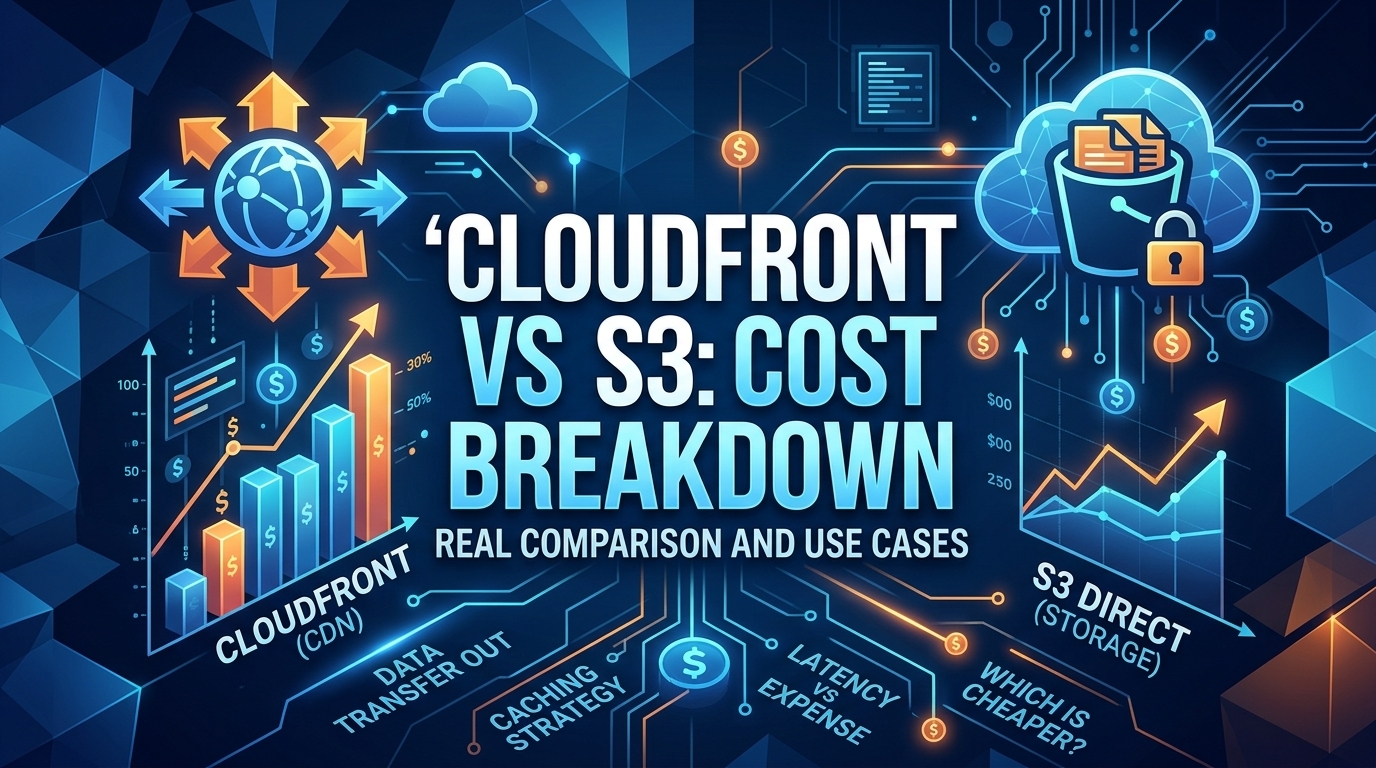
The CloudFront vs S3 decision depends more on object size than on traffic volume. At a 500 KB average response, 100 TB ...
Learn
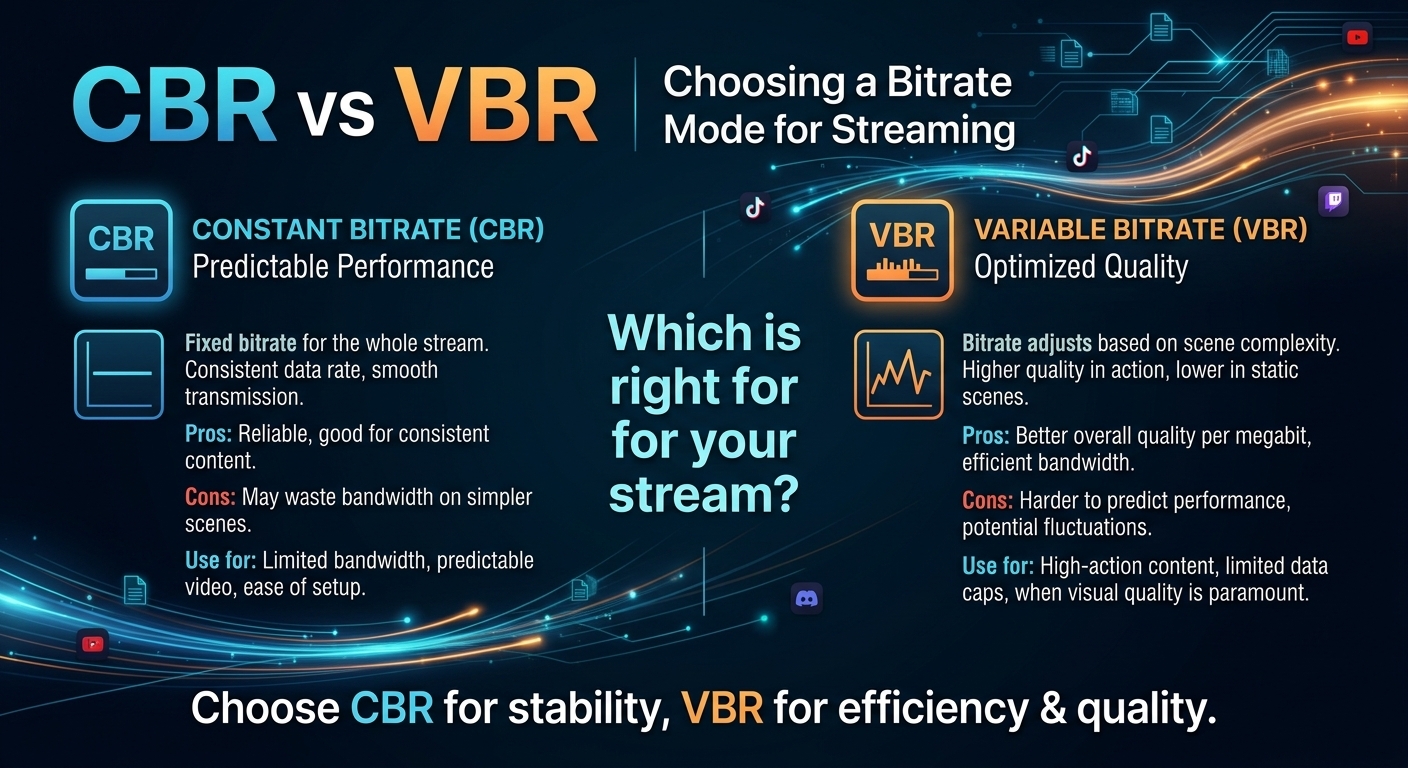
For most on-demand video, capped variable bitrate (VBR) wins the cbr vs vbr decision: it spends bits where the picture ...