
Learn
Lossy vs Lossless Compression: Images, Video and Audio
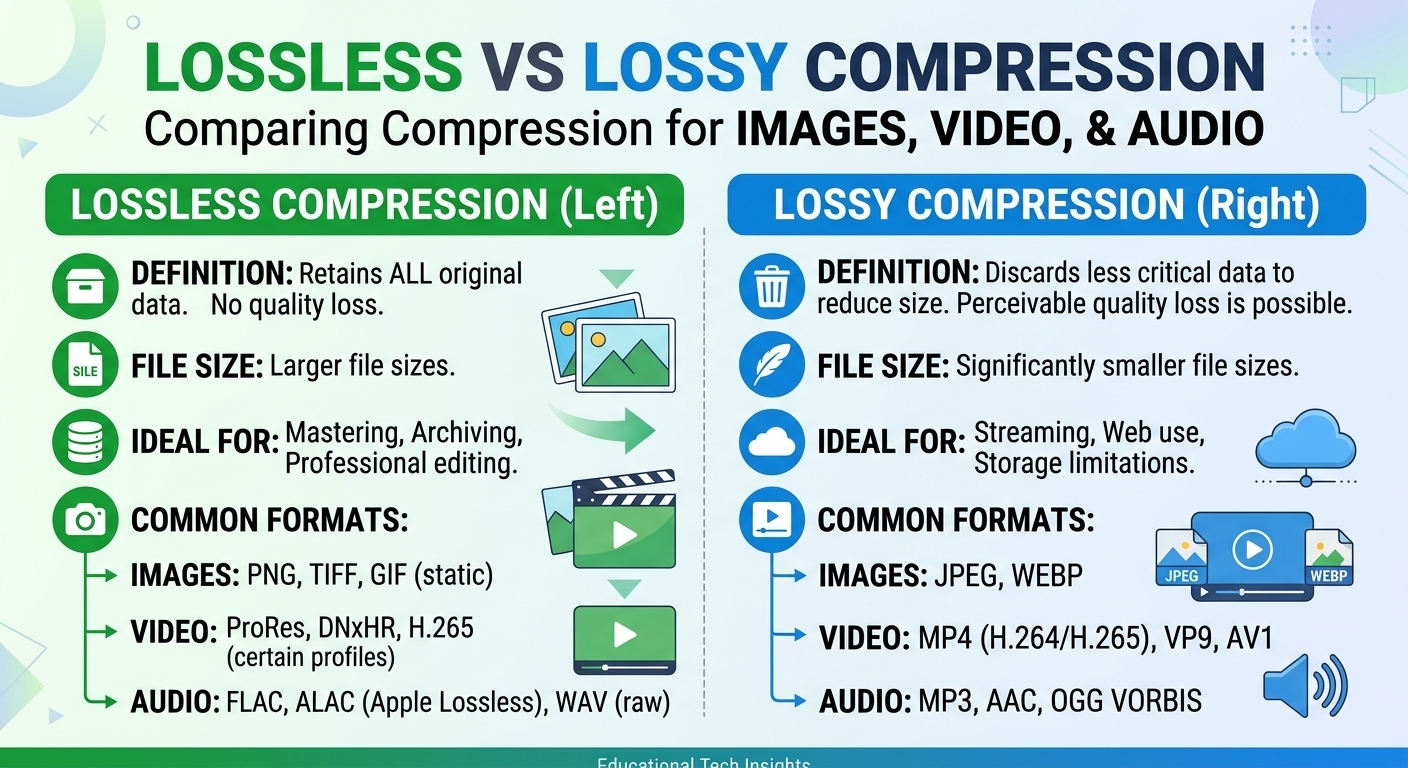
Lossy vs lossless compression comes down to one trade: lossless compression rebuilds every original bit and typically ...
As of October 2026, the Azure service that matches Amazon CloudFront is Azure Front Door Standard or Premium: Microsoft has folded its classic Azure CDN tiers into Front Door, which bills a base fee of $35 a month (Standard) or $330 a month (Premium) on top of data transfer and requests. In an azure front door vs aws cloudfront decision, the deciding factors are origin routing, edge programmability and egress cost. List prices put both near $9,500 to $10,000 a month for 150 TB of transfer (published price lists, checked August 2026). This comparison was evaluated October 2026. It gives you a feature table, worked price math at 150 TB, three multi-cloud patterns and a best-fit-by-workload matrix.
Verdict: pick Front Door when your origins live in Azure or span several clouds and you need weighted, health-probed origin routing. Pick CloudFront when your origins are in AWS, you deliver from private S3 buckets, or you need real code at the edge. Neither is the cheap option for petabyte-scale video or software downloads.
The Azure CloudFront equivalent in 2026 is Azure Front Door Standard or Premium. Azure CDN from Akamai retired in 2023, Azure CDN from Edgio retired in January 2025, and the remaining classic tiers (Azure CDN Standard from Microsoft and Front Door classic) are scheduled for retirement in 2027. New CDN projects on Azure should start on Front Door.
Front Door merges three things AWS sells separately: a CDN (CloudFront), a global layer 7 load balancer with health probes (closer to Global Accelerator plus Route 53 routing policies), and a web application firewall (WAF) attachment point. That bundling explains most of the differences below.
Comparing "Azure CDN" with CloudFront in 2026 means comparing a retiring product line with an active one. The old Azure CDN choice depended on which underlying network you picked (Microsoft, Akamai or Edgio), which made performance and pricing hard to forecast. Front Door removes that ambiguity: one Microsoft-operated Anycast network, two tiers, one price list.
If you still run a classic Azure CDN profile, Microsoft documents an in-place migration path to Front Door Standard or Premium. Plan it as a real change: rules engine syntax, purge behavior, caching defaults and logging schema all differ, so treat it like a migration to a new CDN rather than a SKU upgrade.
| Capability | Azure Front Door (Standard / Premium) | Amazon CloudFront |
|---|---|---|
| Billing model | Base fee ($35 or $330 a month) plus per-GB egress by zone, origin-to-edge transfer and per-10,000 requests | Pay as you go per GB by region plus per-10,000 requests, or flat-rate plans (Business $200 for 50 TB, Premium from $1,000) |
| Origin routing | Origin groups with priority, weight, latency sensitivity and health probes | Origin groups for primary and secondary failover on chosen status codes; weighting needs DNS or edge code |
| Edge logic | Declarative rule sets: match conditions, header changes, URL rewrite and redirect, cache overrides. No custom code | CloudFront Functions (lightweight JavaScript), Lambda@Edge (Node.js and Python), KeyValueStore |
| Private origins | Private Link origins (Premium only) | Origin Access Control for S3, VPC origins for internal load balancers and instances |
| Cache hierarchy | Edge caching with compression and query string behaviors; no separately priced regional shield product | Regional edge caches by default, optional Origin Shield in a chosen region |
| Security | Azure WAF: custom rules on Standard, managed rule sets and bot protection on Premium | AWS WAF (billed per web ACL, rule and request), Shield Standard included, Shield Advanced optional |
| Observability | Diagnostic logs to Log Analytics, Storage or Event Hubs; Azure Monitor metrics | Standard logs, real-time logs through Kinesis, CloudWatch metrics |
The single largest functional gap is edge code: CloudFront runs your JavaScript or Python at the edge, while Front Door only executes declarative rules.
Front Door is the natural edge for App Service, Container Apps, AKS ingress, Azure Storage static sites and API Management. It wires into Microsoft Entra ID for management access, Defender for Cloud for posture findings, and Bicep or ARM templates for deployment. Terraform covers both platforms well.
CloudFront fits S3, Application Load Balancer, ECS, EKS, API Gateway and AWS Elemental MediaPackage origins with almost no glue. AWS Certificate Manager issues edge certificates in us-east-1 at no charge, and CloudFormation or CDK own the lifecycle. If your identity, logging and billing already sit in one cloud, its CDN saves you a second control plane, and that operational cost is real even when nobody puts it in the spreadsheet.
Front Door's origin model is its strongest feature. You can split traffic 80/20 between two regions, mark a third as priority 2, and let health probes drain a failing backend without touching DNS. Session affinity and latency-based origin choice are built in. CloudFront's origin failover is narrower: a request retries the secondary origin when the primary returns configured status codes or times out, and weighted splits require Route 53 or a Lambda@Edge origin request function.
On caching, CloudFront gives you more knobs. Cache policies and origin request policies separate the cache key from what is forwarded, and Origin Shield collapses misses from all edge locations into one regional cache, which matters when origin egress is the expensive line. Front Door's rule sets cover cache key query string handling, TTL overrides and compression, which is enough for most web apps but coarse for complex cache-key normalization.
Performance claims without your own data are noise. Both networks perform well in North America and Western Europe; differences show up in specific ISPs in South America, Africa, South Asia and the Middle East. Measure with real-user monitoring on your audience before treating either as faster.
Azure Front Door publishes rates up to 150 TB, where a month of egress costs about $9,500 (published price lists, checked August 2026), before the base fee, requests and origin-to-edge transfer. Applying CloudFront's North American pay-as-you-go rates to the same volume (first terabyte included, then $0.085, $0.080 and $0.060 per GB across tiers) gives our estimate of about $9,965 for transfer alone.
Requests change the picture for small objects. At roughly $0.01 per 10,000 HTTPS requests on CloudFront in North America, 2 billion requests add about $2,000 a month (our arithmetic: 200,000 blocks of 10,000 at $0.01). Front Door also bills per 10,000 requests and adds a per-GB charge for origin-to-edge transfer, which CloudFront does not apply to fetches from AWS origins.
CloudFront's flat-rate plans rewrite this math: Premium starts at $1,000 for 100 TB and costs $3,500 at 200 TB (published price lists, checked August 2026), with included security features. Front Door has no flat-rate equivalent as of October 2026.
| Provider (150 TB a month) | Transfer cost | Billing model | Honest limitation |
|---|---|---|---|
| BlazingCDN | $590 | Progressive tiers, one rate for US, Europe and Asia, no request fees | Delivery layer only: no WAF, DDoS mitigation, HTTP/3 or WebSockets |
| Azure Front Door | About $9,500 | Base fee plus per-GB by zone, origin-to-edge transfer, requests | No custom edge code |
| Amazon CloudFront (pay as you go) | About $9,965 (estimate) | Per-GB by region plus requests; flat-rate plans available | Weighted origin routing needs extra services |
For heavy static bytes at 150 TB, both hyperscaler CDNs cost roughly 16 times more per month than a delivery-focused CDN at list price.
BlazingCDN publishes this blog, so verify this result on your own traffic; the 14-day testing period exists for exactly that.
As of October 2026, BlazingCDN charges from $5 per TB down to $2.50 per TB at volume on progressive tiers, which makes 150 TB a month $590 (100 TB at $415 plus 50 TB at $3.50) with no request fees and no regional multipliers; current rates are on the BlazingCDN pricing page. It runs on NVMe SSD servers with Anycast routing and built-in failover, measured June 2026 at 24 ms and 1.11 Gb/s in North America on a 100 MB HTTPS download. A side-by-side breakdown is on the BlazingCDN vs Azure CDN and Front Door comparison. Below about 46 TB a month, CloudFront Business ($200 for 50 TB) can cost less than this metered rate.
Front Door Premium bundles managed WAF rule sets and bot protection into the $330 base fee, which simplifies budgeting. AWS WAF bills per web ACL, per rule and per million requests, so its cost scales with traffic, though CloudFront flat-rate plans now include WAF capacity. Both support TLS 1.2 and 1.3, managed certificates, custom domains and mainstream compliance programs.
Operationally, CloudFront configuration changes propagate in minutes and continuous deployment lets you canary a staging distribution on a share of traffic. Front Door changes also propagate globally in minutes, and its route and rule set model is easier to read for teams without CDN specialists.
Pattern 1, one edge for all clouds: Front Door in front of origins in Azure and AWS. This works because Front Door accepts any public origin, but every cache miss to AWS pays AWS internet egress (roughly $0.05 to $0.09 per GB at list, as of 2026) plus Front Door's origin-to-edge charge. Keep hit ratios high or this double billing dominates.
Pattern 2, native CDN per cloud with DNS steering: CloudFront for AWS-hosted hostnames, Front Door for Azure-hosted ones, and a DNS provider routing by hostname or health. Origin fetches stay inside each cloud's cheapest path, at the cost of two WAF policies and two logging pipelines.
Pattern 3, split by traffic class: keep APIs, HTML and authenticated traffic on the hyperscaler CDN with its WAF, and move large static objects (video segments, installers, game patches) to a delivery CDN on a separate hostname, or run it as a second CDN behind weighted DNS. This is usually where the bill moves, because bulk bytes are a small share of requests but most of the egress.
| Workload | Best fit | Why |
|---|---|---|
| Active-active app across Azure regions | Azure Front Door | Weighted, probed origin groups without DNS changes |
| Private S3 delivery, AWS-hosted APIs | Amazon CloudFront | Origin Access Control, VPC origins, no fee on AWS origin fetches |
| Edge auth, A/B routing, header logic | Amazon CloudFront | CloudFront Functions and Lambda@Edge run real code |
| Managed WAF on a fixed budget, Azure origins | Front Door Premium | Managed rules and bot protection inside the base fee |
| Under 50 TB a month, AWS-centric | CloudFront Business plan | $200 flat for 50 TB beats metered pricing at this size |
| Over 100 TB of video, installers or game patches | BlazingCDN beside your hyperscaler CDN | $590 at 150 TB, files up to 50 GB, no request fees |
Choose the hyperscaler CDN by where your origins live and whether you need edge code, then price bulk bytes separately.
To verify on your own stack, compare cache status headers: CloudFront returns an X-Cache value of "Hit from cloudfront" or "Miss from cloudfront", Front Door returns TCP_HIT or TCP_MISS in its X-Cache header. Track hit ratio by bytes, not requests, and compare origin egress before and after any change.
Azure Front Door Standard or Premium is the Azure equivalent of Amazon CloudFront as of 2026. It combines CDN caching, global layer 7 load balancing and a WAF attachment point. Classic Azure CDN tiers are retired or scheduled for retirement in 2027, so new Azure projects should start on Front Door instead of Azure CDN.
At list pay-as-you-go rates, Azure Front Door and CloudFront cost about the same for bulk transfer: roughly $9,500 versus about $9,965 for 150 TB a month. Front Door adds a $35 or $330 base fee and origin-to-edge charges, while CloudFront's flat-rate Premium plan, from $1,000 for 100 TB, can undercut both.
No, Azure Front Door does not run custom code at the edge as of October 2026. Its rule sets handle header changes, redirects, URL rewrites and cache overrides declaratively. Logic that needs code, such as JWT validation or dynamic origin choice, runs in Azure Functions or the origin, adding a network hop that CloudFront Functions avoid.
Yes, both Azure Front Door and CloudFront accept any public HTTP origin, including origins in the other cloud. The cost catch is egress: every cache miss pays the origin cloud's internet egress plus the CDN's own charges, so cross-cloud setups need high byte hit ratios and, on CloudFront, Origin Shield to collapse duplicate misses.
Migrating a classic Azure CDN profile to Front Door Standard or Premium typically takes days to a few weeks, depending on rule complexity. Microsoft provides an in-place migration path, but rules, purge behavior and log schemas change. Moving to CloudFront instead means rebuilding cache policies, certificates and WAF rules, and running both CDNs behind weighted DNS during cutover.
Export last month's CDN logs and split traffic by object size: everything above 1 MB is bulk delivery, everything else is application traffic. Price each bucket on Front Door, CloudFront pay-as-you-go and CloudFront flat-rate, including requests and origin egress. Then route 5 to 10% of bulk traffic to a candidate CDN with weighted DNS for two weeks and compare byte hit ratio, p95 time to first byte and origin egress from real-user data. That tells you which CDN should own which hostname, whichever vendors you end up with.
If bulk bytes dominate your bill, BlazingCDN offers a 14-day testing period on real production traffic at $5 per TB with the monthly minimum waived; you can start a BlazingCDN testing period on your own traffic and onboarding takes about an hour.

Heavy traffic.
Light bill.
The CDN for video and large traffic
Learn
Lossy vs lossless compression comes down to one trade: lossless compression rebuilds every original bit and typically ...
Pricing - Pricing & Costs
The CloudFront vs S3 decision depends more on object size than on traffic volume. At a 500 KB average response, 100 TB ...
Learn
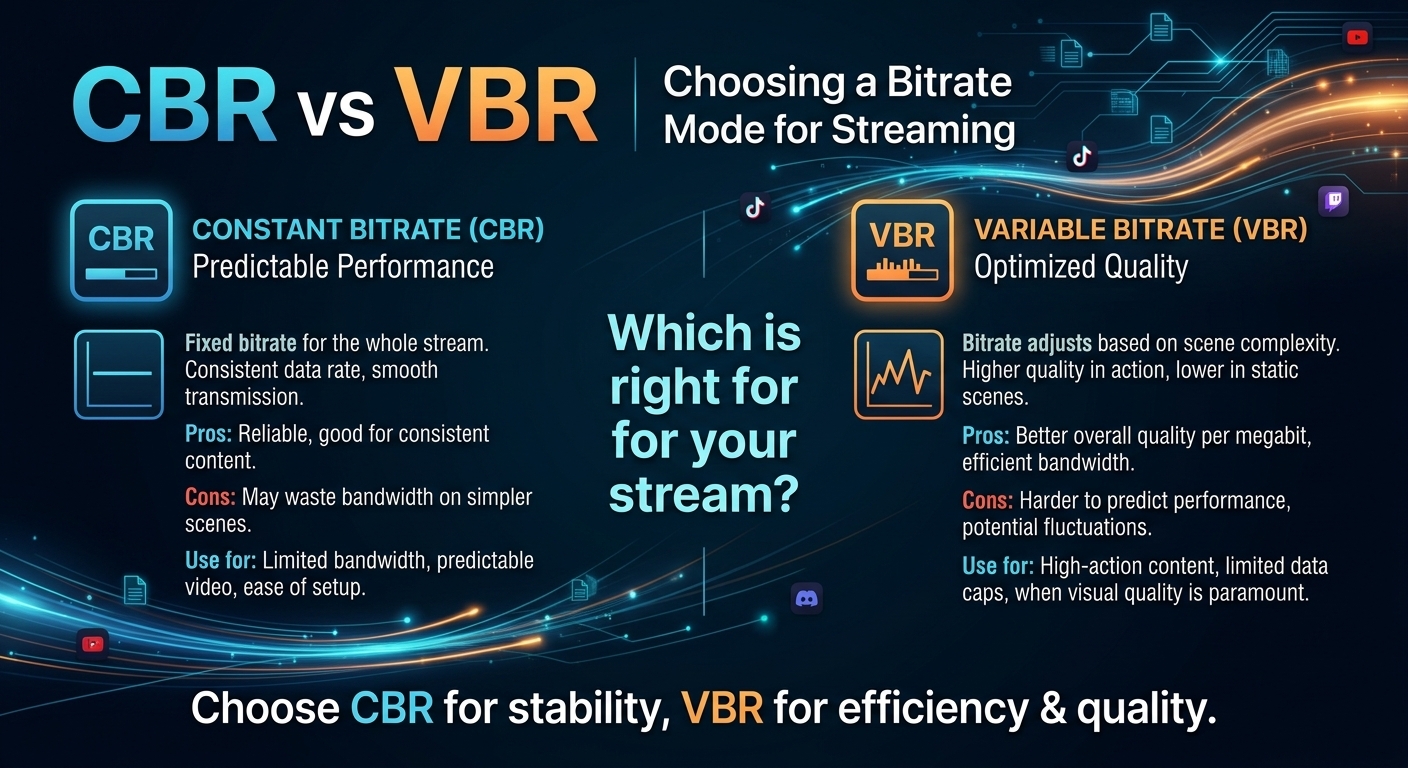
For most on-demand video, capped variable bitrate (VBR) wins the cbr vs vbr decision: it spends bits where the picture ...