
Learn
Lossy vs Lossless Compression: Images, Video and Audio
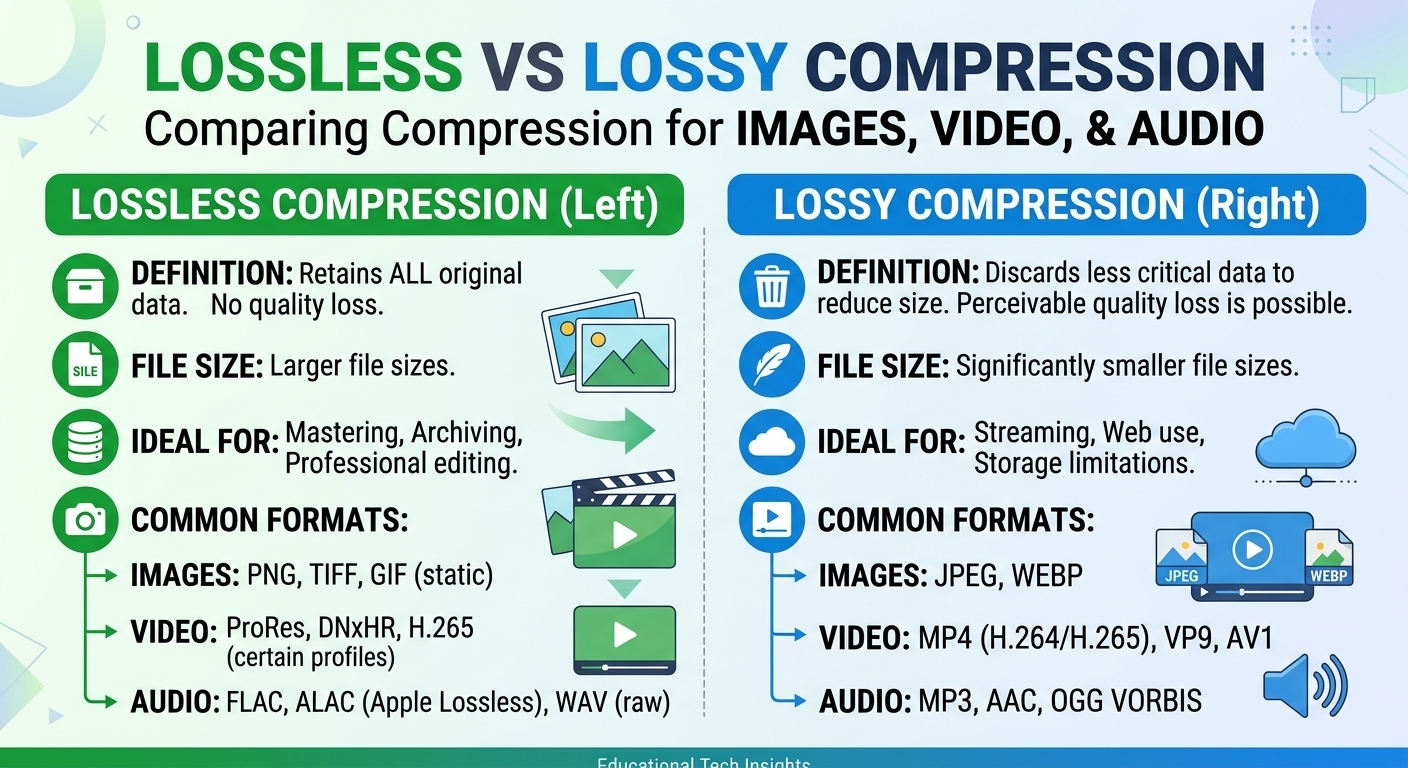
Lossy vs lossless compression comes down to one trade: lossless compression rebuilds every original bit and typically ...
Alibaba Cloud CDN pricing is metered per GB with a different rate for each geographic region. By this blog's estimate from Alibaba's published list prices (2025), that puts 100 TB a month of mixed global traffic at roughly $2,500 to $7,500 before HTTPS request fees, depending on where your users sit. Alibaba's own documentation describes a network of roughly 2,800 to 3,200 nodes, most of them in mainland China. This comparison of Alibaba Cloud CDN vs BlazingCDN gives you a side-by-side table, a regional-mix cost model at 100 TB, and a best-fit matrix by workload. Evaluated October 2026. BlazingCDN prices are as of October 2026, and Alibaba figures are labeled estimates.
Alibaba Cloud CDN bills per GB at rates that vary by region, so 100 TB a month of global traffic costs roughly $2,500 to $7,500 on 2025 list prices (this blog's estimate), plus HTTPS request fees. BlazingCDN bills the same 100 TB at $415 as of October 2026, on one rate for US, Europe and Asia, with no request fees.
The verdict is short. If mainland China is a primary audience and your domain carries an ICP filing, Alibaba Cloud CDN is the right tool. If your heavy traffic is video, software or large files delivered to the US, Europe and Asia outside the mainland, BlazingCDN costs less at every volume above about 50 TB a month, and its bill is easier to predict.
Alibaba Cloud CDN pricing has three layers. The first is the delivery charge, billed per GB of traffic or by peak bandwidth. The second is the regional rate. The third is a set of add-ons that scale with request count and enabled features. Most surprises on an Alibaba invoice come from the second and third layers, not the headline per-GB number.
Alibaba offers pay-by-data-transfer with tiered per-GB rates, which fits spiky traffic. It also offers pay-by-peak-bandwidth, which fits sustained flat traffic with a predictable 95th-percentile profile. Prepaid resource plans buy a data-transfer allowance at a discount, but unused capacity expires at the end of the term. Choosing the wrong mode can cost more than choosing the wrong vendor, so model all three against 90 days of real traffic.
Rates differ by billing region. Mainland China and North America sit at the low end, and Europe is close behind. Parts of Asia-Pacific, the Middle East, Africa and South America cost two to four times more per GB (2025 list prices, estimate). On top of transfer, vendor documentation lists per-10,000-request charges for HTTPS, plus separate billing for real-time logs, QUIC, and origin fetch when OSS is the origin. Dynamic content acceleration (DCDN) has its own price list. Budget for HTTPS request fees whenever the workload consists of many small objects.
Alibaba CDN documentation, published 2024 to 2025, reports roughly 2,800 to 3,200 edge nodes. More than 2,300 of these are in mainland China, and on the order of 1,000 are spread across 70+ countries and regions. That concentration is the product's defining trait: dense carrier coverage across mainland China and thinner coverage elsewhere. Check the current figure on Alibaba's product page before quoting it internally.
For a buyer, node count matters less than where the nodes sit relative to your audience. A European or North American audience is served by the international part of the footprint, which is a fraction of the headline number. The meaningful test is p95 latency and throughput from your users' networks, not a node total.
To accelerate a domain from Alibaba's mainland China nodes, the domain must hold an ICP filing with the Ministry of Industry and Information Technology. Filing takes weeks and needs a mainland-registered entity or a qualifying partner. Domains without a filing can only use acceleration regions outside the mainland. In those regions Alibaba competes on the same terms as any international CDN, without its home-market advantage.
| Dimension | Alibaba Cloud CDN | BlazingCDN |
|---|---|---|
| Cost at 100 TB a month | About $2,500 to $7,500 depending on region mix (estimate, 2025 list prices) | $415 (as of October 2026) |
| Pricing model | Per GB or peak bandwidth, regional rates, prepaid resource plans | Progressive per-TB tiers from $5 down to $2.50, one rate for US, Europe and Asia |
| Request fees | HTTPS requests billed per 10,000 | None, unlimited requests |
| Regions and nodes | Roughly 2,800 to 3,200 nodes (vendor-reported), mostly mainland China | Anycast routing with built-in failover, NVMe SSD servers; one published rate for US, Europe and Asia |
| Mainland China | Supported; ICP filing required | Not part of the published coverage |
| Protocols | HTTP/2; QUIC as a billed option | HTTP/2, IPv6, TLS 1.3; no HTTP/3 or WebSockets |
| Support | Basic support included; faster response through paid support plans | Helpdesk 24/7/365; an engineer replies within 3 business hours |
| Contract and onboarding | Self-service console; deepest integration with OSS, ECS and SLB | No long-term contract, about one hour of onboarding with an engineer, any HTTP origin |
The deciding row is mainland China: if you need it, Alibaba wins by default, and if you do not, cost and billing simplicity dominate the decision.
The old shortcut, "Alibaba is cheap in China, expensive elsewhere", hides most of the real spread. The model below holds volume constant at 100 TB (about 100,000 GB) and varies only where the bytes land. Alibaba figures are this blog's estimates based on 2025 list-price ranges at volume tiers, and they exclude HTTPS request fees and logging.
| Traffic mix at 100 TB | Assumed Alibaba blended rate | Alibaba estimate | BlazingCDN |
|---|---|---|---|
| 80% North America and Europe, 20% Asia | $0.025 to $0.045 per GB | $2,500 to $4,500 | $415 |
| 60% Asia-Pacific outside the mainland | $0.045 to $0.075 per GB | $4,500 to $7,500 | $415 |
| 70% mainland China, ICP filed | $0.025 to $0.040 per GB | $2,500 to $4,000 | Not a fit: mainland China is outside the published coverage |
Outside mainland China, the regional mix moves the Alibaba estimate by up to 3x, while BlazingCDN stays at $415 because a single rate covers US, Europe and Asia.
The arithmetic for BlazingCDN follows the progressive tiers: 5 TB at $5.00 is $25, the next 20 TB at $4.50 is $90, and the next 75 TB at $4.00 is $300, for a total of $415. As of October 2026, BlazingCDN charges from $5 per TB down to $2.50 per TB at volume, with no request fees, no regional multipliers and no setup fee: 100 TB costs $415 and 500 TB costs $1,815. Current tiers are on the BlazingCDN pricing page with per-TB tiers.
Alibaba's architecture favors workloads that already live on Alibaba Cloud. OSS as an origin, ECS behind SLB, and console-level integration reduce configuration work. OSS-to-CDN origin traffic is also billed differently from public egress. The genuine strength is the mainland: no Western CDN matches Alibaba's carrier-level coverage there. The honest limitation is the international side, where buyers juggle regional price lists, billing modes and add-on fees across a thinner footprint.
BlazingCDN is a pull-caching Anycast CDN built for high-volume static delivery: video on demand, live HLS and DASH segments, installers, game patches and large archives up to 50 GB per object. In June 2026 measurements on a 100 MB HTTPS download, it recorded 27 ms and 1.12 Gb/s in Europe, 24 ms and 1.11 Gb/s in North America, and 47 ms and 761 Mb/s in Asia. It reports a 96%+ average cache hit ratio. Origin shield, request coalescing, signed URLs, geo and IP lists, purge, Prometheus metrics and a REST API are included on every plan. Its honest limitation is scope. BlazingCDN does not support HTTP/3, WebSockets or transcoding, and it does not sell a WAF or DDoS mitigation, so it runs beside your existing security stack.
Many global services with a meaningful China audience end up with two CDNs. The ICP-filed domain is served by Alibaba inside the mainland. GeoDNS sends all other resolvers to a delivery CDN priced for international traffic. This is the architecture the old "decision matrix" pointed at without naming it. It also gives you failover outside China, because a weighted DNS split can shift load when one provider degrades. BlazingCDN can run as that second CDN behind DNS, a setup covered on its multi-CDN integration page. To verify the split on your own stack, compare cache hit ratio, p95 time to first byte and 5xx rate per provider over the same 7-day window.
| Workload | Best fit | Why |
|---|---|---|
| Mainland China is the primary audience | Alibaba Cloud CDN | Dense mainland coverage; ICP filing workflow built into the console |
| Origin and compute already on Alibaba Cloud (OSS, ECS, SLB) | Alibaba Cloud CDN | Native integration and internal origin-fetch billing |
| Video on demand or HLS and DASH, 50 to 500 TB a month, outside China | BlazingCDN | $415 at 100 TB and $1,815 at 500 TB, no request fees on segment-heavy traffic |
| Software installers and game patches with launch-day bursts | BlazingCDN | Objects up to 50 GB, cache warm-up through the API, no overage penalties |
| Real-time apps needing WebSockets or HTTP/3 | Alibaba (DCDN) or another full-stack CDN | BlazingCDN does not support these protocols by design |
| Global service with a China segment | Both, split by GeoDNS | Alibaba inside the mainland, BlazingCDN for international heavy files and failover |
Geography decides first, and protocol needs decide second: once neither forces Alibaba, high-volume static delivery favors BlazingCDN on cost.
Alibaba Cloud CDN costs roughly $25 to $75 per TB at volume tiers, depending on the billing region (this blog's estimate from 2025 list prices). Mainland China, North America and Europe sit at the low end of that range, and parts of Asia-Pacific, the Middle East, Africa and South America sit higher. HTTPS request fees, real-time logs and QUIC are billed separately.
Alibaba Cloud CDN documentation reported roughly 2,800 to 3,200 edge nodes in 2024 and 2025. More than 2,300 of them are in mainland China, and on the order of 1,000 are spread across 70+ countries and regions. For buyers outside China, the relevant number is the international footprint, so measure p95 latency from your own users' networks rather than relying on the headline total.
Yes, a domain must hold an ICP filing before Alibaba CDN will accelerate it from mainland China nodes. Filing requires a mainland entity or a qualifying arrangement and usually takes weeks. Without a filing, you can still use Alibaba's acceleration regions outside the mainland, but you lose the main advantage that separates it from international CDNs.
For traffic to the US, Europe and Asia outside mainland China, yes at volume. As of October 2026, BlazingCDN costs $415 for 100 TB and $1,815 for 500 TB, with no request fees. This blog estimates Alibaba at $2,500 to $7,500 for 100 TB, depending on region mix. Below about 46 TB, flat plans from other vendors can cost less than either.
Moving static delivery from Alibaba CDN to BlazingCDN typically takes a day of configuration plus a gradual DNS cutover. BlazingCDN onboarding takes about one hour with an engineer, and it pulls from any HTTP origin, including OSS. Shift 5 to 10 percent of traffic with weighted DNS first, then compare hit ratio and error rate before moving the rest.
Yes, Alibaba Cloud CDN and BlazingCDN can run side by side behind GeoDNS or weighted DNS. A common pattern routes mainland China resolvers to the ICP-filed Alibaba domain and all other traffic to BlazingCDN. Keep cache keys and token signing consistent across both providers so objects and signed URLs behave the same on either path.
Export 90 days of Alibaba billing and split it by region, billing mode and HTTPS request count. Then reprice it at the per-GB ranges above to see which line actually drives your bill. Next, pick one high-volume hostname outside mainland China and send 10 percent of its traffic to a second CDN through weighted DNS. Compare p95 time to first byte, throughput on a large object, cache hit ratio and 5xx rate over the same seven days. The result is useful whichever vendor wins.
BlazingCDN offers a 14-day testing period on real production traffic at $5 per TB with the monthly minimum waived, enough to run that split on your own content. You can start the BlazingCDN testing period and set up the zone with an engineer.

Heavy traffic.
Light bill.
The CDN for video and large traffic
Learn
Lossy vs lossless compression comes down to one trade: lossless compression rebuilds every original bit and typically ...
Pricing - Pricing & Costs
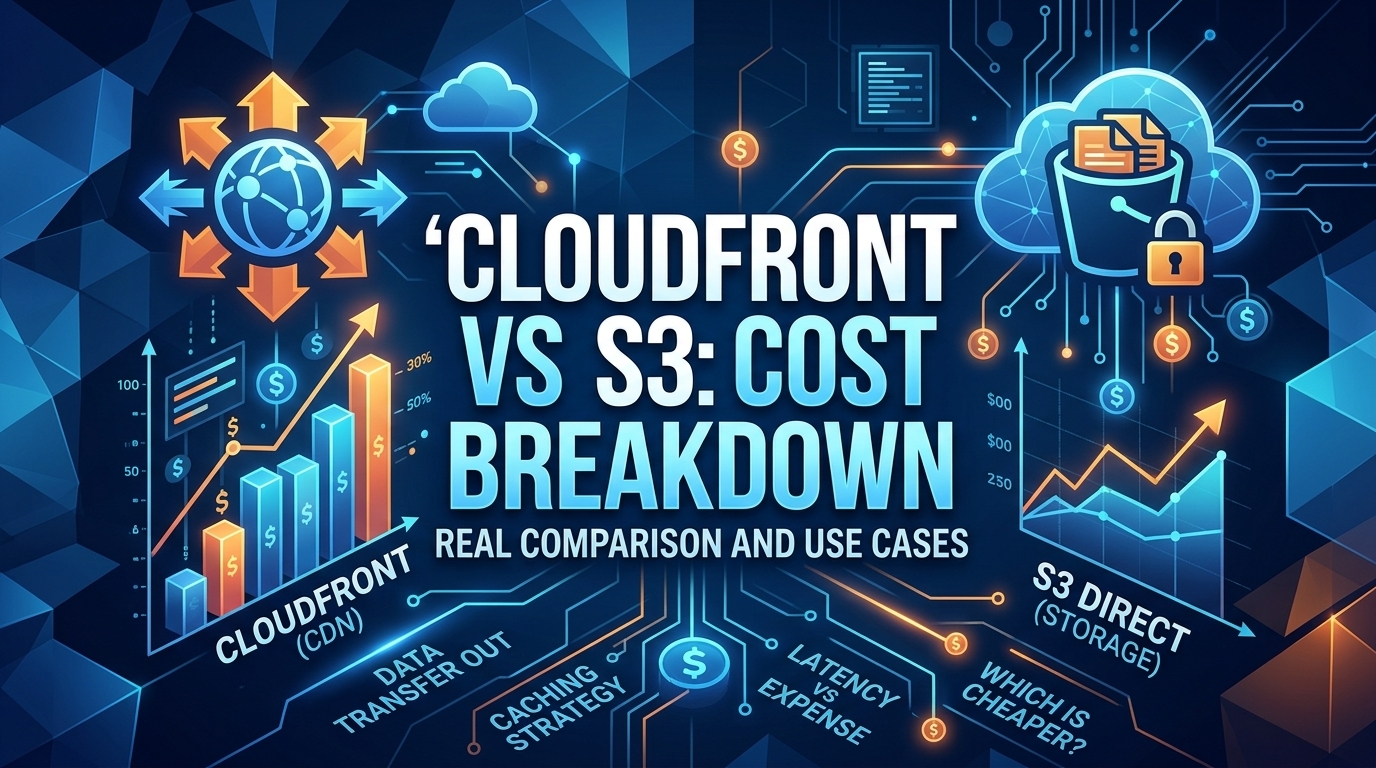
The CloudFront vs S3 decision depends more on object size than on traffic volume. At a 500 KB average response, 100 TB ...
Learn
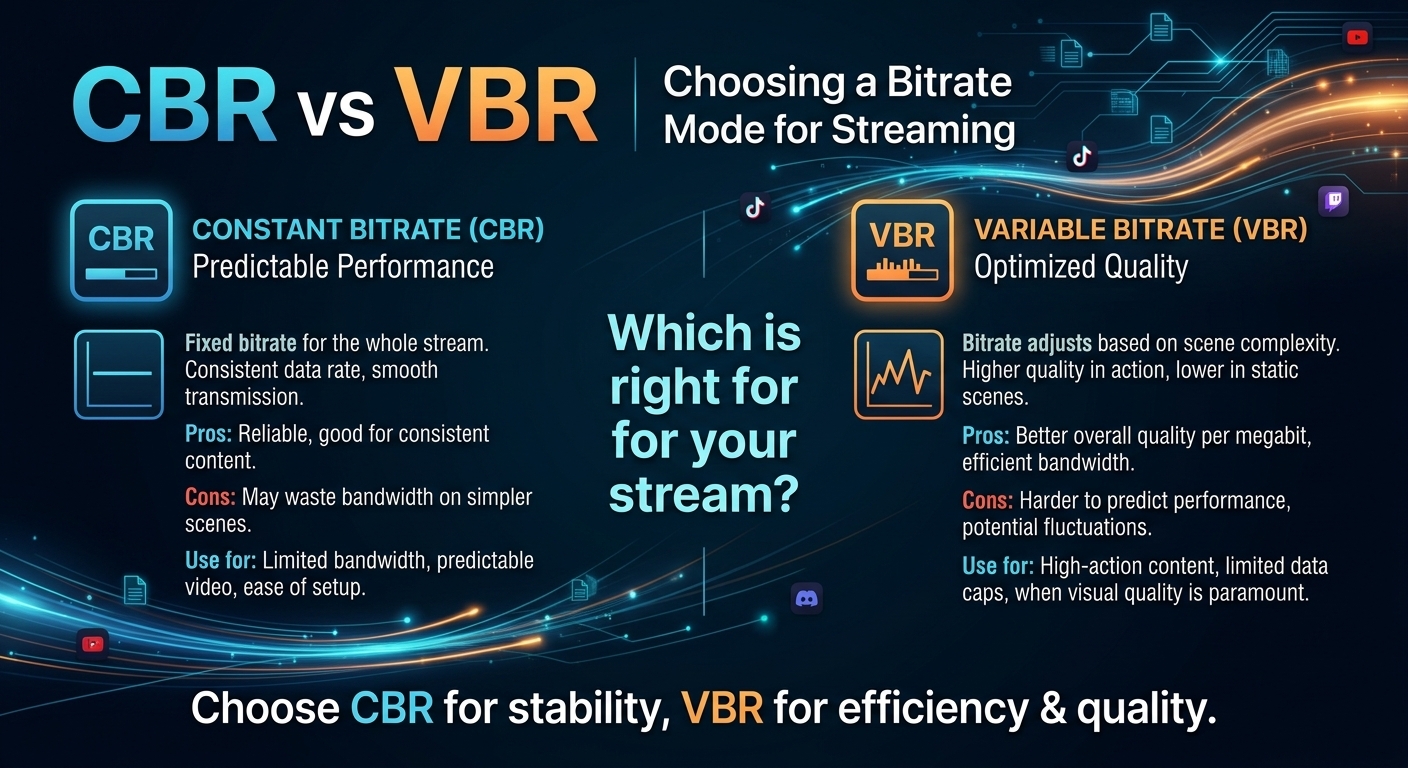
For most on-demand video, capped variable bitrate (VBR) wins the cbr vs vbr decision: it spends bits where the picture ...