Learn
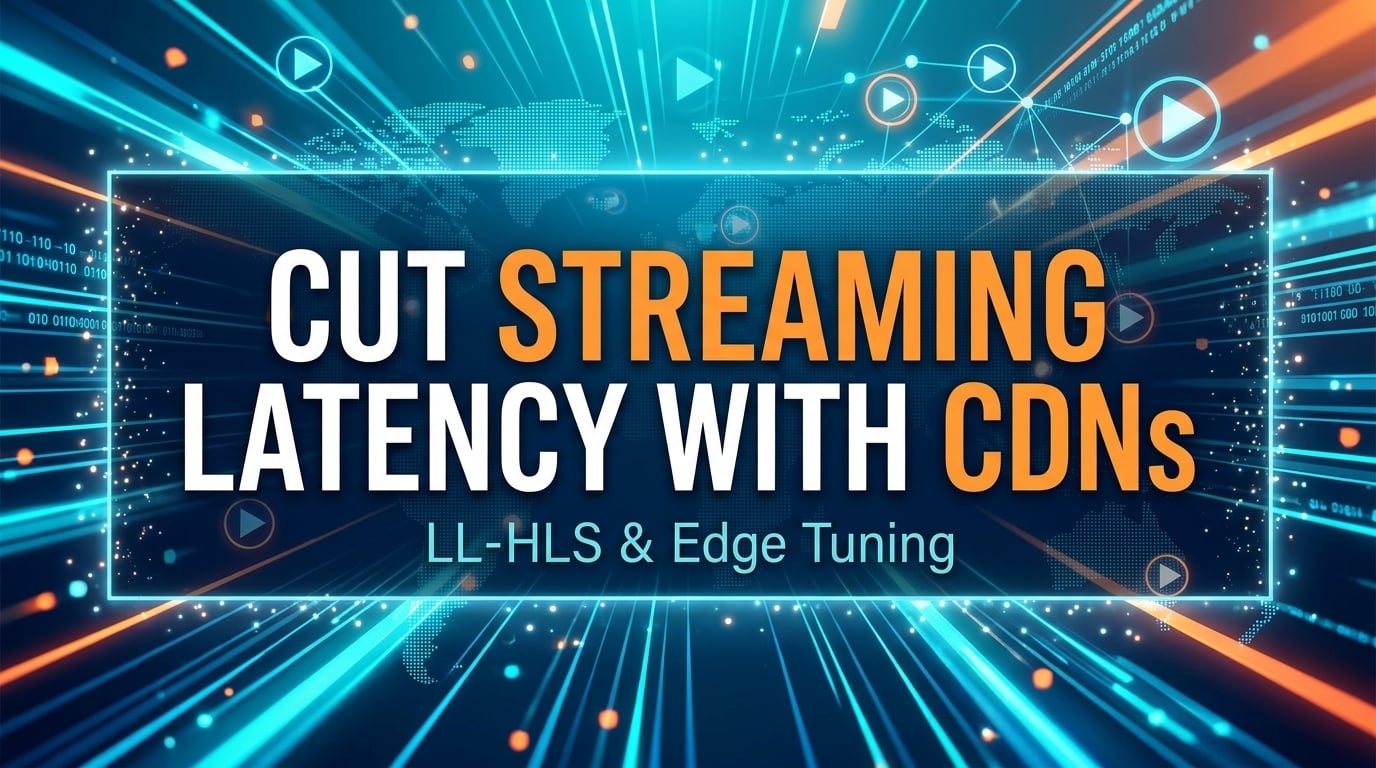
How to Cut Streaming Latency with a CDN: LL-HLS to Edge Tuning
To reduce streaming latency, shrink the buffer the player is forced to hold, then make the CDN deliver partial segments ...


Adaptive streaming over Content Delivery Networks (CDNs) is revolutionizing the way we consume video content online. In a world where streaming quality can make or break user experience, understanding how adaptive bitrate streaming (ABR) works and how it integrates with CDNs is crucial. Here’s what you need to know, presented in a straightforward and engaging way.
Adaptive bitrate streaming is a technology that dynamically adjusts video quality based on the viewer’s current internet speed and device capabilities. Instead of a single video file, multiple versions of the video are encoded at different bitrates. As you watch, the video player selects the highest quality version that can be streamed without buffering.
The process starts with encoding the video at various bitrates. The video is then segmented into small chunks. When you start watching, the player begins with a lower quality version and steps up to higher quality chunks if your connection can handle it. If your connection slows down, the player will switch to a lower quality to avoid buffering.
CDNs are essential for distributing these video chunks efficiently across the globe. By leveraging a network of geographically distributed servers, CDNs ensure that video content is delivered quickly and reliably, regardless of the viewer’s location. This reduces latency, decreases buffering, and provides a smoother viewing experience.
The two most widely-used protocols for adaptive streaming are HTTP Live Streaming (HLS) and MPEG-DASH. HLS, developed by Apple, is known for its compatibility with a wide range of devices and simplicity. MPEG-DASH, on the other hand, is codec-agnostic and supports higher quality streams, including 4K HDR, making it a favorite for platforms like YouTube and Netflix.
While adaptive streaming offers significant benefits, it’s not without challenges. Ensuring consistent quality across different network conditions and devices requires careful planning and robust infrastructure. However, with the continuous evolution of CDNs and streaming protocols, the future looks promising for even more seamless and high-quality video streaming experiences.
In conclusion, adaptive streaming over CDNs is a game-changer in the digital content delivery landscape. By understanding and implementing best practices, you can ensure your viewers enjoy a smooth, high-quality streaming experience no matter where they are.

Heavy traffic.
Light bill.
The CDN for video and large traffic
Learn
To reduce streaming latency, shrink the buffer the player is forced to hold, then make the CDN deliver partial segments ...
Learn
A live HLS channel with 6-second segments and 100,000 concurrent viewers puts roughly 33,000 requests per second on the ...

Video - Video & Streaming
As of 2026, the difference between a sports stream that feels live and one that feels delayed is mostly settled before ...

Learn
A video CDN is a content delivery network built for segmented HTTP streaming. It caches HLS and MPEG-DASH manifests and ...