Learn
What Is H.264 (AVC)? The Codec Behind Most Online Video
H.264, also called Advanced Video Coding (AVC) or MPEG-4 Part 10, is a block-based video compression standard published ...
The average marketing org now runs 31 SaaS tools. That is up from 24 in 2024. Yet pipeline velocity at B2B companies has dropped 14% over the same window, according to Forrester's Q1 2026 B2B Marketing Survey. More tools, worse results. The problem is not tooling. It is architecture. CMOs who treat their stack like a parts bin instead of an integrated system leak budget at every handoff between platforms. This article gives you a framework for selecting the best growth marketing tools in 2026, organized into 12 functional layers, with a decision matrix that maps each tool to a workload profile so you can stop buying shelfware and start compounding growth. All 82 tools below have been re-evaluated against 2026 pricing, feature sets, and integration capabilities.
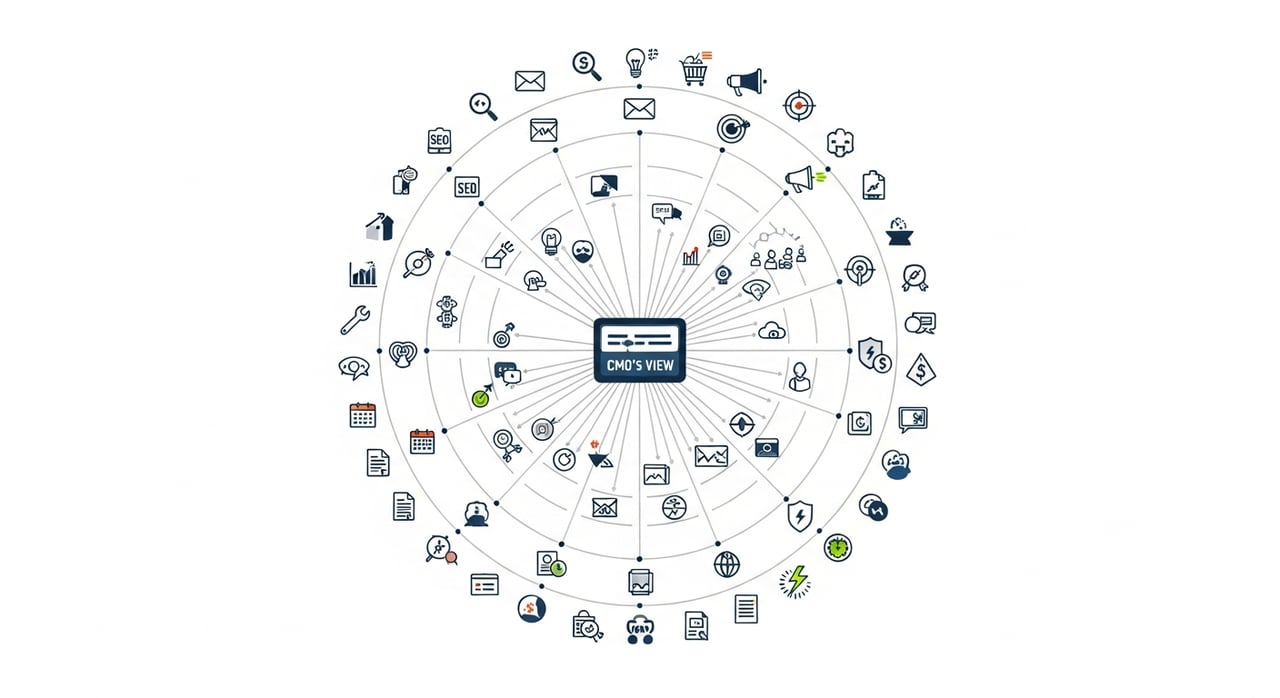
Three shifts make 2026 different from every prior year. First, Google's March 2026 core update significantly rewards first-party behavioral data over third-party intent signals, which means your analytics and personalization layers matter more than your ad-buying layer. Second, the EU Digital Markets Act enforcement wave that began in January 2026 restricts cross-platform tracking in ways that break most attribution models built before Q4 2025. Third, AI-native tools have matured past the "copilot" stage into autonomous execution, meaning the gap between teams that adopt them and teams that do not is widening at the pipeline level, not just the productivity level.
A CMO who selected tools in 2024 and has not revisited the stack is almost certainly running at least four redundant subscriptions and missing at least two critical capabilities. The framework below is designed to fix that.
Rather than dumping 82 tools into a flat list, we organize them into the 12 functional layers a modern growth marketing stack requires. Each layer includes its top picks for 2026, a note on what changed this year, and guidance on which workload profile each tool fits best.
Page speed directly impacts conversion. A 100ms increase in load time drops conversion rate by 7% on median e-commerce sites (as of Q1 2026 web performance benchmarks). Your CDN is not an infrastructure detail — it is a growth marketing tool.
The consolidation trend accelerated in 2026. HubSpot acquired Clearbit's remaining assets. Salesforce embedded Einstein GPT natively into Marketing Cloud. The buy-vs-build calculus shifted.
AI Overviews now appear on 35% of commercial queries (as of April 2026), which changes how you optimize. Tools that track AI Overview inclusion are no longer optional.
This category did not exist as a distinct stack layer 18 months ago. It does now.
No flat list tells you what to buy. Your workload profile does. The matrix below maps company stage, primary growth motion, and budget tier to specific tool recommendations across the 12 layers.
| Profile | Stage | Primary Motion | Budget / mo | Core Stack |
|---|---|---|---|---|
| SaaS Seed | Pre-Series A | Product-Led Growth | Under $2K | HubSpot Free, GA4, Amplitude Free, Customer.io, Ahrefs Lite, Buffer |
| SaaS Growth | Series B–C | PLG + Outbound Hybrid | $5K–$20K | HubSpot Pro, SEMrush, Clay, Gong, Optimizely, Mixpanel, Sprout Social |
| DTC E-Commerce | $5M–$50M Rev | Paid + Retention | $10K–$40K | Klaviyo, Meta Ads, Northbeam, BlazingCDN, Hotjar, Unbounce, Jasper |
| Enterprise B2B | $100M+ Rev | ABM + Content + Events | $50K+ | Marketo, Salesforce MC, LinkedIn Ads, Tableau, Mutiny, Braze, Writer |
This is the section most tool-list articles skip. They tell you what tools exist. They do not tell you which subset to buy for your specific situation. Use this matrix as a starting point, then adjust based on your existing contracts and integration surface area.
Gartner's 2026 CMO Spend Survey reports that marketing technology accounts for 25.4% of total marketing budgets, up from 23.8% in 2024. The median B2B SaaS company with 50 employees spends $14,200/month on marketing tools. The problem is not total spend — it is allocation. Companies consistently over-invest in acquisition tools and under-invest in measurement and optimization layers. If you are spending 60% of your tool budget on ads platforms and 5% on analytics, you are flying blind at scale.
One practical lever: audit your CDN and media delivery costs. Many growth teams pay 3–5x more than necessary for video and asset delivery because the CDN contract was signed by infrastructure, not marketing, and nobody revisited it. Shifting to a cost-effective provider can free thousands per month that redeploys directly into experimentation or content production.
The answer depends on your growth motion. For product-led SaaS, HubSpot, Amplitude, and Customer.io form the core. For enterprise B2B, Marketo, Salesforce Marketing Cloud, and Mutiny are the standard. For DTC, Klaviyo, Meta Ads, and Northbeam dominate. No single stack fits all profiles — use the workload decision matrix above to match tools to your specific stage and motion.
Start with three layers: analytics (GA4 plus one product analytics tool), automation (HubSpot Free or ActiveCampaign), and one acquisition channel you can instrument end-to-end. Add layers only when you have enough traffic or pipeline volume to generate statistically significant data from the new tool. Premature tool adoption is the most common budget leak at startups.
Northbeam, Triple Whale, and Rockerbox are purpose-built for multi-touch attribution in a cookieless environment. GA4 with enhanced conversions and server-side tagging provides a baseline. Avoid any tool that still relies primarily on third-party cookies for attribution — its data quality will degrade throughout 2026 as browser enforcement tightens.
Effective stacks range from 8 tools (early-stage startup) to 25 tools (enterprise). Beyond 25, integration overhead and data fragmentation typically outweigh the marginal value of each additional tool. Consolidation platforms like HubSpot, Braze, and Salesforce reduce total tool count while increasing data coherence.
Three things: AI-native tools moved from assistants to autonomous executors, EU DMA enforcement broke most cross-platform tracking, and Google AI Overviews reached 35% of commercial queries. These shifts make first-party data collection, server-side analytics, and AI content governance newly critical stack components.
Pull your current tool inventory. Map every subscription to one of the 12 layers above. Identify which layers have zero coverage and which have redundant coverage. Then run one concrete test: pick the layer where you suspect the most waste, cancel or downgrade the weakest tool, and redirect that budget into your measurement or optimization layer for 30 days. Measure pipeline impact. That single exercise will tell you more about your stack's health than any analyst report. If your team has run this audit and found a pattern worth sharing, drop it in the comments — real stack teardowns are more valuable than any vendor's feature page.

Heavy traffic.
Light bill.
The CDN for video and large traffic
Learn
H.264, also called Advanced Video Coding (AVC) or MPEG-4 Part 10, is a block-based video compression standard published ...
Compare
At 100 TB a month, the published price gap between options for a CDN for static content is more than 16 times: ...
Learn
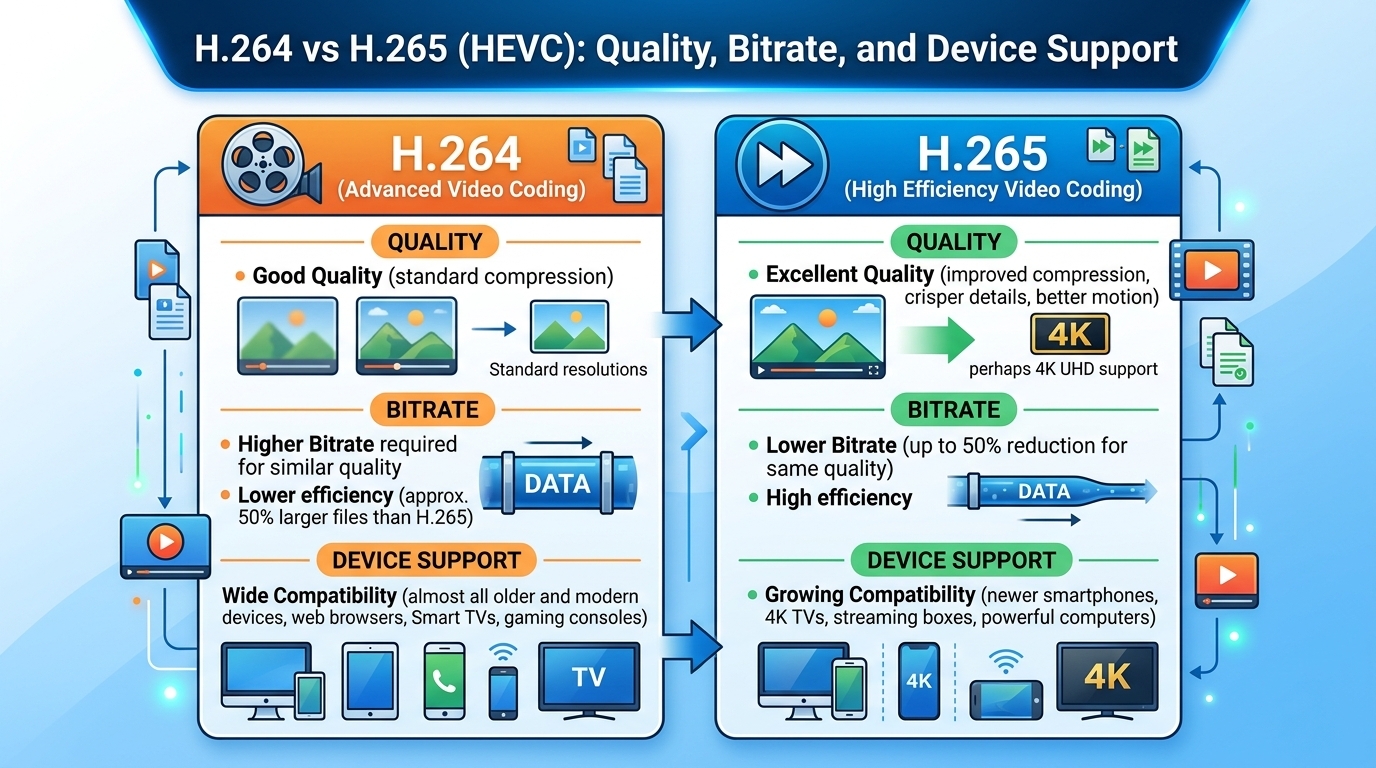
Evaluated October 2026: in the h264 vs h265 decision, HEVC (H.265) matches H.264 (AVC) quality at roughly 30 to 50 ...